My love for Japan began the moment I arrived in Tokyo. The country amazed me with its harmony of ancient traditions, cutting-edge technology, breathtaking nature, and a culture unlike any other. Since then, Japan has become a part of my life, and I return there again and again. Today I help travelers discover the real Japan: I create personalized itineraries, give lectures, and prepare guests for their unforgettable journey. I would be delighted to open Japan for you too!

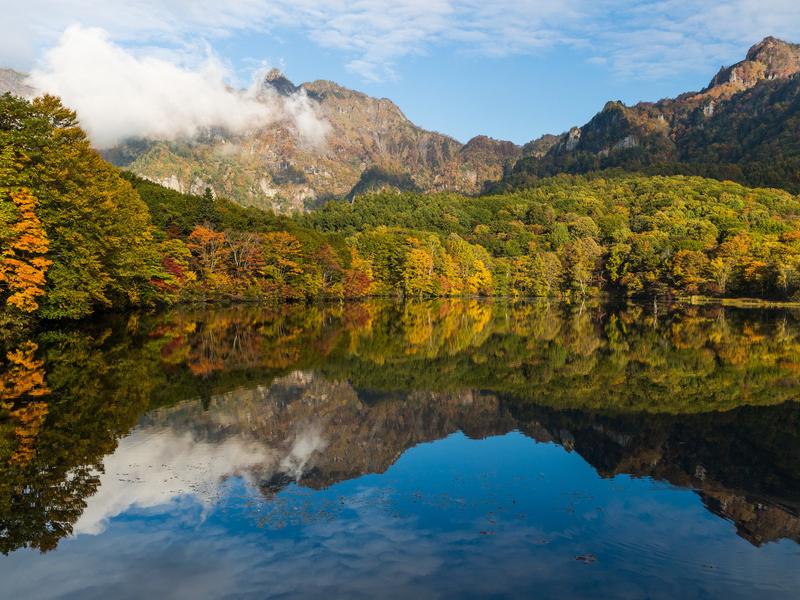

Amanohashidate
Amanohashidate is one of Japan’s three classic scenic views: a long, pine-covered sandbar stretching across Miyazu Bay like a narrow green bridge between the sea and the sky. It makes the strongest first impression from above, especially from Amanohashidate View Land or Kasamatsu Park, but your visit shouldn’t end there. Down at ground level, the sandbar becomes slower and much more tactile — a pine-shaded path, quiet beaches, bicycle routes, short boat rides, and the peaceful atmosphere around Chionji Temple.
Amanohashidate Key Information
Address:
Amanohashidate is located in Miyazu, Kyoto Prefecture, on the scenic coast of northern Kyoto. The main arrival point is Amanohashidate Station, where the tourist information center, access to Amanohashidate View Land, bicycle rentals, sightseeing boat piers, and the route toward the sandbar are all clustered close together. In the map materials, Amanohashidate Sandbar has a rating of 4.5.
How to Get There
The most straightforward way to reach Amanohashidate from Kyoto is by the Limited Express Hashidate straight to Amanohashidate Station. The journey takes about 2 hours, and the one-way train fare is around ¥4,800–¥5,400, depending on your travel date.
Highway buses from Kyoto to Amanohashidate are also available, with a one-way fare of about ¥3,200–¥3,400. For a first visit, the train is usually the simpler and more comfortable choice, but the main rule remains the same: check the timetable carefully. Transport here is far less frequent than in central Kyoto or Osaka.
After arrival, the key planning choice is how much of the bay you want to cover in one day. Amanohashidate View Land is right near the station, while Kasamatsu Park sits on the opposite side and is easier to combine with the sandbar, a sightseeing boat, or a bicycle route if you have enough time.
Click here to learn more about creating a personal itinerary
Parking
Several paid parking areas are available around the station side, near Chionji Temple, close to the boat piers, and on the opposite side near the Fuchu and Kasamatsu Park area. Parking around Amanohashidate is usually around ¥500–¥1,000, while parking directly near Amanohashidate View Land is listed at ¥700.
For a simple day trip, the train is often easier than driving because the main spots around the station can be easily linked on foot, by bicycle, by boat, or by short lifts. A car makes more sense when Amanohashidate is part of a wider Tango Peninsula route, especially if you also plan to visit Ine or move between several coastal stops in a single day.
Opening Hours
Amanohashidate itself is a natural area and can be visited freely, but viewpoints, lifts, boats, shops, and attractions follow daytime and seasonal schedules. Amanohashidate View Land opens from around 9:00, with closing times changing by season.
Tickets
The sandbar itself does not require an entrance ticket. Amanohashidate View Land is listed at ¥1,000 for adults and ¥500 for children, including round-trip lift or monorail access; attractions at the top are paid separately. The Kasamatsu Park cable car or chairlift is listed at ¥800 for adults and ¥400 for children. The Amanohashidate Sightseeing Boat between Amanohashidate Boat Dock and Ichinomiya Boat Dock is listed at ¥800 one way or ¥1,300 round trip for adults, and ¥400 one way or ¥650 round trip for children. Bicycle rental for the sandbar is around ¥400–¥500.
Duration
Allow at least 4–5 hours for Amanohashidate View Land, Chionji Temple, and a walk or bike ride along the sandbar. For a slower visit with Kasamatsu Park, a boat ride, and lunch, it is better to give Amanohashidate a full day.
Best Time to Visit
The best time to start your Amanohashidate visit is in the first half of the day, especially if a viewpoint is part of your plan. Queues for lifts and monorails can quietly eat into your time, and the light is often more comfortable before the area becomes hotter or busier.
In clear weather, head to the viewpoint first, then continue down to the sandbar itself. If the sky is cloudy or the top view does not look promising, the ground-level route still works beautifully: pine trees, sea air, beach sections, Chionji Temple, and the Turning Bridge give the visit plenty of shape without relying solely on the panorama.

Since 2015, our website has specialized in individual planning of unique routes, taking into account personal preferences and desires.
Each of you will receive a unique PDF file from us, which contains everything you need: travel routes, car rentals, hotels, the best tourist attractions, attractions for kids and everything you need for a perfect vacation.
During the trip, we are available for you by phone via WhatsApp.
Our personal service provides information from A to Z, taking into account many small details that can become a decisive factor on the way from a wasted trip to an unforgettable vacation.
Our service will make your trip comfortable, save a lot of time on planning and preparation, and most importantly – will allow you to become freer and fully enjoy the pleasure of the trip.
What to See in Amanohashidate
Amanohashidate is best experienced as a seamless journey of changing views, steady movement, and quiet pauses, rather than a single isolated panorama. A well-balanced visit naturally connects the sandbar itself, one primary viewpoint, the temple grounds near the station, and, if time permits, the quieter Fuchu side across the bay.
Amanohashidate Sandbar
Bridge to Heaven
The sandbar is the true heart of Amanohashidate: a long, pine-covered strip stretching across Miyazu Bay between the open sea, sandy beaches, and calm inner waters. It is around 3–3.6 km long, so it shouldn’t be treated merely as a beautiful shape seen from a distance. On the ground, the area takes on a slower, more immersive rhythm — think pine shade, a fresh sea breeze, hidden shrines, and water views on both sides. Crossing the full path on foot takes about 50 minutes, whereas renting a bicycle makes the journey effortless, faster, and much more flexible.
Opening Hours: Open natural area; surrounding services operate on their own schedules.
No entrance ticket for the sandbar itself. Bicycle rental is usually around ¥400–¥500.
Tip from the itinerary expert: Use a bicycle if you want to connect both sides of Amanohashidate without tiring everyone out too early. Walking is beautiful, but the full sandbar can feel longer than expected, especially in summer heat, sudden rain, or when traveling with children.

Distance/Time: About 50 minutes on foot or around 20 minutes by bicycle across the sandbar.
Amanohashidate View Land
Amanohashidate View Land is the most accessible vantage point since it sits right on the station side of the bay. A monorail or chairlift takes you straight to the top, where the sandbar opens up into a classic, wide panorama over Miyazu Bay. This is also one of the prime spots where visitors try matanozoki — bending forward to view the landscape upside down, which makes the sandbar appear like a dragon flying into the sky. For families, View Land is more than just a viewing terrace; the area features small rides, a Ferris wheel, go-karts, a café, and souvenir shops.
Opening Hours: Usually from around 9:00, with seasonal changes to closing time.
Around ¥1,000 for adults and ¥500 for children, including round-trip lift or monorail access; rides at the top are paid separately.
Tip from the itinerary expert: Start with View Land if this is your first visit to Amanohashidate. From the top, the layout of the station, sandbar, bay, boat piers, and the route toward the opposite shore becomes instantly clear.
Distance/Time: Close to Amanohashidate Station.
Kasamatsu Park
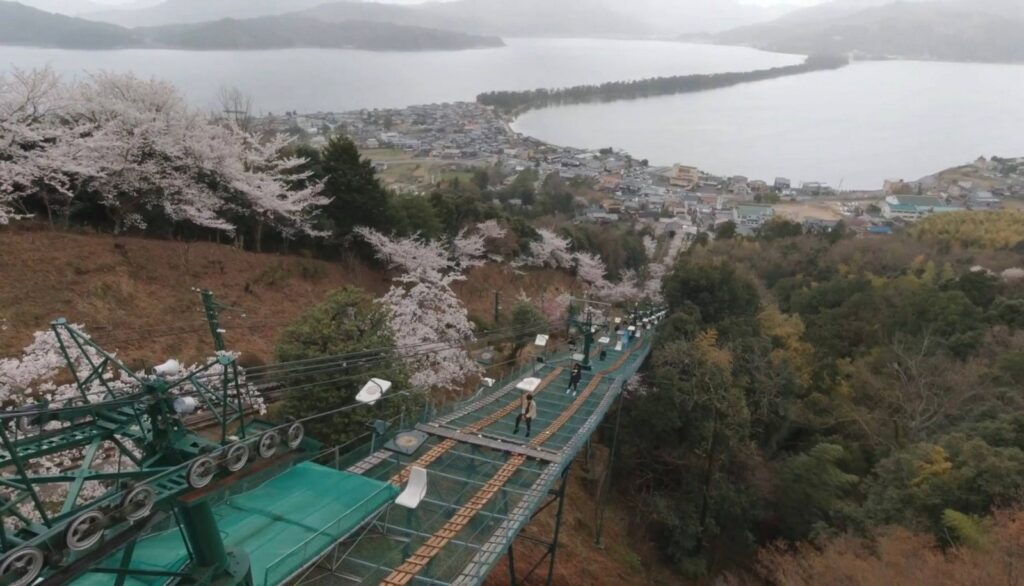
Kasamatsu Park serves as the second major viewpoint, located directly on the opposite side of the bay from Amanohashidate Station. The angle here contrasts with View Land, offering a broader perspective that captures the sandbar, the bay, and the surrounding mountains all at once. Accessible by cable car or chairlift from the Fuchu side, it pairs perfectly with a bicycle ride across the sandbar or a sightseeing boat trip back. If your time is limited, it is far better to enjoy one viewpoint thoroughly rather than rushing between both and missing out on the charm of the journey itself.
Opening Hours: Daytime operation; lift and cable car schedules should be checked before visiting.
Cable car or chairlift access is listed at around ¥800 for adults and ¥400 for children.
Tip from the itinerary expert: Kasamatsu Park works best as part of a full-day Amanohashidate itinerary. Pair it naturally with a sandbar crossing and a boat return, rather than squeezing it in as a rushed extra stop.
Distance/Time: On the opposite side of the bay, near the Fuchu area.
Kaisenkyo Turning Bridge
Turning Bridge
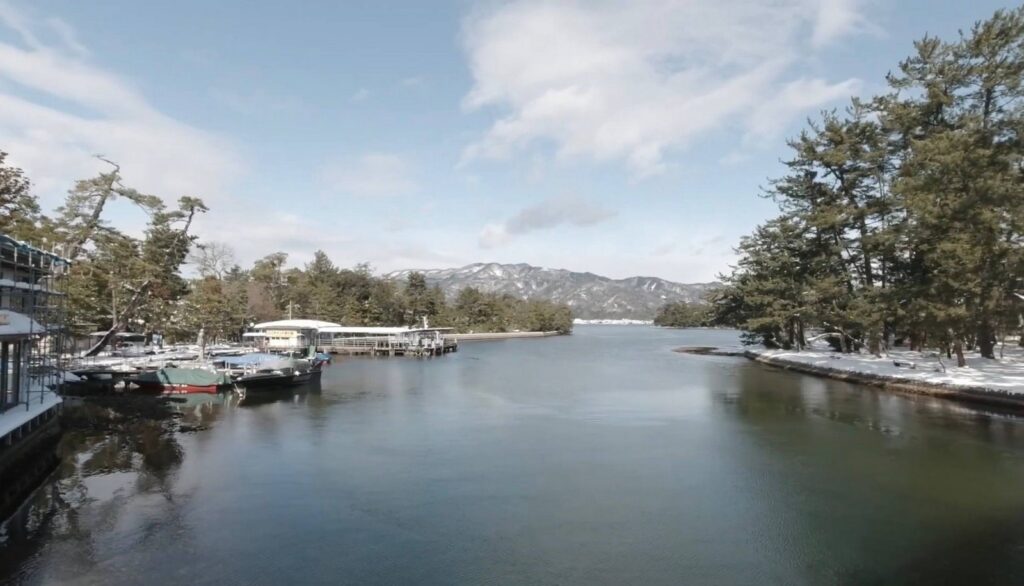
Kaisenkyo is a charming rotating bridge situated right at the entrance to the sandbar, close to the station-side pier and Chionji Temple. Its appeal is simple but fascinating: the bridge pivots 90 degrees to let boats pass through the canal, then swings back into place so pedestrians and cyclists can continue their route. While it doesn’t require a long stop, it adds a memorable, moving detail to your walk, especially for young travelers. There is no need to plan your whole schedule around the rotation, as it depends entirely on boat traffic, but it is well worth keeping an eye out for as you pass by.
Opening Hours: Open crossing; bridge movement depends on boat traffic.
Free.
Distance/Time: Near Chionji Temple and the station-side approach to the sandbar.
Chionji Temple
Chionji Temple offers a gentle cultural pause right next to the station-side pier and the entrance to the sandbar. Historically connected with wisdom and academic success, it makes for an easy, meaningful visit for families without making the day feel like a heavy temple tour. The distinctive fan-shaped omikuji paper fortunes hanging from the pine trees, the grand temple gate, and the quiet grounds bring distinct character to this side of the bay. Since it sits steps from the boat pier and the turning bridge, it fits effortlessly into a day focused on nature and viewpoints.
Opening Hours: Temple grounds operate separately from surrounding shops and transport.
No specific entrance price was provided in the materials.
Tip from the itinerary expert: Treat Chionji Temple as a short, pleasant pause rather than a standalone attraction. It is best visited just before you cross the sandbar or right before heading back to the station.
Distance/Time: Near Amanohashidate Station, the pier and Kaisenkyo Turning Bridge.
Motoise Kono Shrine
Motoise Kono Shrine is located on the Fuchu side, near the lower station for Kasamatsu Park. It adds historical depth to the opposite shore, giving you a wonderful reason to explore further after crossing the sandbar or arriving by boat. Known as one of the region’s ancient and highly significant spiritual sites, its serene, shaded atmosphere contrasts beautifully with the active movement of bicycles, ferries, and lifts nearby. Since photography is restricted in certain inner areas, it is best experienced as a mindful, quiet walk rather than a quick photo stop.
Opening Hours: Check local hours before visiting.
No specific entrance price was provided in the materials.
Distance/Time: Near the Fuchu side and the Kasamatsu Park access area.
Nariaiji Temple
Nariaiji Temple is a peaceful, elevated sanctuary tucked away in the mountains above Kasamatsu Park, perfect for travelers looking to explore beyond the standard sightseeing loop. Renowned for its panoramic views, historic temple structures, and a slower mountain rhythm, it works beautifully when your day isn’t already packed. It takes more effort to reach than the waterfront sights, which is exactly why it should be a deliberate choice rather than an afterthought. For family trips, it is an excellent fit if you are traveling with older children or simply prefer a deeper, more layered exploration of the area.
Opening Hours: Check access and temple hours before visiting, especially outside the main season.
Older materials mention an entrance fee of around ¥1,100; current prices should be checked before the trip.
Tip from the itinerary expert: Add Nariaiji Temple only if you have plenty of time to spare on the Fuchu side. If your schedule is tight, sticking to the sandbar, one main viewpoint, and the boat connection will give you a much more relaxed day.
Distance/Time: Above the Kasamatsu Park side; allow extra time for access.
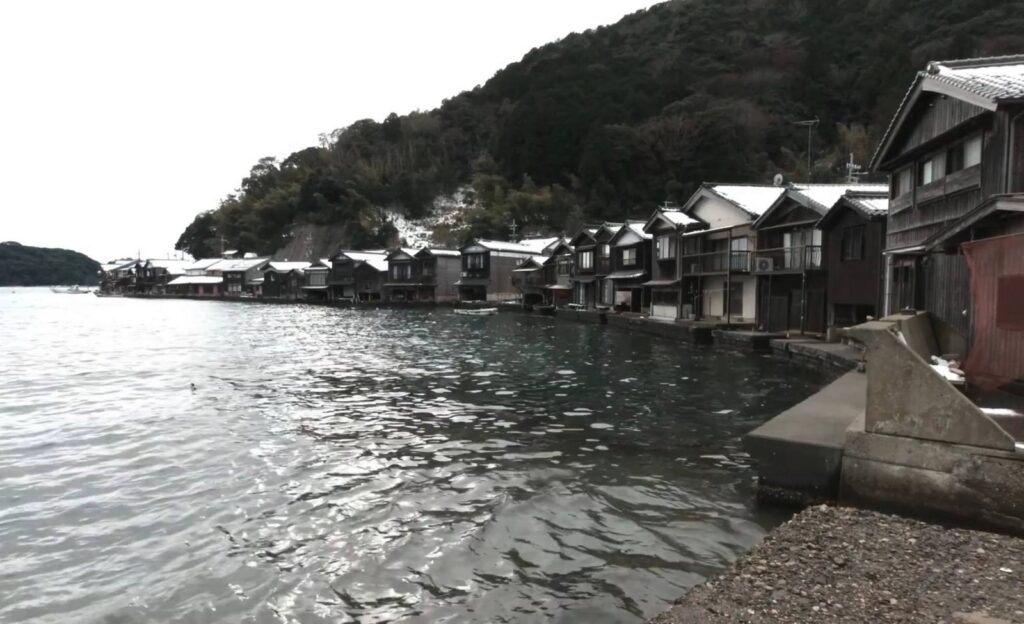
What Is Near Amanohashidate and Worth Visiting?
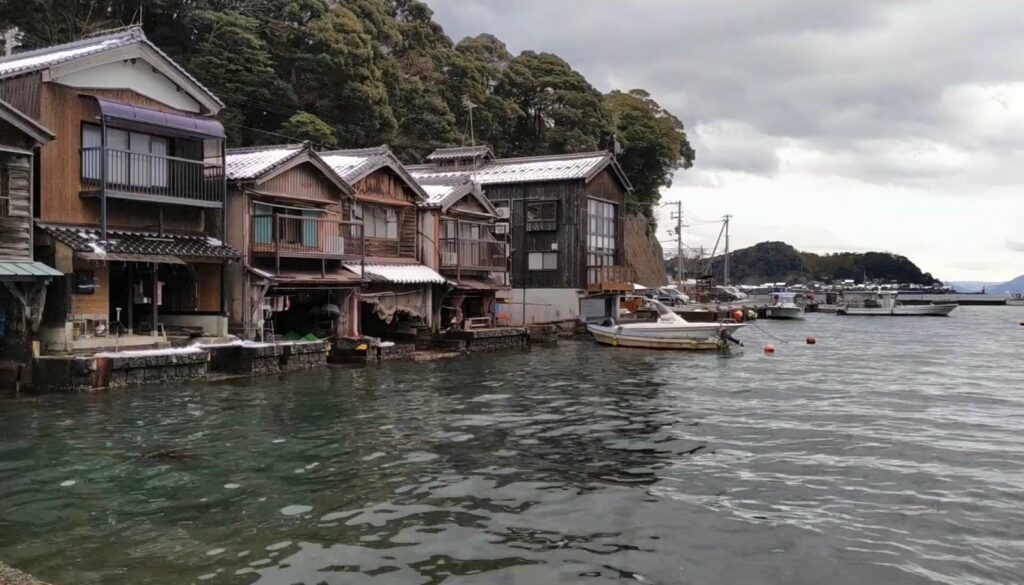
- Ine Funaya: Ine is one of the most atmospheric side trips from Amanohashidate, famous for its traditional boathouses built right along the water’s edge. The vibe here is completely different from the open bay scenery of Amanohashidate, offering narrow streets, quiet waterfront views, small cafés, local fishing boats, and a slower, authentic coastal rhythm. The best way to experience Ine is from the water, either on a sightseeing ferry or a local sea taxi, because these historic funaya houses were built specifically to face the bay. If you add Ine to your itinerary, don’t treat it as a quick extra stop after an already packed day; it deserves enough time for a leisurely walk, a boat ride, and a quiet pause by the water.
- Miyazu: Miyazu serves as a highly practical base around Amanohashidate, especially for travelers who want easy access to hotels, dining, and transport. It is far more than just a transit point; the wider bay area adds a calmer local layer to the trip, featuring coastal views, straightforward dining options, and convenient links to the sandbar, boats, and viewpoints. For a family route, Miyazu is incredibly useful because it keeps your logistics manageable rather than forcing too much travel into a single day. It is also an excellent choice if you plan to stay overnight instead of making a late-evening return to Kyoto or Osaka.
- Tango Peninsula: The Tango Peninsula is a perfect fit for travelers with a car who want to expand Amanohashidate into a broader coastal road trip. The area is renowned for its sweeping sea views, rugged cliffs, quiet beaches, hidden fishing towns, and rural scenery, giving your journey a deep connection to nature. While public transport exists, moving between these smaller coastal spots can be time-consuming and requires careful schedule checking. With a rental car, the route becomes exceptionally flexible, allowing you to seamlessly combine Amanohashidate with Ine and several scenic coastal lookouts.
- Kinosaki Onsen: Kinosaki Onsen is a classic hot-spring town that pairs wonderfully with Amanohashidate on a comprehensive northern Kansai itinerary. Rather than a brief add-on for a short trip, it fits best as an overnight continuation, particularly if you want to experience traditional ryokan-style accommodation, relaxing thermal baths, and a slower evening after your coastal sightseeing. The atmosphere here is entirely different from Amanohashidate — less about dramatic viewpoints and more about willow-lined onsen streets, historic inns, and relaxed strolls in a traditional yukata robe. This combination works beautifully when planned over two or more days.
- Amano Hashidate Winery: Amano Hashidate Winery offers a relaxed adult stop if your schedule isn’t already too full and you are exploring the Miyazu Bay area. While it shouldn’t replace the main Amanohashidate sights, it can add a pleasant food-and-wine element to your day. For families, it works well only if your timing is flexible and the visit is kept brief. If your main plan already features View Land, the sandbar path, a boat ride, and Kasamatsu Park, it is wiser to save the winery for a slower, multi-day route.
- Local beaches around Amanohashidate: The sandy beach sections near the sandbar and bay are well worth noticing, particularly during the warmer months. They offer a refreshing pause after visiting viewpoints, taking lifts, and walking, making them ideal when children need a break from structured sightseeing. The beach experience depends heavily on the season: in summer, it feels like an active part of the main visit, while outside the swimming season, it is all about panoramic views, crisp sea air, and a quiet stroll. Don’t center your whole day around the beach unless the weather is perfectly suited for it.
Tip from the itinerary expert: Do not combine Amanohashidate, both viewpoints, Ine, and Kinosaki Onsen into one ordinary day. Amanohashidate and Ine together already make for a full, perfectly paced route; Kinosaki Onsen works much better as an overnight continuation.
Who Is Amanohashidate Suitable For?
- Families who want nature without a difficult hike: Amanohashidate is ideal for families because the core experience revolves around panoramic views, boats, lifts, bicycles, pine-scented paths, and beach scenery rather than demanding mountain trekking. The sandbar is long but completely flat, meaning the route can be adapted easily: you can walk just a portion of it, rent bicycles, return by ferry, or stay mostly on the station side. This makes the day highly flexible for different energy levels. The main thing is to avoid overloading the schedule with too many competing stops.
- Travelers who love scenic viewpoints: This is one of the most compelling reasons to visit. Amanohashidate View Land and Kasamatsu Park both showcase the famous sandbar from above, but each offers a completely unique angle, lighting, and feel. Clear weather makes a massive difference here, so if the forecast looks promising, prioritize heading up to your chosen viewpoint early in the day. If visibility drops, the ground-level route still works beautifully, though the famous “Bridge to Heaven” effect will be less dramatic.
- Visitors who enjoy slow coastal places: Amanohashidate is about much more than just checking a famous view off a bucket list. The deeper pleasure lies in the pine shade, the fresh sea breeze, the water stretching out on both sides, quiet temple grounds, and the gentle movement between the land and the bay. It suits travelers who are genuinely ready to slow down for a few hours instead of rushing from one photo point to the next. The destination leaves a much stronger impression when your route has plenty of breathing space.
- Families with children who need variety: The area packs an excellent mix of simple, engaging activities: chairlifts and monorails, small amusement rides at View Land, bicycle rentals, sightseeing boats, beaches, and a rotating bridge. This variety keeps the day moving and feels far more active than a standard scenic stop. Younger children will love the constant movement and small surprises, while older kids tend to respond best to cycling the path, a boat ride, or trying the upside-down matanozoki viewing technique. Just keep an eye on the distances and plan breaks before everyone gets tired.
- Travelers coming from Kyoto or Osaka for a day trip: Amanohashidate can certainly be visited as a day trip, though it makes for a long day. The train journey from Kyoto takes about 2 hours on the Limited Express Hashidate, and express trains are not as frequent as standard urban transit. A day trip works best with a highly focused plan: View Land, Chionji Temple, the sandbar, and perhaps a boat ride or one viewpoint on the opposite side. If you want to add Ine or prefer a more relaxed pace, an overnight stay becomes much more comfortable.
- Travelers with limited mobility: Amanohashidate can still be thoroughly enjoyed, but it requires thoughtful planning. The sandbar itself is flat, yet the overall distances are long, ground surfaces can vary, and not every viewpoint or transfer option is equally accessible. The station-side area, the main boat pier, Chionji Temple’s immediate grounds, and the View Land access point will generally be much easier to navigate than trying to cross the full sandbar path on foot. For a smooth experience, focus on fewer stops and avoid long walking sections.
- Travelers who may find Amanohashidate less suitable: The area is less ideal for anyone seeking constant high-energy entertainment, large shopping districts, or a fast-paced city sightseeing rhythm. It also relies heavily on favorable weather: rain, low hanging clouds, or poor visibility can impact the views from the top. During peak travel seasons, queues for the lifts and limited transport schedules can make a rushed visit feel less efficient. Amanohashidate is at its best for those who appreciate natural scenery, open spaces, water views, and a relaxed coastal atmosphere.
Click here to learn more about creating a personal itinerary
Tip from the itinerary expert: For a balanced first visit, choose one primary viewpoint, one ground-level experience, and one easy pause. For example: Amanohashidate View Land, a bicycle ride or partial stroll along the sandbar, followed by Chionji Temple or a short boat ride. This keeps your day rich and rewarding without turning it into a race.
Amanohashidate 2-Day Family Itinerary
Trip Duration: 2 days
Day 1 — Amanohashidate View Land, Chionji Temple, and the Pine-Covered Sandbar
Morning, 10:00–12:30. Start your journey at Amanohashidate Station. If you are traveling from Kyoto, the Limited Express Hashidate takes about 2 hours and costs around ¥4,800–¥5,400 one way. The station area serves as the most practical launching pad: the tourist information center, the entry to Amanohashidate View Land, the main ferry pier, bicycle rentals, and the path to the sandbar are all steps away.
Head up to Amanohashidate View Land first, which opens daily from 9:00. Catch the monorail or chairlift to the summit; round-trip tickets are listed at about ¥1,000 for adults and ¥500 for children, with the amusement rides at the top paid separately. Give yourself 1.5–2 hours to enjoy the main observation terrace, try the classic matanozoki upside-down view, snap photos, and enjoy family attractions like the Ferris wheel or go-karts.
Lunch, 12:30–13:30. Return to the station area for a relaxed lunch. Seafood Kobo Hashidate Bussan is a highly convenient option right by the station, offering fresh seafood bowls, local café-style lunches, and seasonal crab bento boxes generally ranging from ¥1,000–¥2,000 (the crab bento is about ¥1,500). If you have your heart set on the crab bento, make sure to drop in early since these freshly prepared boxes frequently sell out by afternoon.
Afternoon, 13:30–16:30. Stroll over to Chionji Temple for a pleasant cultural pause of about 25–35 minutes. Located right beside the pier and the sandbar entrance, it fits naturally into your walk without adding unnecessary travel time. Continue to the nearby Kaisenkyo Turning Bridge; catching it rotate to let a boat pass through the canal is a delightful little spectacle, though there is no need to wait around for hours if it is stationary.
Next, grab a rental bike from one of the station-side shops and set off across the Amanohashidate Sandbar. Rentals usually run about ¥400–¥500 for a short duration, and the flat, breezy ride along the pine path takes roughly 20 minutes nonstop. Traveling with children means allowing 1.5–2 hours to accommodate plenty of photos, beach breaks, and small detours. Walking the full length takes about 50 minutes, but cycling keeps the afternoon light, active, and fun for everyone.
Evening, 16:30–18:00. Ride back or board the Amanohashidate Sightseeing Boat connecting Amanohashidate Boat Dock and Ichinomiya Boat Dock. Fares are listed at ¥800 one way or ¥1,300 round trip for adults, and ¥400 one way or ¥650 round trip for children. For dinner, stick around Amanohashidate or Miyazu to save a late commute: a standard restaurant dinner starts around ¥3,000, while premium seafood or multi-course ryokan meals run significantly higher, especially during winter crab season.
Tip from the itinerary expert: I highly recommend visiting Amanohashidate View Land first thing, rather than saving it for after the sandbar. Looking down from above gives the family a fantastic sense of the bay’s layout before you cross it on foot or by bike, and ensures you make the most of the clear morning light. If you plan to visit both View Land and Kasamatsu Park over the weekend, check if the combined 2-day pass for View Land + Kasamatsu Park (around ¥1,700 for adults and ¥850 for children) is available to save on separate fares.
Overnight Location: Amanohashidate or Miyazu
Day 2 — Kasamatsu Park, Motoise Kono Shrine, and Ine Funaya
Morning, 10:00–12:30. Set out from Amanohashidate or Miyazu and make your way toward the quieter Fuchu side of the bay. If your hotel is on the station side, jump on the sightseeing boat, rent a bicycle, or catch local transit depending on the weather. Head straight for Kasamatsu Park, accessed by a scenic cable car or chairlift ride up the mountainside; tickets are listed at around ¥800 for adults and ¥400 for children.
Plan for about 1.5 hours at Kasamatsu Park to take in the cable car journey, the Sky Terrace viewpoints, and the alternative matanozoki angle across the water. This view offers a wonderful contrast to View Land, making the morning feel entirely fresh. If the sky is clear, make this your first priority. If low-hanging clouds are hugging the bay, explore the shrine at the base first to let the weather clear up.
Once back down, step into the peaceful grounds of Motoise Kono Shrine for a 30–40 minute walk. Situated right near the Kasamatsu Park lower station, it offers a serene cultural pause that won’t overwhelm your morning. If the kids are already losing steam, keep it brief and head straight to lunch to keep the mood light.
Lunch, 12:30–13:30. Enjoy a meal at one of the seasonal eateries on the Fuchu side, or head back toward central Amanohashidate or Miyazu for more diverse dining choices. Budget around ¥1,000–¥2,000 per person for a casual lunch. If you prefer an authentic, sit-down local seafood feast, allocate a bit more time and a budget of around ¥3,000–¥8,000+.
Afternoon, 13:30–17:30. Travel onward to Ine Funaya, the iconic fishing village famed for its traditional wooden boathouses lining the shoreline. Buses leave from Amanohashidate Station or Miyazu for about ¥400 one way; be sure to align your departure with the actual schedule since regional services run infrequently. If you are driving, please note that Ine’s streets are highly compact, weekend traffic can build up quickly, and finding paid parking can occasionally take some patience.
Once in Ine, focus your time along the waterfront and out on the bay rather than wandering between private residential properties. The absolute best view of these unique funaya houses is from the water: tickets for the Ine Bay Sightseeing Boat are listed around ¥1,000 for adults and ¥500 for children. Allow 40–60 minutes for the boat trip and another 1–1.5 hours for a relaxed coastal walk, a coffee break at a waterfront café, and a trip up to the hillside viewpoint if time permits. Head back to Amanohashidate or Miyazu for dinner unless you have managed to secure a local funaya guesthouse well in advance.
Tip from the itinerary expert: I would avoid driving into Ine on busy weekends unless your entire trip depends on having a car. The village is incredibly charming but tight, and the real magic comes from viewing the boathouses from a boat on the bay and then walking the waterfront at a slow pace. Keep an eye on local business hours too: many shops and cafés in Ine close on Wednesdays, while several spots in Amanohashidate take their break on Thursdays.
Overnight Location: Amanohashidate, Miyazu, or Ine if booked well in advance
Traveller Reviews of Amanohashidate

Daniel Harris
Visited in April 2018

We rented bikes and crossed the sandbar at a relaxed pace, stopping frequently because the views of the pine trees and the water shifted every few minutes. The kids honestly enjoyed the brief beach breaks more than the temple visit. While the panorama from above was spectacular, cycling through the trees remains the highlight of my trip.
Maya Rosen
Visited in June 2023

The scenery is beautiful, but our timing could have been better. It rained during our visit, which left the beach area looking a bit untidy, and the small amusement park felt somewhat dated. We still took the chairlift to the summit, though heavy clouds blocked much of the horizon. It was a pleasant visit, just not quite the magical experience I had anticipated.
Omar Khalid
Visited in August 2019
It was an exceptionally hot day, but the coastal breeze along the pine path offered great relief. We initially started walking across the sandbar, but soon decided to rent bicycles—which turned out to be an excellent choice. Our younger son was fascinated by the rotating bridge, a delightful detail we almost missed entirely. For lunch, we enjoyed a simple, fresh seafood meal near the station.
Laura Bennett
Visited in November 2025
We arrived by car, and finding paid parking near the main entrance area was a bit challenging. However, the stunning views from Kasamatsu Park more than made up for it. If I were to visit again, I wouldn’t try to crowd so many sights into a single day. The distances look manageable on the map, but the hours fly by very quickly.
Adam Miller
Visited in February 2022
Seeing fresh snow on the sandbar was unexpected and incredibly beautiful. Despite the cold, the contrast of the crisp white snow against the dark pines and calm water was breathtaking. Fortunately, we wore winter boots. The children found the full trek a bit demanding, so we turned back halfway, which still felt like a complete and rewarding experience.
Sofia Martins
Visited in May 2017
Amanohashidate View Land turned out to be much more entertaining than I expected. The kids absolutely loved the chairlift ride and trying the traditional matanozoki upside-down viewing trick, even though we all felt a bit ridiculous doing it. There was a brief queue at the entrance, but it moved quickly. That said, I wouldn’t recommend spending the entire day at the summit.
Nadia Collins
Visited in July 2024
We may have simply picked an unfortunate day to visit. The area was crowded and humid, and the wait for the chairlift felt exceptionally long. Arriving after lunch left us feeling rushed through the main sights. While the sandbar itself was lovely, I left feeling more exhausted than inspired. I highly recommend staying overnight rather than rushing it as a day trip from Kyoto.
Michael Evans
Visited in October 2016
The sightseeing boat ride was a wonderful surprise. I expected the hilltop vistas to be the main highlight, but observing the bay from the water offered a much calmer and more memorable perspective. We also paused at Chionji Temple for a quick visit, where the fan-shaped fortune papers hanging from the pine branches added a beautiful local touch.
Tips from the Itinerary Expert

Start with View Land, then choose how far to go on the sandbar
I highly recommend starting with Amanohashidate View Land, as a single look from the summit helps the family understand the layout of the entire bay. After that, your choices become much clearer: cross the full sandbar, walk just a portion of it, rent bicycles, or return via the sightseeing boat. This prevents that slightly disorienting feeling of walking a path without knowing how the itinerary pieces together.
Use bicycles if the children have already spent energy at the viewpoint
If the children have already used up their energy exploring View Land, there is no need to force the full sandbar walk. Instead, rent bicycles near the station side to cross the pine-shaded path much quicker. This approach generally works better for families, offering a refreshing sea breeze, easy photo opportunities, and far less complaining halfway through.
Treat the Turning Bridge as a bonus, not a fixed stop
When visiting Kaisenkyo Turning Bridge, avoid waiting around too long just to see it move. If a boat happens to pass by, it serves as a delightful little surprise for the children; if not, you can naturally continue your path toward the sandbar. Standing there for an extended period can quietly drain precious time away from the highlights of your day.
Take the boat back instead of repeating the same route
After crossing part or all of the Amanohashidate Sandbar, taking the sightseeing boat for your return journey is an excellent choice if the timetable aligns. It shifts your perspective entirely, saves tired legs, and prevents the second half of your day from feeling like a repetitive trip in reverse.
Do not squeeze both viewpoints into a short visit
If you only have a few hours to spare, pick either Amanohashidate View Land or Kasamatsu Park, rather than attempting both. View Land is much easier to access from the station side, whereas Kasamatsu Park integrates better into an extended itinerary that includes boat or bicycle connections. Rushing through both options makes the day feel mechanical.
Check the weekday rhythm before adding Ine
When planning a visit to Ine Funaya right after Amanohashidate, always check the days of the week first. Several establishments in Ine close on Wednesdays, while a few Amanohashidate businesses take their day off on Thursdays. If your family is looking forward to local cafés, lunch stops, and boat tours, this minor detail can impact the entire flow of your trip.
Avoid driving into Ine unless the wider route needs a car
Taking the regional bus to Ine is a much smoother option when the schedule works, primarily because the village streets are narrow and parking can be quite challenging. A car is highly useful if you are exploring the broader Tango Peninsula, but inside Ine itself, the best experience comes from slowing down, walking the waterfront, and viewing the funaya boathouses from the water.
Keep Chionji Temple as a short pause, not a full temple route
When traveling with kids, keep your stop at Chionji Temple relatively brief: admire the main gate, check out the unique fan-shaped omikuji fortunes, enjoy a quiet look around, and then move on to the bridge or pier. It adds wonderful atmosphere right near the station, but turning it into a major stop risks making your time on the sandbar and boats feel rushed.
In bad weather, change the focus instead of cancelling the day
If low-hanging clouds completely obscure the hilltop views, avoid spending extra money chasing the perfect panorama. Instead, shift your focus toward the pine path, Chionji Temple, the beach edges, and the cozy cafés near the station. The day slows down to a more relaxing pace, and your family still enjoys an authentic coastal experience.
Insights from the Itinerary Expert
I visited Amanohashidate in October 2023, and what truly stayed with me was more than just the famous view from Amanohashidate View Land. It was the moment after descending when we had to decide whether to walk the full sandbar or rent bicycles. At first, I thought walking would be fine. However, it quickly became clear that when traveling with children, this distance feels much longer than it looks on the map. While the pine shade was pleasant and the sea breeze helped, the route still requires a lot of energy.
The viewpoint is definitely worth doing, especially for the matanozoki upside-down view, but the experience depends heavily on the weather and the length of the queues. When clouds obscure the bay, the iconic “Bridge to Heaven” effect is significantly diminished. I would also caution against squeezing Amanohashidate, Kasamatsu Park, and Ine Funaya into a single day unless you plan to stay overnight. The pace of local transport is much slower here, and once the itinerary becomes rushed, the area loses much of its charm.
Amanohashidate works best as a relaxed coastal day with plenty of breathing room: one viewpoint, a stretch of the sandbar, a boat or bicycle ride, and a fresh seafood meal. If you want a more comfortable family route through Amanohashidate and across Japan, we can create a custom itinerary tailored perfectly to your pace, accommodation choices, and travel dates.
Amanohashidate Prices and Travel Budget
| Name | Amount | Description |
|---|---|---|
| Budget hotel / simple business hotel in Miyazu or Amanohashidate | From ¥17,000 per night JPY | This is the practical baseline for budget-conscious stays in the Amanohashidate and Miyazu area. For instance, Hashidate Bay Hotel starts around ¥17,000 per night, with premium or seasonal room rates ranging from ¥21,850 to ¥43,600. |
| Mid-range hotel / resort hotel | ¥20,700–¥32,700 per night JPY | A realistic budget for a comfortable, resort-style experience near Miyazu Bay. Mercure Kyoto Miyazu Resort and Spa is listed from ¥20,700, while their ocean-view rooms generally cost between ¥31,550 and ¥32,700. |
| Comfort hotel near Amanohashidate Station / onsen-style stay | ¥30,000–¥45,000+ per night JPY | A higher budget is typically required for premium properties near Amanohashidate Station or for accommodations featuring hot springs and bay views, especially on weekends or during the winter crab season. Note that a local accommodation tax of approximately ¥150 per person, per night, may be added to your final bill. |
| Apartment or larger family stay (5 people) | ¥35,000–¥65,000+ per night JPY | For a family of five, this price range serves as a reliable benchmark for an overnight stay—particularly if you prefer a spacious traditional ryokan, an apartment-style setup, a scenic bay-view room, or are booking a popular weekend date. |
| Kyoto to Amanohashidate by Limited Express Hashidate | ¥4,800–¥5,400 one way JPY | The direct express train from Kyoto Station to Amanohashidate takes approximately 2 hours. Fares fluctuate slightly depending on your travel date, season, and whether you choose a reserved or unreserved seat. |
| Kyoto to Amanohashidate by highway bus | ¥3,200–¥3,400 one way JPY | Taking the highway bus from Kyoto Station to Amanohashidate Station is a budget-friendly alternative to the Limited Express train, with the higher end of the fare spectrum applying during peak holiday periods. |
| Amanohashidate Station / Miyazu to Ine by bus | About ¥400 one way JPY | An essential and inexpensive transit option if you are adding the Ine Funaya boathouses to your itinerary. This flat bus fare applies to departures from either Amanohashidate Station or Miyazu Station. |
| Amanohashidate Sightseeing Boat | ¥800 one way / ¥1,300 round trip JPY | Standard adult fare for the scenic ferry crossing between Amanohashidate Boat Dock and Ichinomiya Boat Dock. Children's tickets are priced at ¥400 one way or ¥650 round trip. |
| Simple lunch, seafood bowl, bento, or local café meal | ¥1,000–¥2,000 per person JPY | A realistic estimate for a casual lunch near the station or main sightseeing hubs. For example, a meal at the popular Seafood Kobo Hashidate Bussan typically runs between ¥1,000 and ¥1,999. |
| Crab bento / crab sushi bento near the station | About ¥1,500 JPY | A delicious and highly recommended local specialty right by Amanohashidate Station. We suggest picking one up early in the day, as these freshly prepared seafood boxes frequently sell out by the afternoon. |
| Restaurant dinner / ryokan-style meal | ¥3,000–¥8,000+ per person JPY | A standard sit-down dinner in town starts around ¥3,000. Multi-course seasonal seafood menus or traditional multi-course (kaiseki) crab feasts served inside a hotel or ryokan can be significantly more expensive. |
| Parking near Amanohashidate View Land | ¥700 JPY | The dedicated parking lot for Amanohashidate View Land has a flat rate of ¥700 and offers 17 available parking spaces. |
| General paid parking around Amanohashidate | ¥500–¥1,000 JPY | Virtually all parking lots around the primary tourist area require a fee. Private lots situated a short walk away cost around ¥500, while the closest and most convenient options range from ¥700 to ¥1,000. |
FAQ About Amanohashidate
01
Is half a day enough for Amanohashidate if we want to visit the viewpoint and the sandbar?
Yes, half a day is sufficient for Amanohashidate View Land and a leisurely stroll along the sandbar. However, if you want to include cycling, a return boat ride, and Kasamatsu Park, it is best to allocate a full day.
02
Should we walk or rent bicycles across the Amanohashidate Sandbar when traveling with children?
Renting bicycles is highly recommended, especially if the children are already tired from the viewpoint. The sandbar is about 3–3.6 km long, and cycling makes the journey much faster and more enjoyable for families.
03
Which viewpoint is easier for a first visit: Amanohashidate View Land or Kasamatsu Park?
Amanohashidate View Land is much more convenient for a first visit because it is located right near Amanohashidate Station. Kasamatsu Park integrates better into your itinerary if you plan on crossing the bay or exploring the sandbar first.
05
Is Amanohashidate still worth visiting in cloudy or rainy weather?
It is still worth a visit, though the panoramic views from the top lose some of their impact when clouds obscure the bay. In case of poor weather, we recommend shifting your focus to the pine path, Chionji Temple, the beach shoreline, and the local cafés.
06
Is it worth renting a car for a trip to Amanohashidate?
Renting a car is definitely worth it if you plan to extend your journey to Ine, explore the broader Tango Peninsula, or visit multiple coastal stops. If you are only visiting the station-side attractions in Amanohashidate, taking the train and local boats is usually simpler.
08
Where is the most practical place to eat during an Amanohashidate day trip?
The area surrounding the train station is the most reliable choice for lunch. Fresh seafood bowls, seasonal crab bento, and casual café meals are much easier to find there than after you cross over to the other side of the sandbar.
09
Is the sightseeing boat actually useful or just an optional tourist activity?
It is highly practical if you want to avoid retracing your steps on the way back. Additionally, the sightseeing boat offers a wonderful, alternative perspective of the pine-covered sandbar from the waters of Miyazu Bay.
10
What is the most common mistake families make when visiting Amanohashidate?
The biggest mistake is trying to squeeze both viewpoints, the entire sandbar, a boat cruise, and a trip to Ine into one rushed day. The Amanohashidate experience is far more memorable when you include fewer stops and allow for plenty of breathing space.
What we propose

Emma Heidi
Customer Experience Manager
Take all the stress out of planning your trip!
With our experts, you can create the perfect itinerary for you – complete, comfortable, and tailored to all your dreams, wishes, and needs.
We take care of every little detail, so you can simply focus on enjoying your journey.
We’ve been designing personalized itineraries since 2015, and over the years we’ve created thousands of custom itineraries for happy clients.

Save time, avoid confusion – we do the work for you. Our service saves you weeks of searching, reading, comparing, and complicated planning. Instead of wasting endless hours – you receive a ready-to-use, accurate and clear itinerary.

A tailor-made itinerary – built just for you. Your itinerary is personally designed based on our experts’ real field experience and genuine feedback from hundreds of travelers – including hidden discoveries and insider tips that don’t appear in any travel guide.

Smart accommodation selection – often saves you hundreds or even thousands of dollars. We help you choose verified and recommended places to stay, checking availability for your exact travel dates. Sometimes we suggest hotels not “in the center,” but in safe, convenient, and highly strategic locations – which can significantly reduce travel costs and save you even thousands of dollars.

We’re by your side even during the trip. We stay with you throughout your vacation – providing professional help whenever needed. If the weather changes, there’s a strike, a local event, heavy crowds, or any unexpected situation – we are here to update, guide, and adjust your itinerary in real time.

Easy-to-use itinerary – with direct navigation links. Your itinerary includes direct Waze / Google Maps links – no need to search for parking addresses, no stress, no mistakes. Just tap – and go.

Service cost: from only $420. (Special price for short itineraries up to 5 days). Clients tell us the itinerary saves them costly mistakes, fines, wrong choices – plus exclusive discounts on car rentals, better-priced accommodations, and money-saving local tips.
Want to know if it’s really worth it?
Take a look at the experiences of travelers who built their personal itinerary with us.
Click here and let’s start building the itinerary that will save you time, money, and stress – and turn your vacation into perfection.
Of course, your first inquiry is completely free – with no commitment whatsoever.
How it works


- You are welcome to contact us
- We discuss your trip
- You fill out a special form
- We create your itinerary
- You get it with all useful tips
- We are in touch with you all the time