My love for Japan began the moment I arrived in Tokyo. The country amazed me with its harmony of ancient traditions, cutting-edge technology, breathtaking nature, and a culture unlike any other. Since then, Japan has become a part of my life, and I return there again and again. Today I help travelers discover the real Japan: I create personalized itineraries, give lectures, and prepare guests for their unforgettable journey. I would be delighted to open Japan for you too!


Hiroshima Peace Memorial Park
Hiroshima Peace Memorial Park is one of Japan’s most poignant sites, located in the former Nakajima district—an area once vibrant and now dedicated to the memory of those lost in the atomic bombing of August 6, 1945. Today, the park serves as a serene space for reflection, bringing together the Atomic Bomb Dome, the Peace Memorial Museum, the Children’s Peace Monument, and the Flame of Peace. A visit here feels less like typical sightseeing and more like a thoughtful journey through history and memory.
Key Information for Hiroshima Peace Memorial Park
Address:
Hiroshima Peace Memorial Park is located in central Hiroshima, specifically in the Nakajima area. It sits near the Motoyasu River, within walking distance of the Atomic Bomb Dome, Motoyasu-bashi Bridge, Hondori, and the Hiroshima Peace Memorial Museum.
How to Get There
The most convenient way to reach the park is via the Hiroshima Electric Railway streetcar. Take the line from Hiroshima Station to the Genbaku Dome-mae stop. The journey takes approximately 13 minutes and leaves you just steps away from the Atomic Bomb Dome.
For a well-paced first visit, we recommend starting at the Atomic Bomb Dome and walking toward the central memorial axis, leaving the museum for the latter half of your stay. Since the museum can be emotionally heavy, it is best not to schedule other intense activities immediately afterward.
Click here to learn more about creating a personal itinerary
Parking
There is no dedicated parking lot directly within the Peace Memorial Park. If you are traveling by car, the most practical approach is to use underground parking facilities in the Kamiya-cho or Hondori districts, near the Hiroshima Bus Center, and walk to the park from there.
While a car is useful for reaching multiple stops in Hiroshima, walking remains the best way to experience the memorial area. The main monuments, museum, and riverside paths are all closely connected and best explored on foot.
Opening Hours
The park itself is an open outdoor space accessible at any time. The Hiroshima Peace Memorial Museum operates with seasonal hours: 7:30–19:00 (March–July and September–November), 7:30–20:00 (August, with extended hours until 21:00 on August 5–6), and 7:30–18:00 (December–February). Last entry is permitted 30 minutes before closing. The museum is closed on December 30–31.
Tickets
Access to the park and outdoor memorials is free of charge. Admission to the Hiroshima Peace Memorial Museum is 200 yen for adults and 100 yen for high school students; junior high school students and younger enter for free. Entry to the Hiroshima National Peace Memorial Hall for the Atomic Bomb Victims is also free.
Duration
Plan for roughly 1.5–2 hours for a focused walk through the park and its outdoor memorials. If you intend to visit both the Peace Memorial Museum and the National Peace Memorial Hall, we recommend setting aside 3–4 hours in total.
Best Time to Visit
The best time to visit the park is early in the morning, before the larger groups and museum crowds arrive. If you plan to tour the museum, ensure you visit when your energy levels are high, as the exhibits—which include personal artifacts and survivor stories—require focused emotional attention.

Since 2015, our website has specialized in individual planning of unique routes, taking into account personal preferences and desires.
Each of you will receive a unique PDF file from us, which contains everything you need: travel routes, car rentals, hotels, the best tourist attractions, attractions for kids and everything you need for a perfect vacation.
During the trip, we are available for you by phone via WhatsApp.
Our personal service provides information from A to Z, taking into account many small details that can become a decisive factor on the way from a wasted trip to an unforgettable vacation.
Our service will make your trip comfortable, save a lot of time on planning and preparation, and most importantly – will allow you to become freer and fully enjoy the pleasure of the trip.
What to See in Hiroshima Peace Memorial Park
Hiroshima Peace Memorial Park is best experienced as a slow, contemplative journey rather than a quick stop for a single monument. While the main sites are situated close together, each carries a distinct emotional weight: from the skeletal ruins of the dome by the river to the stillness of the central memorial axis, the museum, and the poignant children’s monument. Moving through these spaces gradually allows the profound story of the site to unfold naturally.
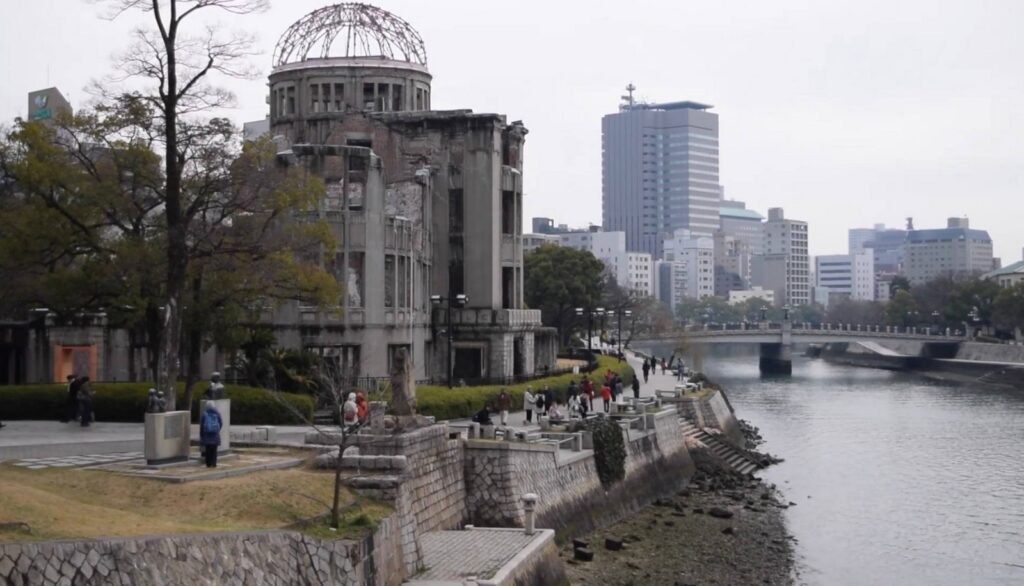
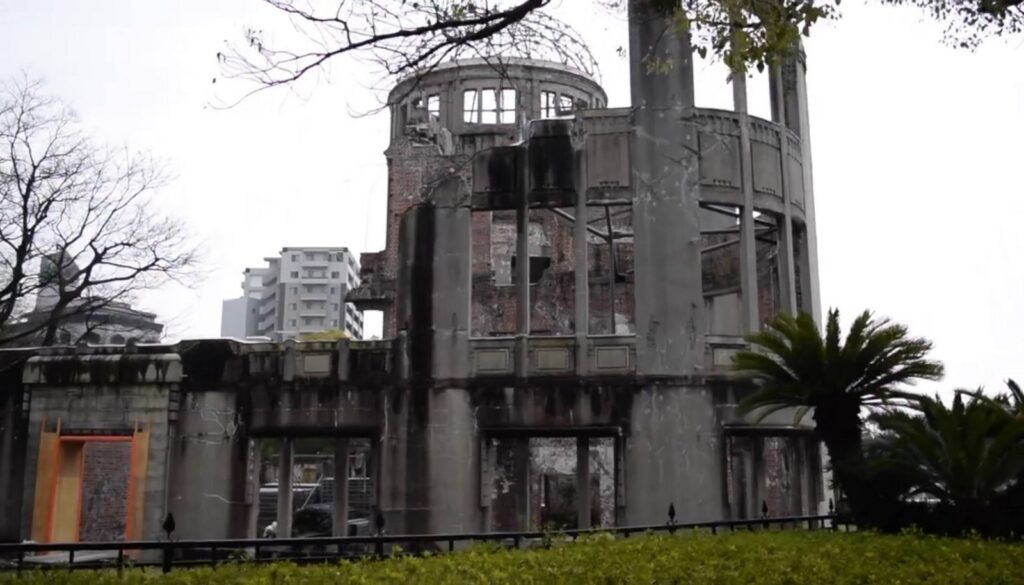
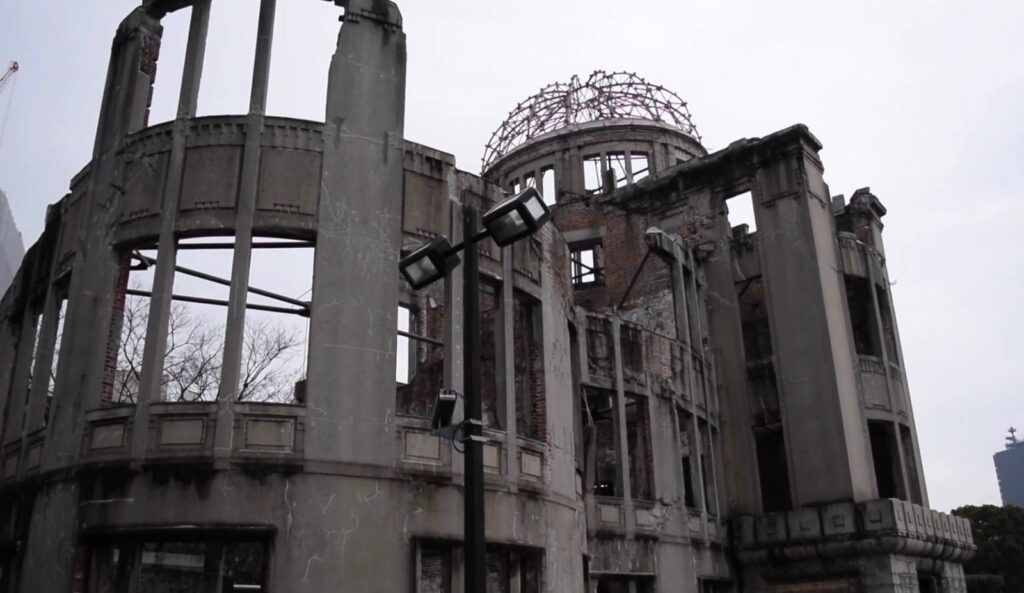
Atomic Bomb Dome
Genbaku Dome
The Atomic Bomb Dome stands as the most haunting visual anchor of the park and one of Japan’s most iconic memorial sites. Originally the Hiroshima Prefecture Industrial Promotion Hall, its resilient frame remained standing amidst the devastation of the 1945 blast. Designated a UNESCO World Heritage Site in 1996, it is preserved exactly as it looked after the explosion. Rather than pausing for a quick photo, take a slow walk along the riverbank; the dome’s presence shifts and deepens from every angle along the Motoyasu River.
Opening Hours: Outdoor viewing at any time.
Free.
Tip from the itinerary expert: Do not photograph the Atomic Bomb Dome only from the closest vantage point. Walk across the Motoyasu River and look back at the ruins from the opposite side; this perspective offers a much clearer sense of how the building sits within the broader landscape of Hiroshima Peace Memorial Park.

Distance/Time: Next to Genbaku Dome-mae streetcar stop.
Hiroshima Peace Memorial Museum
Hiroshima Peace Memorial Museum
As the park’s primary indoor site, the Hiroshima Peace Memorial Museum is often the most emotionally significant part of any visit. The exhibitions meticulously document the city before and after the bombing, detailing the catastrophic impact through personal artifacts. Watches frozen in time, charred clothing, and children’s belongings transform abstract history into deeply personal stories. This museum requires time and emotional space; it is not a site to be squeezed between lighter activities.
Opening Hours: 7:30–19:00 (March–July, September–November); 7:30–20:00 (August); until 21:00 on August 5–6; 7:30–18:00 (December–February). Last admission 30 minutes before closing. Closed December 30–31.
200 yen for adults, 100 yen for high school students, free for children up to junior high school.
Tip from the itinerary expert: Plan your museum visit for a time when your group has plenty of energy. Because the exhibits are so powerful and detailed, it is best to allow for some quiet reflection afterward rather than rushing into another intense activity.
Distance/Time: Inside Hiroshima Peace Memorial Park.
Children’s Peace Monument
Children’s Peace Monument
The Children’s Peace Monument is perhaps the most moving tribute in the park. It is dedicated to Sadako Sasaki and the thousands of child victims of the bombing. Sadako’s story—and her quest to fold one thousand paper cranes—is immortalized here, surrounded by millions of colorful origami cranes sent from schools and visitors worldwide. These bright symbols of hope create a poignant contrast with the history they represent, leaving a lasting impression on everyone who visits.
Opening Hours: Outdoor viewing at any time.
Free.
Tip from the itinerary expert: This is an ideal spot to slow your pace. If the main museum feels overwhelming, the Children’s Peace Monument offers a more visual and symbolic way to connect with the park’s message of peace.
Distance/Time: A short walk from the Atomic Bomb Dome and the central memorial area.
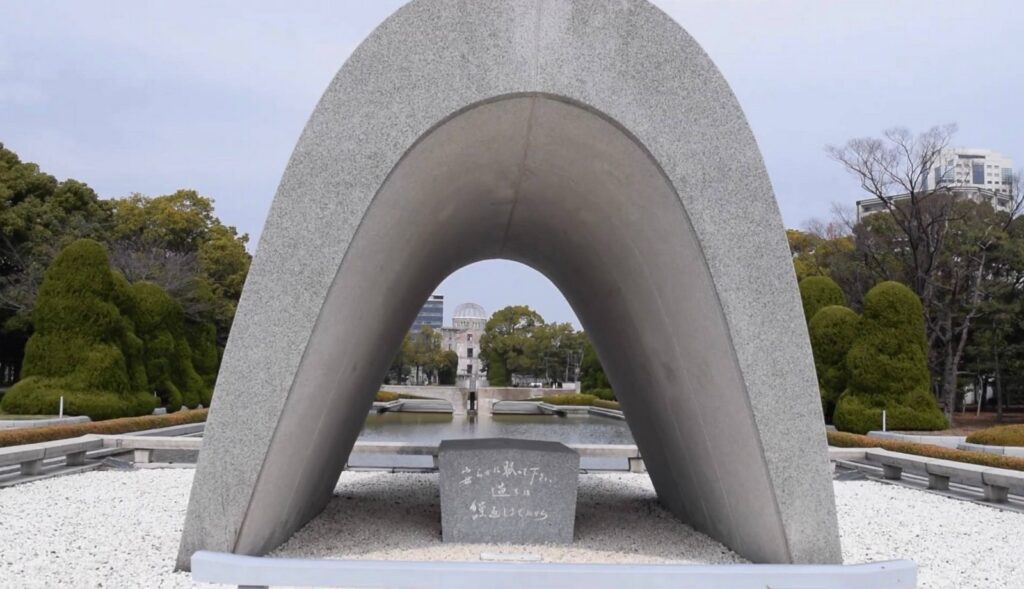
Memorial Cenotaph, Flame of Peace and Pond of Peace
Memorial Cenotaph, Flame of Peace and Pond of Peace
These three elements form the central memorial axis of the park. The arch-shaped Cenotaph is perfectly aligned so that the Atomic Bomb Dome is framed within its view, symbolically linking the past ruins with the present space of mourning. Nearby, the Flame of Peace is designed to burn until all nuclear weapons are abolished, while the Pond of Peace provides a still, reflective surface. These sites are best experienced as a single, unified landscape of remembrance.
Opening Hours: Outdoor viewing at any time.
Free.
Tip from the itinerary expert: Stand directly in front of the Cenotaph and look through the arch toward the Atomic Bomb Dome. This specific viewpoint reveals the architectural logic of Hiroshima Peace Memorial Park more effectively than any map.
Distance/Time: In the central part of Hiroshima Peace Memorial Park.
Hiroshima National Peace Memorial Hall for the Atomic Bomb Victims
Hiroshima National Peace Memorial Hall for the Atomic Bomb Victims
Located near the museum, the National Peace Memorial Hall is a quieter, more contemplative space. It serves as a place to mourn and remember by preserving the names and photographs of the victims, alongside moving survivor testimonies. The Hall of Remembrance, with its hushed atmosphere, offers a necessary space for pause and reflection after the intensity of the museum. Since entry is free, it is a highly recommended addition for those not on a strict schedule.
Opening Hours: Open according to the memorial hall schedule.
Free.
Tip from the itinerary expert: Visit the memorial hall after the central monuments rather than before. The atmosphere of the hall is much more meaningful once the broader story of the park is clear in your mind.
Distance/Time: Near Hiroshima Peace Memorial Museum.
Rest House
Rest House
The Rest House is a rare survivor of the blast, originally a kimono shop located just 170 meters from the hypocenter. Today, it serves a dual purpose as a historical landmark and a visitor facility, housing a tourist information center, souvenir shop, and a quiet cafe. It provides a much-needed practical pause during a visit, allowing you to rest and process the experience within the walls of a building that witnessed the event itself.
Opening Hours: Open according to the facility schedule.
Free access to general visitor areas.
Tip from the itinerary expert: Use the Rest House as a strategic break rather than waiting until you are exhausted. A short pause here helps keep the visit respectful and manageable, especially on longer itineraries.
Distance/Time: Inside Hiroshima Peace Memorial Park, near the main walking route.
Motoyasu River and Motoyasu-bashi Bridge
Motoyasu River and Motoyasu-bashi Bridge
The Motoyasu River defines the physical boundaries of the park and contributes significantly to its peaceful atmosphere. The riverside paths offer the most striking views of the Atomic Bomb Dome, while the bridges—including the historic Motoyasu-bashi—serve as essential landmarks for navigating between the different memorial zones. After the emotional weight of the museum and monuments, the open sky and flowing water provide a gentler, more rhythmic conclusion to the walk.
Opening Hours: Outdoor area accessible at any time.
Free.
Tip from the itinerary expert: Dedicate time to the riverside walk instead of simply moving from one monument to the next. The open vistas along the Motoyasu River offer a sense of space and some of the best photographic angles of the Atomic Bomb Dome.
Distance/Time: Along the edge of Hiroshima Peace Memorial Park.
What Is Near Hiroshima Peace Memorial Park and Worth Visiting
- Orizuru Tower: Orizuru Tower stands close to the Atomic Bomb Dome and works well as a lighter stop after the memorial route. From the upper levels, you can look out over central Hiroshima, the river and the wider Peace Memorial Park landscape. After the museum, this view can feel like a useful pause: it helps connect the memorial area with the living modern city around it.
- Hondori Shopping Street: Hondori is the easiest nearby place for food, cafes, shops and a change of atmosphere after Hiroshima Peace Memorial Park. It is close enough to reach on foot, but the mood is completely different, which helps the day continue more gently after an emotional visit. For families, this is often the most convenient option for a casual meal or a short shopping break without adding another transfer.
- Kamiya-cho Area: Kamiya-cho is useful for transport, underground parking, shopping and moving around the city center. If you arrive by car, this is one of the most logical areas to look for parking before walking toward the park. It also works well as a practical meeting point or a base before continuing to other parts of Hiroshima.
- Hiroshima Bus Center: Hiroshima Bus Center is close to Kamiya-cho and can be helpful if you plan to connect the park with other places in the city or the wider Hiroshima area. It is not a sightseeing stop in itself, but it matters for route planning, especially on a day with several transfers. Keeping this area in mind can save unnecessary backtracking after the park visit.
- Motoyasu River Walk: The riverside around Hiroshima Peace Memorial Park should be treated as part of the visit, not just as a path between monuments. The views toward the Atomic Bomb Dome are especially strong from across the river, and the open space helps soften the emotional weight of the museum and memorials. It is one of the easiest nearby additions if you do not want to build the rest of the day around another paid attraction.
- Hiroshima City Center Food Stops: After visiting the park, it is practical to plan a meal in the central area instead of leaving the district immediately. Hiroshima-style okonomiyaki is one of the city’s key local dishes, and a simple lunch or dinner nearby can make the day feel more balanced. This is especially useful if the museum takes more time and energy than expected.
Tip from the Itinerary Expert: Do not add too many nearby stops after Hiroshima Peace Memorial Park. A strong plan is to combine the park with **one practical nearby area** — such as Hondori or Kamiya-cho — and keep the rest of the day flexible, because the museum and memorials often take more emotional energy than expected.
Who Hiroshima Peace Memorial Park Is Best For
- Travelers visiting Hiroshima for the first time: Hiroshima Peace Memorial Park is the main place to understand the city’s modern history. It gives context to the Atomic Bomb Dome, the museum, the memorial monuments and Hiroshima’s message of peace. Even a short visit should include the central memorial axis and the riverside view toward the dome.
- Families who want a meaningful but manageable visit: The park is open, walkable and easy to navigate, which makes it more flexible than a visit focused only on indoor museums. The Children’s Peace Monument, paper cranes, river paths and open lawns help explain the place in a visual, accessible way. The museum needs more careful pacing, because some exhibits are emotionally heavy and may not suit every child in the same way.
- Travelers interested in history and remembrance: The Atomic Bomb Dome, Memorial Cenotaph, Flame of Peace, Hiroshima Peace Memorial Museum and Hiroshima National Peace Memorial Hall create a complete memorial route. The visit is not only about seeing separate objects, but about understanding how the whole park was designed around memory, loss and the hope for peace. It is worth leaving enough time to read, pause and move slowly between the sites.
- Visitors who prefer walking routes over packed sightseeing: The main locations inside Hiroshima Peace Memorial Park are close to each other, so the visit works very well on foot. The route can be short and focused, or expanded with the museum, the memorial hall and a longer riverside walk. This makes the park a good choice for travelers who want a structured experience without complicated logistics.
- People who need a quieter pace during a city trip: Although the park is in central Hiroshima, its paths, water views and memorial spaces create a calmer rhythm than the surrounding commercial areas. It is still a solemn place, not a casual picnic park, but the open layout makes it easier to pause between intense stops. This matters when the same day also includes shopping, transport connections or another major attraction.
- Travelers with limited time in Hiroshima: A focused route through the Atomic Bomb Dome, Children’s Peace Monument, Memorial Cenotaph and Flame of Peace can give a strong first impression even without entering every facility. If there is more time, Hiroshima Peace Memorial Museum and Hiroshima National Peace Memorial Hall add much deeper context. The important thing is not to rush through the park only for photos, because the meaning of the place reveals itself gradually.
Click here to learn more about creating a personal itinerary
Tip from the Itinerary Expert: For a first visit, plan Hiroshima Peace Memorial Park as the main activity of the day, not as a short stop between unrelated attractions. If time is limited, prioritize **Atomic Bomb Dome, Children’s Peace Monument, Memorial Cenotaph, Flame of Peace and the riverside view** before adding extra nearby sites.
2-Day Hiroshima & Miyajima Itinerary
Trip Duration: 2 days
Day 1: Memorial Heritage & City Life
10:00–10:15 — Arrival at the Memorial Park. Start at Hiroshima Station and catch the streetcar to Genbaku Dome-mae. The journey takes approximately 13 minutes; fares are 240 yen for adults and 120 yen for children. If arriving by car, use the underground parking in Kamiya-cho / Hondori and walk to the park.
10:15–11:00 — Atomic Bomb Dome & Motoyasu River. Begin at the Dome, the skeletal remains of the former Industrial Promotion Hall and a haunting symbol of the city. For the best experience, walk slowly along the Motoyasu River and cross the bridge to capture wider views. Allow 45 minutes to read the plaques and reflect on the site’s significance.
11:00–12:15 — The Central Memorial Axis. Head into the heart of the park to visit the Children’s Peace Monument, the Memorial Cenotaph, and the Flame of Peace. Moving through these sites in one continuous walk creates a more powerful narrative than visiting them as isolated stops. Plan for about 1 hour 15 minutes here.
12:15–13:15 — Lunch in Hondori. Stroll toward Hondori Shopping Street, a vibrant covered arcade. Trying Hiroshima-style okonomiyaki is a must; expect to spend between 900–1,500 yen. Alternatively, local ramen or udon shops offer excellent meals for 1,000–2,000 yen.
13:15–15:15 — Peace Memorial Museum. Return to the park for the museum. The exhibits document the city’s history through personal items—watches, clothing, and photographs—that tell the human story of the blast. Admission is 200 yen. We recommend at least 2 hours for a thoughtful, unhurried visit.
15:15–16:00 — Reflection at the Rest House. Visit this rare surviving structure, which now houses a cafe and souvenir shop. It’s an ideal place for a quiet break after the museum. If you prefer fresh air, find a spot by the Motoyasu-bashi bridge to watch the river.
16:00–17:15 — National Peace Memorial Hall. Conclude your memorial circuit at the Memorial Hall for the Atomic Bomb Victims. Entry is free. The hushed, contemplative atmosphere and victim archives offer a deeply personal conclusion to the day’s events. Allow 45–60 minutes.
17:15–18:00 — Orizuru Tower Views. Finish the day at Orizuru Tower for panoramic views of the park and, on clear days, Miyajima. If you’re feeling tired, a simple riverside stroll is a great alternative. For dinner, explore the Okonomimura district for a classic Hiroshima night out (budget 3,000–5,000 yen per person).
Tip from the itinerary expert: To ease into the emotional depth of the site, start with the outdoor monuments and the river. Entering the museum after you’ve familiarized yourself with the park’s layout and atmosphere makes for a much more balanced experience, especially for families.
Overnight Location: Hiroshima city center, near Hondori or the Peace Memorial Park
Day 2: Gardens, Castles & Island Views
10:00–12:00 — Shukkeien Garden. Begin with a peaceful stroll through this historic landscape garden. Its paths, miniature forests, and tea houses provide a refreshing contrast to Day 1. Admission is 350 yen. It’s a photogenic and gentle start for families and solo travelers alike.
12:00–13:00 — Hiroshima Castle Grounds. Walk to the nearby castle. Note that the main keep is closed for structural maintenance since March 2026, but the moats and reconstructed gates remain beautiful. It’s a perfect short stop for photography.
13:00–14:00 — Downtown Lunch. Return to the city center. If you haven’t tried Okonomimura yet, it’s a great chance to see several okonomiyaki chefs in action. Budget 1,000–2,000 yen for a satisfying meal.
14:00–15:30 — River Cruise Experience. Head to Motoyasu Pier for a 25-minute river cruise (approx. 1,500 yen). Seeing the Atomic Bomb Dome and the city’s bridges from the water offers a fresh, low-effort perspective on Hiroshima’s recovery.
15:30–18:00 — Optional: Miyajima Extension. If energy levels allow, board the World Heritage Sea Route boat directly from the park to Miyajima (2,400 yen for adults). Keep the island visit focused on the Torii gate and the waterfront shops. If you prefer a relaxed pace, stay in the city for coffee and light shopping in the arcade.
Tip from the itinerary expert: Keep the second day flexible. If you feel ‘museum-fatigued,’ prioritize the garden and the river cruise. Miyajima is beautiful but requires a fair amount of walking, so only add it if you’re up for one more adventure.
Overnight Location: Hiroshima city center
Traveler Experiences at Hiroshima Peace Memorial Park

Emily Carter
April 2018

We arrived shortly after lunch. Despite the school groups, the park remained remarkably calm. The paper cranes at the Children’s Peace Monument left a lasting impression on me, and my daughter was quiet for a long while afterward. It is a deeply moving and essential place to visit.
Daniel Morgan
October 2023
The park is very easy to navigate on foot, with the Atomic Bomb Dome, Cenotaph, and museum all located close together. The museum felt quite crowded and stuffy during our visit. My advice: explore the outdoor memorials first, then visit the museum, and finish with a coffee break in nearby Hondori.
Laura Bennett
July 2019
It is a powerful place, but honestly, it was overwhelming for our younger child. Some museum displays are quite graphic, so we left earlier than intended. The outdoor areas worked better for us. The river, the cranes, and the open monuments provided space to breathe. I am glad we went, but I truly underestimated the emotional weight.
Michael Adams
November 2024

Very well-organized and peaceful for such a central location. Taking the streetcar from Hiroshima Station to Genbaku Dome-mae was straightforward. The most profound moment for me was standing at the Cenotaph and seeing the Atomic Bomb Dome framed perfectly in the distance.
Sophie Turner
May 2017
I thought the museum would be the highlight, but the outdoor park moved me more. The river was quiet, the cranes added a splash of color, and the Atomic Bomb Dome looked almost surreal against the modern skyline. We spent nearly three hours there, completely losing track of time.
James Wilson
August 2025
An important site, but August was difficult. It was hot, crowded, and emotionally exhausting. The museum line moved slowly, and our kids were tired before we even finished. I highly recommend arriving exactly at opening time or reconsidering the museum on very hot days.
Natalie Brooks
March 2022
Stopping at the Rest House was a great decision. The park has many heavy memorial stops, so having a place for information and a quick rest was very helpful. A quiet walk along the Motoyasu River afterward provided a much-needed sense of calm.
Thomas Reed
December 2016
It was a cold morning with almost no crowds, and the whole area felt very still. We focused on the Atomic Bomb Dome, the Children’s Peace Monument, and the Cenotaph before entering the museum. The entry fee is minimal, but the experience itself is heavy and far from ‘easy’.

Tips from the Itinerary Expert

Start at Genbaku Dome-mae for a logical flow
I recommend beginning your route at Genbaku Dome-mae rather than the museum. Walking slowly toward the museum allows the Atomic Bomb Dome, Motoyasu River, and the Children’s Peace Monument to introduce the history step by step, preventing an overwhelming start at the most difficult part of the site.
Capture the river view before moving closer
When visiting the Atomic Bomb Dome, I first head to the Motoyasu River side to view the building from a distance. The perspectives are much clearer for photos, and it helps everyone understand how the dome remains connected to the entirety of Hiroshima Peace Memorial Park.
Visit the museum in the middle of your day
I avoid making the museum your first or last stop. Midday is often ideal: you will already have a feel for the park’s layout, and energy levels are usually still high enough for the detailed exhibition. Afterward, plan a quiet river walk to process the experience.
Set expectations for children beforehand
Before entering the museum, I suggest explaining that this is a place for reflection, not a typical interactive exhibit. Knowing that they will see personal items like clothing and photographs helps children react more calmly and gives the family permission to step out if it becomes too intense.
Plan a strategic break at the Rest House
Don’t wait until the group is exhausted. After the museum or central memorials, take a planned pause at the Rest House. With its tourist information, cafe, and rest space, it provides a necessary reset that makes a heavy visit feel much more manageable.
Allow extra time at the Children’s Peace Monument
If younger travelers start to lose focus, slow down at the Children’s Peace Monument. The colorful paper cranes offer a visual narrative that is often easier for children to grasp than long historical explanations. I usually allocate more time here than a map might suggest.
Pause at the Cenotaph to understand the park’s design
At the Memorial Cenotaph, stand in the center and look through the arch toward the Atomic Bomb Dome. This single vantage point explains the intentional ‘Peace Axis’ of the park better than any map, making the entire layout suddenly feel clear and meaningful.
Save Hondori for a post-visit reset
I suggest keeping Hondori Shopping Street for after you finish the memorial route. The lively energy, shops, and food are much more welcome once the serious portion of your visit is complete, and it keeps the rhythm of the day from feeling disjointed.
Parking tips for those arriving by car
If you are driving, look for parking in the Kamiya-cho or Hondori areas rather than trying to get closer to the park. The memorial zone is a compact walking area, and attempting to drive between sites will only waste time. The route is far more effective on foot.
End with the National Peace Memorial Hall
For a quieter, more contemplative ending, visit the Hiroshima National Peace Memorial Hall after the main museum. It is free and offers a hushed atmosphere with personal testimonies and archives, providing a peaceful conclusion to your journey.
Insights from the Itinerary Expert
I visited Hiroshima Peace Memorial Park in October 2023, and one detail resonated with me more than I expected: after leaving the museum, silence feels like a necessity. While the Atomic Bomb Dome, the Children’s Peace Monument, and the paper cranes are essential for a family route, the museum is a far more intense experience. Some galleries are quite graphic; younger children may become quiet or ask to leave. I strongly advise against forcing a family through every display simply because the entry is inexpensive—quality of reflection matters more than quantity.
The outdoor circuit offers a much better pace for reflection. We recommended walking from Genbaku Dome-mae toward the river, passing through the Cenotaph area before entering the museum. The most challenging aspect was the crowd flow near the entrance; inside, the air can feel heavy and the movement slow, making the Rest House a vital pause for decompression afterward.
Hiroshima Peace Memorial Park is a remarkable place, but it requires a thoughtful approach. It demands time, quiet intervals, and a route that carefully balances solemn remembrance with riverside views and lighter stops. We can help you design a personal itinerary for Hiroshima and Japan that maintains this delicate balance without overwhelming your journey.
Expert Tip: Always have a ‘light’ activity planned immediately after the museum—like a boat cruise or a walk in Shukkeien Garden—to help children transition back to a positive mindset.
Hiroshima Peace Memorial Park: Prices & Budgeting
| Name | Amount | Description |
|---|---|---|
| Budget / Capsule Hotel | 5,000–10,000 JPY | Per night. Simple rooms for two in the city center typically fall within this range, though prices may increase during peak seasons. |
| Mid-range Hotel for two | 10,000–18,000 JPY | Per night. A realistic budget for business or chain hotels conveniently located near Hondori or Hiroshima Station. |
| Comfortable 4-star Hotel for two | 18,000–35,000 JPY | Per night. Ideal for travelers seeking more space and premium comfort close to the park or main city center. |
| Hiroshima Streetcar (Single Ride) | 240 adult / 120 child JPY | A convenient way to travel between Hiroshima Station, Genbaku Dome-mae, and the Hondori shopping district. |
| 1-Day Streetcar Pass | 700 adult / 350 child JPY | Best value for those planning multiple trips around central Hiroshima throughout the day. |
| Inexpensive Lunch | 1,000–2,000 JPY | Per person. Budget for a satisfying meal of ramen, curry, or udon at local shops near the memorial area. |
| Hiroshima-style Okonomiyaki | 900–1,500 JPY | Per person. A must-try local specialty found in numerous restaurants around the downtown area. |
| Mid-range Dinner | 3,000–5,000 JPY | Per person. Includes a full meal with drinks at a standard restaurant in central Hiroshima. |
| Peace Memorial Park Entry | Free JPY | There is no entrance fee to explore the park grounds and view the main outdoor monuments. |
| Peace Memorial Museum | 200 adult / 100 student JPY | A very affordable entrance fee for a profound and essential historical experience. |
| National Peace Memorial Hall | Free JPY | A quiet, cost-free memorial hall located near the museum, ideal for reflection. |
Hiroshima Peace Memorial Park FAQ
What we propose

Emma Heidi
Customer Experience Manager
Take all the stress out of planning your trip!
With our experts, you can create the perfect itinerary for you – complete, comfortable, and tailored to all your dreams, wishes, and needs.
We take care of every little detail, so you can simply focus on enjoying your journey.
We’ve been designing personalized itineraries since 2015, and over the years we’ve created thousands of custom itineraries for happy clients.

Save time, avoid confusion – we do the work for you. Our service saves you weeks of searching, reading, comparing, and complicated planning. Instead of wasting endless hours – you receive a ready-to-use, accurate and clear itinerary.

A tailor-made itinerary – built just for you. Your itinerary is personally designed based on our experts’ real field experience and genuine feedback from hundreds of travelers – including hidden discoveries and insider tips that don’t appear in any travel guide.

Smart accommodation selection – often saves you hundreds or even thousands of dollars. We help you choose verified and recommended places to stay, checking availability for your exact travel dates. Sometimes we suggest hotels not “in the center,” but in safe, convenient, and highly strategic locations – which can significantly reduce travel costs and save you even thousands of dollars.

We’re by your side even during the trip. We stay with you throughout your vacation – providing professional help whenever needed. If the weather changes, there’s a strike, a local event, heavy crowds, or any unexpected situation – we are here to update, guide, and adjust your itinerary in real time.

Easy-to-use itinerary – with direct navigation links. Your itinerary includes direct Waze / Google Maps links – no need to search for parking addresses, no stress, no mistakes. Just tap – and go.

Service cost: from only $420. (Special price for short itineraries up to 5 days). Clients tell us the itinerary saves them costly mistakes, fines, wrong choices – plus exclusive discounts on car rentals, better-priced accommodations, and money-saving local tips.
Want to know if it’s really worth it?
Take a look at the experiences of travelers who built their personal itinerary with us.
Click here and let’s start building the itinerary that will save you time, money, and stress – and turn your vacation into perfection.
Of course, your first inquiry is completely free – with no commitment whatsoever.
How it works


- You are welcome to contact us
- We discuss your trip
- You fill out a special form
- We create your itinerary
- You get it with all useful tips
- We are in touch with you all the time