My love for Japan began the moment I arrived in Tokyo. The country amazed me with its harmony of ancient traditions, cutting-edge technology, breathtaking nature, and a culture unlike any other. Since then, Japan has become a part of my life, and I return there again and again. Today I help travelers discover the real Japan: I create personalized itineraries, give lectures, and prepare guests for their unforgettable journey. I would be delighted to open Japan for you too!

Yamaguchi
Yamaguchi lies at the far western edge of Honshu, away from the familiar Tokyo–Kyoto–Osaka route. It is a destination that feels much richer when treated as a journey across the whole prefecture rather than a quick stop in a single city. Its charm lies in a perfect balance: quiet historic streets, expansive sea views, soothing hot springs, and dramatic limestone scenery. This is a place that still feels pleasantly open, even when its landmarks clearly deserve more international attention.
This is not a destination to rush through with a tight checklist. Yamaguchi works best at a slower pace: spend a day exploring Yamaguchi City, another for Akiyoshido Cave (Akiyoshido Cave) and the Akiyoshidai Plateau (Akiyoshidai Plateau), then allow extra time for Shimonoseki, Hagi, Iwakuni, or the iconic Tsunoshima Bridge. For families, the prefecture is especially comfortable when the route mixes scenic drives, outdoor stops, short walks, and easy evenings in a traditional onsen area.
Getting around Yamaguchi: trains, buses and the moments when a car really helps
Yamaguchi fits naturally into a wider trip through western Japan. From Hiroshima (Hiroshima), it is easy to continue toward Yamaguchi City, Iwakuni (Iwakuni), or Shimonoseki (Shimonoseki), while the shinkansen journey from Osaka to Shin-Yamaguchi takes about **2.5 hours**. From Tokyo, flying to Yamaguchi Ube Airport (Yamaguchi Ube Airport) is often the smarter option, especially if your trip begins around central Yamaguchi or the Akiyoshido area.
Once inside the prefecture, the best transport choice depends on your itinerary. Yamaguchi City and Iwakuni are accessible by public transport; the city itself offers pleasant walking routes toward the Rurikoji Temple Five-Story Pagoda (Rurikoji Temple) and the quiet Ichinosaka River area. In Iwakuni, check your arrival station carefully: **Shin-Iwakuni Station and Iwakuni Station are located in different parts of the city**, which significantly changes your next transfer.
Buses are useful for major nature stops, especially Akiyoshido Cave. The route from Shin-Yamaguchi to Akiyoshido is priced at **¥1,170 one way**, and the bus from Yamaguchi Ube Airport via Shin-Yamaguchi is about **¥2,080**. A taxi from Yuda Onsen or Yamaguchi to the cave costs around **¥7,000–¥8,000**, which can be a practical choice for families or small groups when the bus timetable doesn’t align with your plans.
For the northern coast, Tsunoshima Bridge (Tsunoshima Bridge), Motonosumi Inari Shrine (Motonosumi Inari Shrine), and Nagato Yumoto Onsen, a rental car makes the journey much smoother. Public transport in these areas is limited, and the distances between viewpoints can be tiring if you are traveling with children or heavy luggage. A compact rental car costs around **¥7,000–¥10,000 per day**, and on a route featuring coasts, caves, and plateaus, that flexibility is often worth the investment.
If you travel without a car, keep your route close to rail and bus hubs: Yamaguchi City, Shin-Yamaguchi, Shimonoseki, Iwakuni, and Hagi. This makes the trip realistic and helps you avoid long waits between connections. The simplest structure works best: choose one main area for the day and add one nearby viewpoint or food stop instead of trying to cross the whole prefecture in one ambitious loop.
Click here to learn more about creating a personal itinerary
Tip from the itinerary expert: for a first trip to Yamaguchi, **use trains between cities and rent a car only for the spread-out nature days**. This keeps the route comfortable without making every day depend on driving, parking, and navigation.

When to visit Yamaguchi: the best seasons for scenery, family stops and an easier pace
Spring is one of the best times for Yamaguchi because the prefecture brings together cherry blossoms, riverside walks, and historic scenery without the intense crowds of Japan’s classic routes. In Yamaguchi City, the Ichinosaka River (Ichinosaka River) becomes especially atmospheric when the cherry trees bloom, while in Iwakuni, Kintai Bridge (Kintai Bridge) and Kikko Park are stunning during sakura season. Spring perfectly suits a route built around gentle walks, cafes, and temple gardens.
Late April and early May add a playful family note thanks to koinobori, the carp streamers connected with Children’s Day on **5 May**. Roadside Station Niho-no-Sato, Nijigahama Beach, and Sabagawa Koinobori in Hofu (Hofu) are excellent places to see them. Nijigahama Beach is a little over an hour by car from central areas or accessible via a short walk from Hikari Station; keep in mind that the Sabagawa Koinobori display is usually short-lived and time-sensitive.
Summer works best when the route focuses on the coast and cooler underground stops. Tsunoshima Bridge and the local beaches feel most natural in warm weather, especially when the day is planned around views and food breaks rather than heavy walking. Akiyoshido Cave is a perfect summer escape, as its internal temperature stays around **17 °C**, providing a refreshing break from the heat and humidity.
Autumn is one of the easiest seasons for a full route across the prefecture. The Akiyoshidai Plateau turns a striking golden color, Nagato Gorge (Nagato Gorge) is famous for its autumn foliage, and driving days are more pleasant than in the peak of summer. This season is ideal for combining nature viewpoints, historic towns, and onsen evenings without the fatigue of hot weather.
Winter offers a quieter version of Yamaguchi: hot springs, calm city walks, and fewer crowds. Kintai Bridge is beautiful in the cold, especially on rare snowy days, and Rurikoji Temple maintains a strong, serene atmosphere. The trade-off is simple: there is less greenery and shorter daylight hours, and cloudy weather can make the sea views look less vivid than in the brighter spring or summer months.

Since 2015, our website has specialized in individual planning of unique routes, taking into account personal preferences and desires.
Each of you will receive a unique PDF file from us, which contains everything you need: travel routes, car rentals, hotels, the best tourist attractions, attractions for kids and everything you need for a perfect vacation.
During the trip, we are available for you by phone via WhatsApp.
Our personal service provides information from A to Z, taking into account many small details that can become a decisive factor on the way from a wasted trip to an unforgettable vacation.
Our service will make your trip comfortable, save a lot of time on planning and preparation, and most importantly – will allow you to become freer and fully enjoy the pleasure of the trip.
Tip from the itinerary expert: **for a balanced family route, choose spring or autumn**. Spring offers blossoms and koinobori, while autumn brings easier walking weather and vibrant scenery; summer works best if your plan focuses on beaches, coastal drives, and Akiyoshido Cave.
Top attractions in Yamaguchi for a scenic, easy-to-plan family route
A well-balanced Yamaguchi itinerary avoids the trap of a long temple checklist. The most rewarding trips mix one or two historic sites with expansive landscapes, coastal views, and local food stops. Since the prefecture is quite spread out, it is most efficient to group your route by area: Yamaguchi City, Akiyoshidai, the northern coast, Hagi, and Iwakuni.
Rurikoji Temple Five-Story Pagoda
The Rurikoji Temple Five-Story Pagoda (Rurikoji Temple) is the defining image of Yamaguchi City. Built in 1442, this national treasure explains why the city is often called the “Kyoto of the West.” The pagoda stands elegantly in Kozan Park, surrounded by a pond and seasonal flowers that offer beautiful angles for photography. It is widely considered one of Japan’s three greatest five-story pagodas. This visit is perfect even for those on a tight schedule, as the main appeal is the outdoor architecture and the serene garden atmosphere. It serves as an excellent introduction to the prefecture: cultural, memorable, and physically easy for all ages.
Opening Hours: The park area can be visited quite flexibly, but temple facilities and special viewings may have their own opening times.
The pagoda and Kozan Park are free to visit; the temple museum archives are listed at **200 JPY for adults**.
Tip from the itinerary expert: **come early in the day or closer to evening** if your schedule allows. The softer light and the reflection in the pond make this stop feel much more magical than a quick midday photo visit.
Distance/Time: About 40 minutes on foot from Yamaguchi Station; 30 minutes is usually enough for the pagoda and park area.
Akiyoshido Cave
Akiyoshido Cave (Akiyoshido Cave) is a primary reason to include Yamaguchi in a western Japan itinerary. Hidden beneath the Akiyoshidai Plateau, it features a dramatic limestone landscape with flowing water and massive chambers. The well-lit paths make the experience comfortable even for those who aren’t typical cave explorers. The main tourist trail is approximately **1 km**, and the internal temperature remains a steady **17 °C**, making it a perfect refuge during the summer heat. For children, it feels less like a nature walk and more like a real underground adventure, though sturdy shoes are recommended as the floor can be damp.
Opening Hours: Check the current schedule before visiting, especially if you are combining the cave with buses or the plateau.
Listed ticket prices: **1,300 JPY adult / 1,050 JPY middle school student / 700 JPY elementary school child**.
Tip from the itinerary expert: if you are visiting without a car, **build the cave visit around the bus timetable first**. The bus from Shin-Yamaguchi to Akiyoshido takes about **45 minutes** and costs **1,170 JPY one way**; a single missed connection can disrupt your entire day.
Distance/Time: About 45 minutes by bus from Shin-Yamaguchi; the cave route itself is about 1 km.
Akiyoshidai Plateau
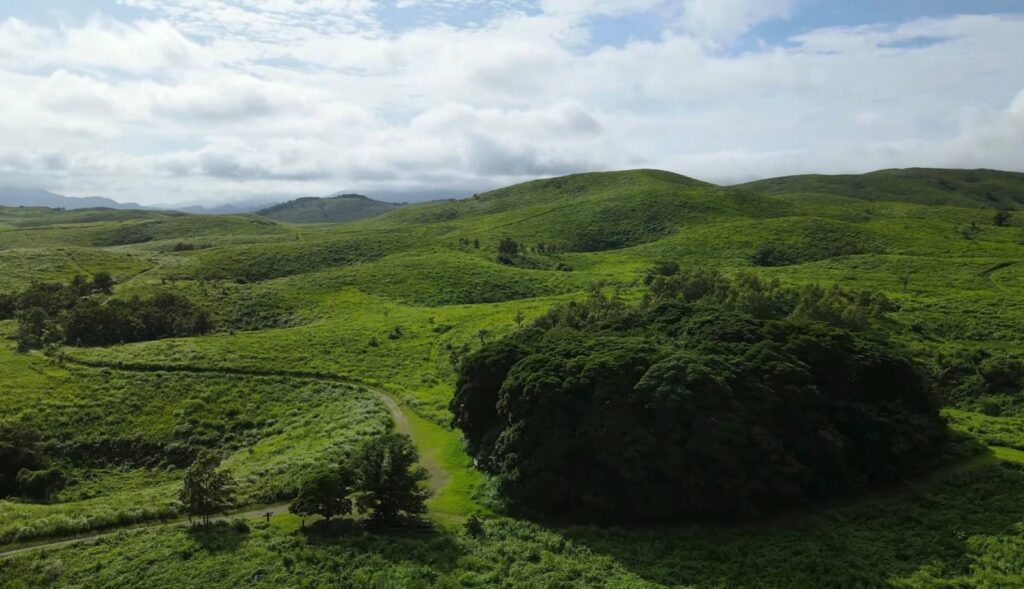
Akiyoshidai Plateau (Akiyoshidai Plateau) reveals a completely different side of Yamaguchi: rolling grasslands dotted with limestone formations and panoramic views that shift with the seasons. It is the natural counterpart to Akiyoshido Cave, and the experience is only complete when you see both the subterranean world and the karst landscape above. This scenery is ideal for a road trip, as you can enjoy the views from various observation points, hiking trails, or even right from your car. In autumn, the golden pampas grass creates a warm, atmospheric glow, showcasing the true scale of this unique geological formation.
Opening Hours: Outdoor areas are best planned for daylight hours and clear weather.
No general plateau ticket price is listed in the provided materials.
Tip from the itinerary expert: **do not separate Akiyoshidai Plateau from Akiyoshido Cave unless you are extremely short on time**. Together they create a much stronger experience: explore the cool underground world first, then head up to the plateau for fresh air and open horizons.
Distance/Time: Best combined with Akiyoshido Cave on the same day.
Tsunoshima Bridge
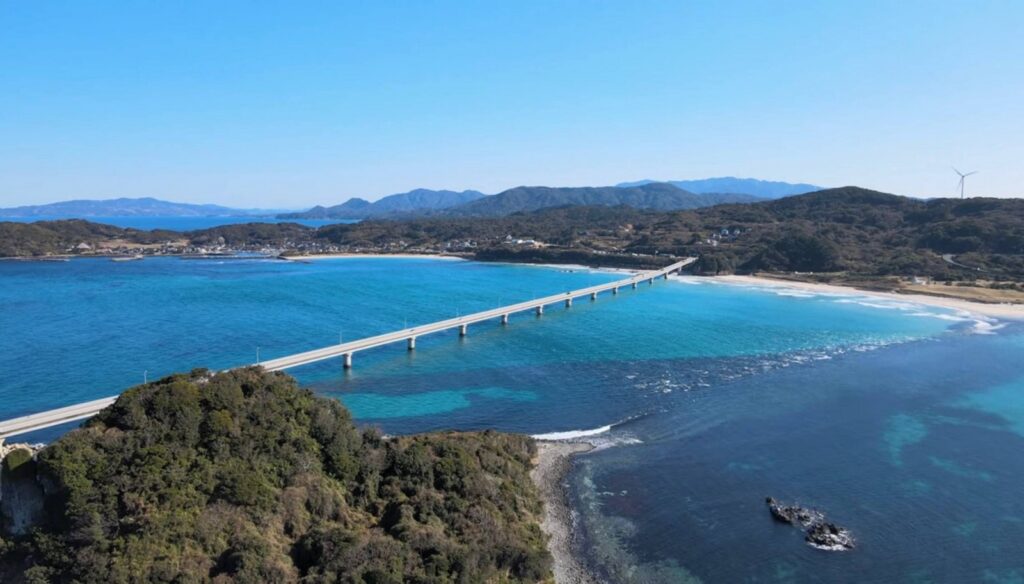
Tsunoshima Bridge (Tsunoshima Bridge) is one of the most photogenic coastal landmarks in Japan, stretching across vibrant emerald waters toward a small offshore island. Opened in 2000, it is one of the nation’s longest toll-free bridges, featuring a gentle curve that harmonizes with the coastline. This is more than just a transit point; the area is best enjoyed by taking time at the viewpoints to admire the contrast between the white sand and blue sea. It integrates perfectly into a driving day that includes the northern coast, Motonosumi Inari Shrine, or Nagato Yumoto Onsen.
Opening Hours: The bridge is an outdoor scenic drive, but the views are best in daylight and clearer weather.
Free to cross; main costs involve car rental, fuel, and parking on the island.
Tip from the itinerary expert: **plan Tsunoshima Bridge as part of a driving day, not as a public transport detour**. With a car, it links naturally with other coastal spots; without one, the logistics are significantly more difficult.
Distance/Time: Best visited by car as part of a northern coast route.
Motonosumi Inari Shrine
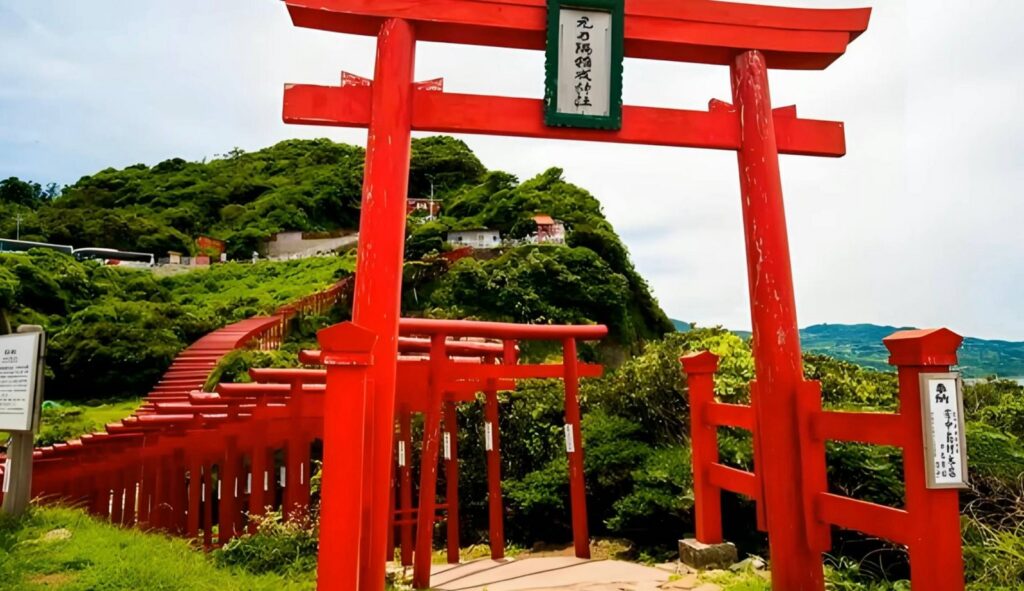
Motonosumi Inari Shrine (Motonosumi Shrine) offers one of Yamaguchi’s most striking vistas, with 123 vermilion torii gates winding down a rugged cliffside toward the Sea of Japan. The vivid red gates against the deep blue waves create a dramatic visual impact far beyond a typical shrine visit. A unique feature is the offering box perched high atop the final gate; successfully tossing a coin into it is said to bring good fortune. This is best treated as a scenic coastal stop, fitting well with other northern attractions rather than a city-centric itinerary.
Opening Hours: Plan the visit for daylight and keep some flexibility for wind and coastal weather.
Shrine entry is free; parking is typically **300 JPY for the first hour**, capped around **500 JPY**.
Tip from the itinerary expert: **combine Motonosumi Inari Shrine with Tsunoshima Bridge only if you have a rental car**. On a map they look close, but in practice, they are best visited as part of a dedicated coastal driving route.
Distance/Time: Best reached by car on a northern coast itinerary.
Hagi Castle Town
Hagi Castle Town (Hagi) preserves the authentic atmosphere of an Edo-period samurai district with its iconic white-plaster walls and narrow lanes. It is ideal for travelers who enjoy history without the formality of a heavy museum tour; the charm lies in wandering the streets and soaking in the town’s quiet rhythm. Key sites like the Shokasonjuku Academy add historical depth to the trip. When visiting with children, it’s best to avoid over-scheduling historic buildings—a relaxed walk paired with a local snack or tea break is usually much more enjoyable.
Opening Hours: Historic streets can be explored during the day; individual residences and sites may follow separate schedules.
Ticket details depend on the specific residence or site chosen.
Tip from the itinerary expert: **use Hagi as a slow half-day or overnight stop** rather than a rushed detour. Its true appeal is found in the quiet streets and residential walls, so the itinerary needs plenty of breathing room.
Distance/Time: Best planned as a separate area, especially when combining Yamaguchi City and northern routes.
Kintai Bridge and Iwakuni Castle
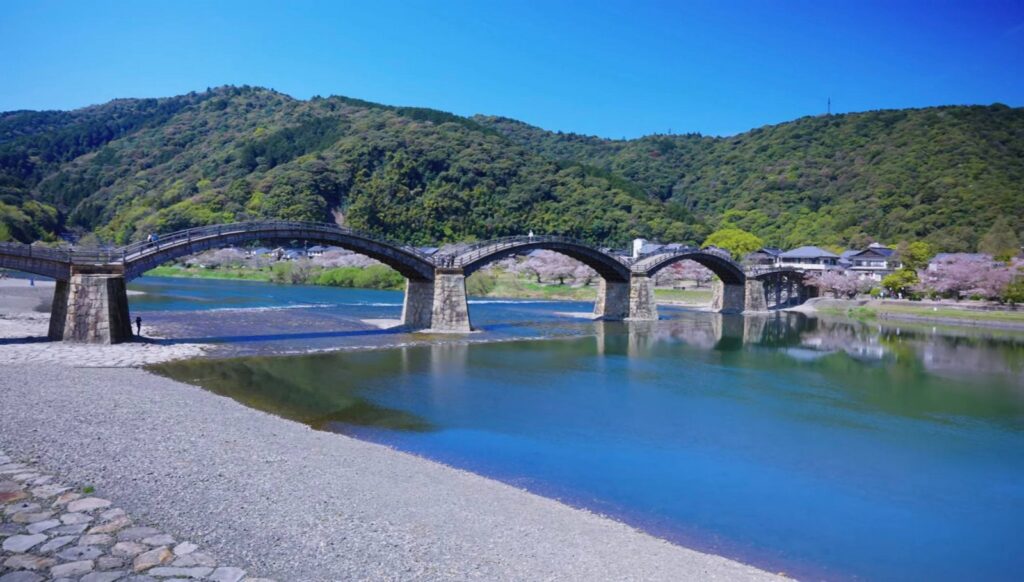
Kintai Bridge (Kintai Bridge) and Iwakuni Castle (Iwakuni Castle) form one of the most family-friendly sightseeing pairs in the region. The bridge is world-renowned for its five wooden arches, while the castle perched atop the hill offers sweeping views of the Nishiki River and the surrounding valley. The area is a complete destination: you can cross the bridge, explore Kikko Park, take the ropeway to the castle, and sample local specialties like Iwakuni-style pressed sushi. While spring blossoms are legendary here, the site remains a strong day-trip option from Hiroshima or a key stop on a wider Yamaguchi journey.
Opening Hours: Check the current hours for the ropeway and castle before planning the day.
Combined tickets for the bridge, ropeway, and castle are typically available at the site.
Tip from the itinerary expert: **always verify if your train arrives at Shin-Iwakuni or Iwakuni Station**. They are far apart, and arriving at the wrong one can make the final transfer to the bridge much more complicated.
Distance/Time: From Hiroshima, Iwakuni is about 50 minutes by local train; from Shin-Yamaguchi, it is 30 minutes by shinkansen.
Natural places in Yamaguchi: caves, coast roads, plateaus and quiet scenic routes
- Akiyoshidai Plateau. This is Yamaguchi’s signature landscape and one of the most memorable open-air stops in the prefecture. The plateau (Akiyoshidai Plateau) is famous for its vast karst scenery, rolling grasslands, and unique limestone formations. Walking trails offer sweeping views that shift beautifully with the seasons; it is especially striking in autumn when the grass turns golden, though spring brings a refreshing vibrant green. On a family route, don’t treat the plateau as just a quick roadside photo op. Leave enough time for the viewpoints and a quiet walk after exploring the cave.
- Akiyoshido Cave. Akiyoshido Cave (Akiyoshido Cave) offers a completely different nature experience: cool air, damp stone, and massive subterranean chambers. The tourist route is about **1 km** long, well-lit, and easy to navigate, though sturdy shoes are essential as the floor can be wet. Inside, the temperature stays around **17 °C**, making it one of the best summer escapes in the prefecture. Children often love it, as the walk feels more like an underground expedition than a standard hike.
- Tsunoshima Island and Coast. Tsunoshima (Tsunoshima) is best enjoyed as a coastal driving day rather than a quick bridge crossing. While the bridge itself is iconic and photogenic, the island’s beaches, lighthouse, and hidden lookouts make the journey feel complete. Clear weather is key here, as the vibrant blue of the sea is the main attraction, so it’s wise to keep your plans flexible. In summer, this area is perfect for a seaside lunch and a relaxed beach break.
- Omijima Island. Omijima (Omijima) introduces a wilder maritime landscape to the itinerary, featuring jagged cliffs, sea caves, and crystal-clear water. Often called the “Alps of the Sea,” it offers dramatic coastal formations best seen by boat or via its scenic walking paths. It suits travelers looking for a more rugged experience away from the standard city routes. To get the most out of it, build your northern coast itinerary with plenty of time rather than trying to squeeze it in at the end of a busy day.
- Nagato Gorge. Nagato Gorge (Nagato Gorge) is a premier spot for enjoying lush greenery and rushing water. It provides a peaceful forest contrast to the open karst plateaus and coastal roads. Autumn is the peak season here, when the changing foliage gives the gorge incredible depth and color. For a family outing, focus on a manageable section of the walking path rather than committing to a long, tiring hike.
- Nagato Yumoto Onsen area. Nagato Yumoto Onsen is more than just a place to stay; it’s a tranquil end to a day of exploring. This hot spring town is a perfect final stop after visiting the coast or the caves, allowing for a calmer evening rhythm. This is particularly helpful for families: after a day of sightseeing and transfers, a soak in the onsen provides much-needed rest for both parents and children.
Tip from the itinerary expert: **do not put Akiyoshidai, Tsunoshima, Omijima and Nagato Gorge into one day**. They are all nature-focused, but they belong to different route logic; choose one main natural area per day and build the rest of the plan around it.
Top 5 hidden gems in Yamaguchi for a more local route
- Beppu Benten Pond. This small, mystical pond (Beppu Benten Pond) is a beautiful short stop on the way to the Akiyoshidai area. The water is incredibly clear, originating from the karst region’s spring, and it creates soft, glass-like reflections of the surrounding trees. It’s a quiet, local gem that provides a peaceful pause between larger attractions. It is easiest to include if you are traveling by car, as it fits naturally between major stops.
- Ichinosaka River in Yamaguchi City. The Ichinosaka River (Ichinosaka River) offers a gentle city stroll that perfectly captures the quiet character of Yamaguchi. In spring, the cherry blossoms along the banks create an atmospheric setting, and nearby cafes make it an ideal spot for a slow afternoon break. It’s a great way to wind down after visiting the Rurikoji Temple. It also works well for your arrival day when you might have less energy for long transfers.
- Yuda Onsen foot baths. Yuda Onsen (Yuda Onsen) is located close to the city center and serves as a relaxed evening base. The area is famous for its free public foot baths (ashiyu), and the local legend of the white fox gives it a playful identity. Keep a small towel handy so you can enjoy a soak whenever you spot a bath. For families, this is a simple luxury that adds a sense of relaxation without needing a full hotel onsen plan.
- Roadside Station Niho-no-Sato during koinobori season. In late April and early May, this roadside station (Roadside Station Niho-no-Sato) becomes a lively seasonal highlight with rows of colorful carp streamers flying over the river. You can view them from the bridge or walk down to the water’s edge for a different perspective. It’s an easy addition to a spring driving route and offers a genuine local feel that isn’t staged for tourists.
- Yamaguchi and Ube tea areas. Yamaguchi has a long, understated history of tea production, with large plantations located near Ube (Ube). The local sencha is known for its clean, natural character. While you don’t necessarily need a full detour, trying the tea at local restaurants or picking up a pack as a souvenir is a great way to experience this side of the prefecture’s agriculture.
Click here to learn more about creating a personal itinerary
Tip from the itinerary expert: **use hidden gems as short route connectors, not as separate full-day goals**. Beppu Benten Pond, Ichinosaka River, Yuda Onsen foot baths and seasonal koinobori stops work best when they soften the pace between the bigger Yamaguchi attractions.
Children’s activities in Yamaguchi that make the route easier and more engaging
- Akiyoshido Cave. Akiyoshido Cave is one of the most exciting nature stops for kids due to its scale and the feeling of entering another world. It’s also a practical choice in summer, as the constant **17 °C** temperature offers a break from the heat. To keep the experience smooth, wear comfortable shoes and keep your hands free for the damp sections. If you’re visiting the plateau on the same day, explore the cave first so the kids can run around the open landscape afterward.
- Akiyoshidai Safari Land. This is the premier family attraction in the region. Akiyoshidai Safari Land (Akiyoshidai Safari Land) allows you to see lions, tigers, and elephants from the safety of a private car or a dedicated park bus. There is also an interactive area where children can get closer to smaller animals, making the visit very engaging. It pairs perfectly with a trip to the nearby cave or plateau, minimizing travel time.
- Tsunoshima Bridge and beaches. The drive across Tsunoshima Bridge is an event in itself. The turquoise water and island atmosphere are far more stimulating for children than a day of visiting temples. In good weather, the local beaches are perfect for a snack break and a bit of exploring. It’s a scenic and low-pressure environment that keeps the mood light for the whole family.
- Kintai Bridge and Iwakuni Castle Ropeway. This combination is a winner for families because it includes a unique bridge, a park, and a ropeway ride up to Iwakuni Castle (Iwakuni Castle). The castle is small and manageable, so it won’t overwhelm younger travelers, and the view from the top is a great reward. Just remember to check your train station carefully: **Shin-Iwakuni and Iwakuni Station are in different parts of town**.
- Koinobori spots (Late April – Early May). If your trip falls during this window, the carp streamer displays are a must. Roadside Station Niho-no-Sato and Nijigahama Beach (Nijigahama Beach) offer beautiful displays, while Sabagawa in Hofu features food trucks and child-friendly activities. Since these events are weather-dependent and often short, treat them as a seasonal bonus. Remind children to be gentle around low-hanging streamers, as many are delicate.
- Karato Market in Shimonoseki. Karato Market (Karato Market) is a fun, bustling food stop where everyone can pick out their own small plates. From fresh sushi to fugu soup, there are options for every palate with a typical budget of **¥1,000–¥2,500 per person**. For kids hesitant about exotic fish, there are plenty of familiar choices like fried fish or simple tuna rolls. It’s best visited for a late breakfast or an early lunch.
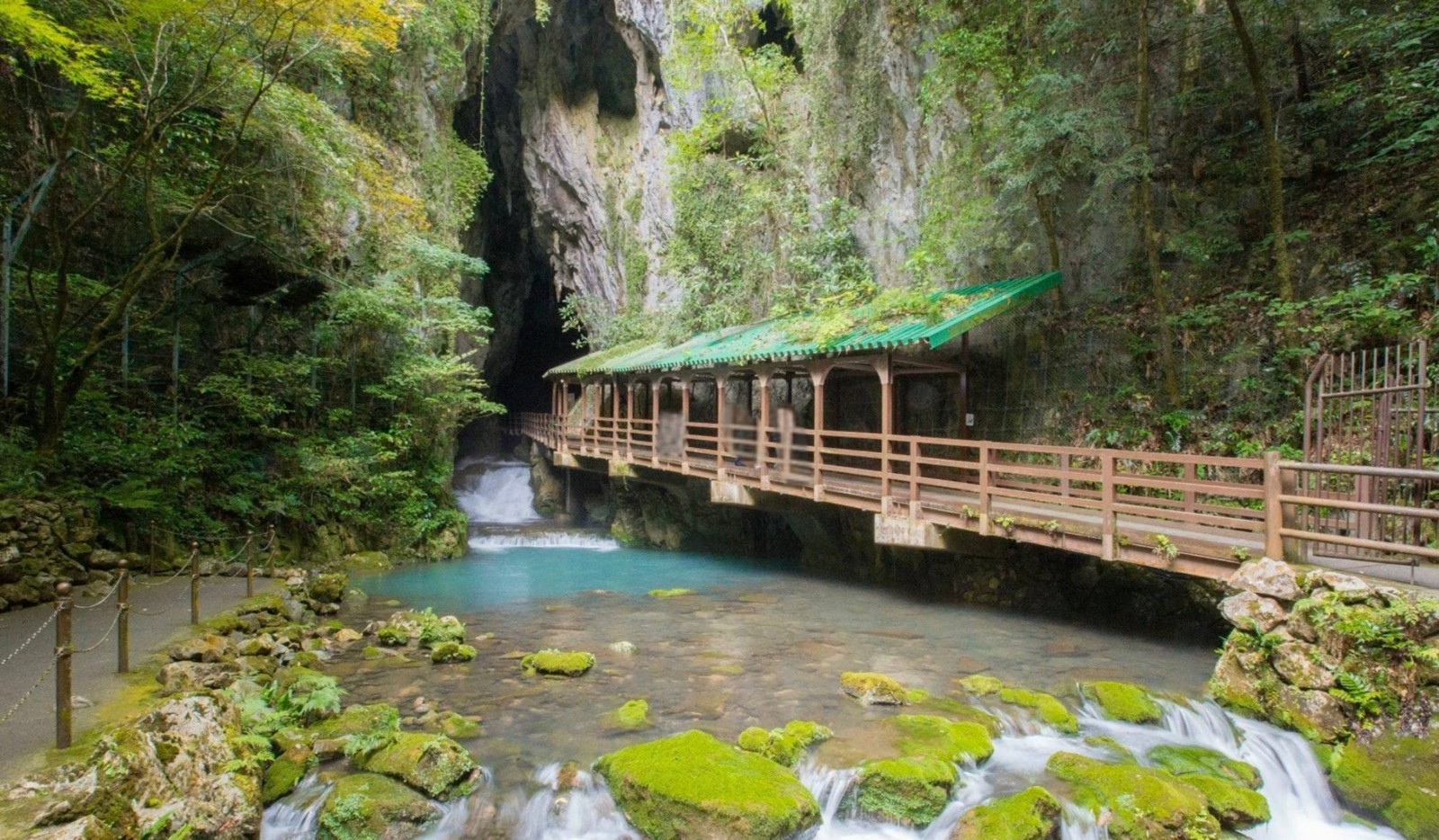
At the entrance to Akiyoshido Cave, clear streams, moss-covered rocks and high limestone cliffs create a cool, atmospheric gateway into one of Japan’s largest limestone caves.
Tip from the itinerary expert: **alternate one active stop with one easy stop**. In Yamaguchi, a good family day might combine Akiyoshido Cave with Safari Land, or Kintai Bridge with the ropeway and a relaxed food break, instead of stacking too many quiet historical places in a row.
4-Day Yamaguchi Itinerary: nature, coast, caves, food and quiet historic towns
Trip Duration: 4 days
Day 1 — Yamaguchi City, Rurikoji Pagoda and Yuda Onsen
Morning, 10:00–12:30. Start at Yamaguchi Station or Shin-Yamaguchi Station and continue into Yamaguchi City by local transport. This is a good place to begin slowly: walk along Ichinosaka River, especially atmospheric in spring when the cherry trees are in bloom, then drift toward the nearby cafés and small restaurants. This part of the day is not about rushing. It gives the route that gentle “Kyoto of the West” feeling, but without the crowds and pressure of Kyoto itself.
Lunch, 12:30–14:00. Choose a local restaurant near the river and try kawara soba, one of Yamaguchi’s signature dishes: green tea soba served on a hot ceramic roof tile, so the noodles become crisp underneath and chewy in the middle. A realistic lunch budget for kawara soba is ¥1,000–¥1,800 per person. If the day is warm, or if the family needs a gentler pace before the temple area, add a café stop afterward.
Afternoon, 14:00–16:00. Visit Rurikoji Temple Five-Story Pagoda, the main visual symbol of Yamaguchi City. Built in 1442, it is considered one of Japan’s most beautiful five-story pagodas and stands in a peaceful park setting with a pond and seasonal scenery. Plan about 30–60 minutes for the pagoda, the pond view and the surrounding park. The pagoda and park are listed as free to visit; the temple museum archive is listed at ¥200 for adults.
Evening, 16:30–18:00. Move to Yuda Onsen for the night. The hot spring district is compact and known for its free public foot baths, so bring a small towel and let the evening feel like part of the trip, not just a hotel transfer. Dinner can be at the ryokan if you are staying in an onsen hotel, or in a casual izakaya nearby; a simple dinner budget is usually more comfortable at ¥2,500–¥5,000 per person.
Tip from the Itinerary Expert: I would not schedule Akiyoshido Cave on the first arrival day. Keep Day 1 light, sleep in Yuda Onsen, and start the cave day fresh; it saves energy and makes the whole Yamaguchi route feel calmer.
Overnight Location: Yuda Onsen or Yamaguchi City
Day 2 — Akiyoshido Cave, Akiyoshidai Plateau and Safari Land
Morning, 10:00–12:30. Travel from Yuda Onsen, Yamaguchi or Shin-Yamaguchi toward Akiyoshido Cave. By bus, the route from Shin-Yamaguchi to Akiyoshido is listed at ¥1,170 one way and takes about 45 minutes; by taxi from Yuda Onsen or Yamaguchi, expect around ¥7,000–¥8,000. If you are traveling with children, this is one of the days when a car really helps, because it gives you much better control over timing.
Late morning, 11:00–12:30. Enter Akiyoshido Cave, one of Japan’s largest limestone caves. The walking route is about 1 km, well lit, and the temperature inside stays around 17 °C, which makes it excellent in summer. Ticket prices are listed at ¥1,300 adult / ¥1,050 middle school student / ¥700 elementary school child. Allow 1–1.5 hours for the cave, or closer to 2 hours if everyone wants photos and a slower pace.
Lunch, 12:30–13:30. Eat near the cave entrance or choose a simple noodle stop before continuing upward. Keep lunch easy rather than formal, because the afternoon is better spent outdoors. If you are using public transport, check the return or onward bus timing before sitting down to eat.
Afternoon, 13:30–16:00. Continue to Akiyoshidai Plateau for open karst views, limestone formations and short walks. The contrast with the cave is the whole point of the day: underground first, wide sky after. If the family wants a more active child-friendly stop, add Akiyoshidai Safari Land, where the materials mention animals such as lions, tigers, elephants and giraffes, with the option to tour by private car or dedicated bus.
Evening, 16:00–18:00. Return to Yuda Onsen or stay closer to the Akiyoshidai area if the next day begins with a long drive. For dinner, a ryokan meal is the easiest option if booked with half board; otherwise, a casual restaurant or izakaya is much better than trying to travel far after the cave and plateau day.
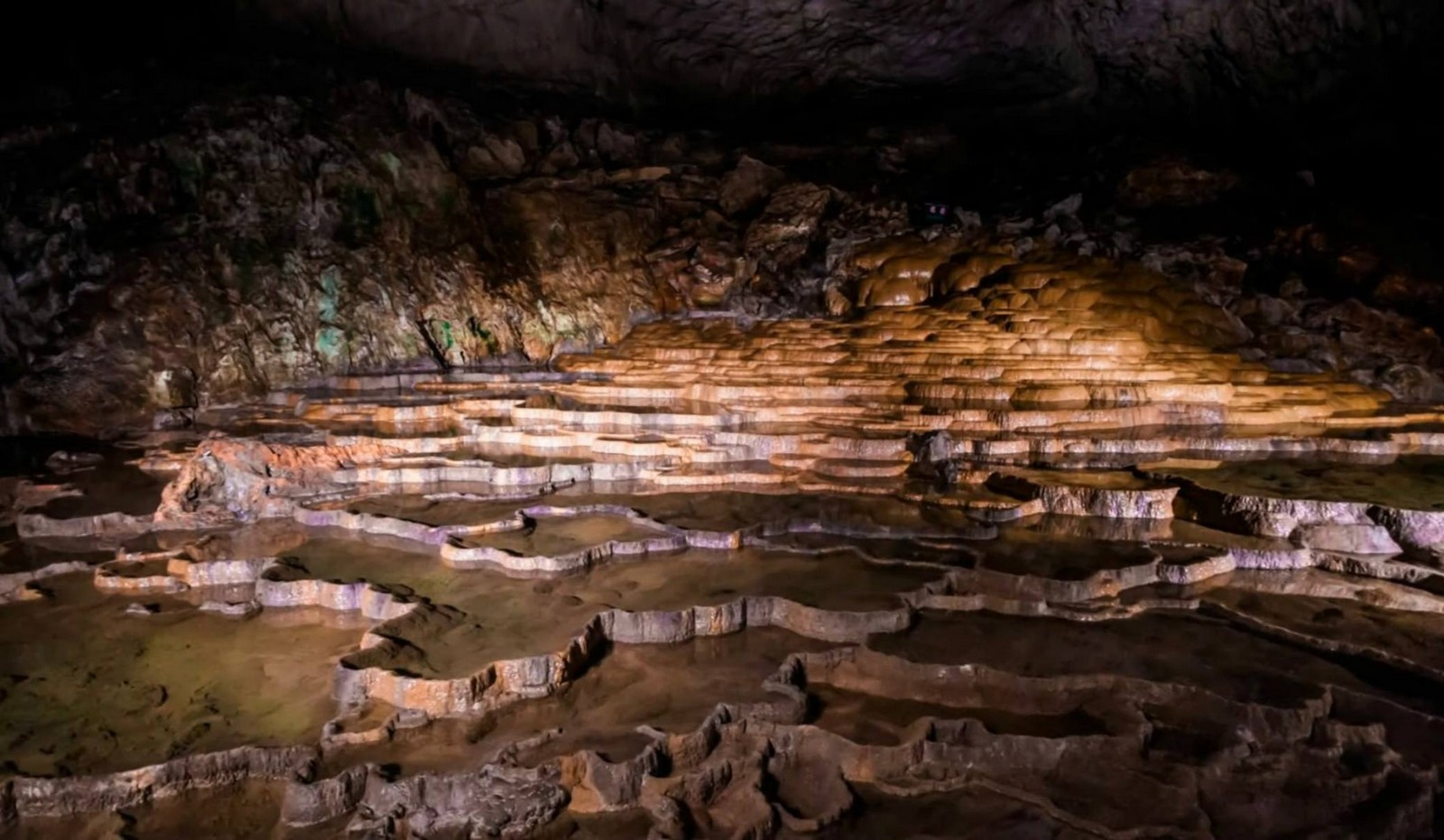
Inside Akiyoshido Cave, layered limestone terraces glow under soft lighting, revealing strange natural formations shaped slowly by water over thousands of years.
Tip from the Itinerary Expert: do the cave before the plateau. The cave is cooler, more structured and easier to time; after that, Akiyoshidai feels open and refreshing instead of becoming a rushed add-on.
Overnight Location: Yuda Onsen, Yamaguchi City or Akiyoshidai area
Day 3 — Northern coast: Tsunoshima Bridge, Motonosumi Inari Shrine and Nagato Yumoto Onsen
Morning, 10:00–12:00. This is the day to use a rental car. A compact rental car is listed at around ¥7,000–¥10,000 per day, and the northern coast is exactly where the car becomes much more useful than public transport. Drive toward Tsunoshima Bridge, one of Yamaguchi’s most photogenic coastal views, opened in 2000 and described as one of Japan’s longest toll-free bridges. Stop for photos before crossing and again on the island side if the weather is clear.
Lunch, 12:00–13:30. Plan a relaxed coastal lunch on or near Tsunoshima Island. Choose seafood, simple Japanese lunch sets or a casual café-style meal depending on what is open that day. This is not the day for a rushed schedule: the bridge, the color of the sea and the island atmosphere are the real value.
Afternoon, 13:30–16:00. Continue to Motonosumi Inari Shrine, where more than one hundred vermilion torii gates run down toward the Sea of Japan. The shrine is free to visit, and parking is listed as usually ¥300 for the first hour, with additional payment after that and a limit around ¥500. Allow about 45–75 minutes here, including the torii path, coastal views and the high offering box where visitors try tossing a coin for luck.
Evening, 16:00–18:00. Finish at Nagato Yumoto Onsen instead of driving back across the prefecture too late. This gives the day a calmer ending after the coast and reduces fatigue. Dinner is best at the onsen accommodation if booked with meals; otherwise, keep it simple in the hot spring town and avoid another long drive after dark.
Tip from the Itinerary Expert: I would not do Tsunoshima Bridge and Motonosumi Inari Shrine by public transport on a family trip. With a car, they become a beautiful coastal day; without a car, the same route can feel like a chain of awkward transfers.
Overnight Location: Nagato Yumoto Onsen or northern Yamaguchi coast
Day 4 — Shimonoseki food, Karato Market and Iwakuni’s classic bridge view
Morning, 10:00–12:30. Drive or return by rail toward Shimonoseki, Yamaguchi’s famous fugu city. Start around Karato Market, where the route can stay flexible and food-focused instead of formal. A practical market budget is listed at ¥1,000–¥2,500 per person for sushi, seafood, fugu soup, fried fish or small snacks. For travelers who want a simple fugu lunch in Shimonoseki, a realistic budget is listed at ¥2,000–¥4,000 per person; a full fugu course belongs to a different style of trip and can reach ¥15,000–¥30,000+ per person.
Lunch, 12:00–13:30. Eat at Karato Market or choose a simple restaurant nearby if the family prefers to sit down properly. The market is usually more convenient because everyone can choose different small dishes. It also keeps the day light before the transfer toward Iwakuni or the next destination.
Afternoon, 14:30–16:30. Continue to Iwakuni for Kintai Bridge and, if there is still time and energy, the Iwakuni Castle Ropeway area. Kintai Bridge gives one of the clearest scenic finales in the prefecture, with five wooden arches across the Nishiki River and castle views above the town. If traveling by train, check carefully whether the train arrives at Shin-Iwakuni Station or Iwakuni Station, because they are in different parts of the city.
Evening, 16:30–18:00. Keep the final evening simple: walk around the bridge area, take photos in softer light, then have dinner nearby or continue toward Hiroshima if the wider trip goes on. If staying in Iwakuni, look for a local meal such as Iwakuni-style pressed sushi or a simple Japanese set dinner. This day should end with a view, not another long list of attractions.
Tip from the Itinerary Expert: at Karato Market, do not make the meal too late. I prefer going earlier, choosing several small seafood dishes, and leaving enough time for the Iwakuni transfer instead of turning the final day into a rushed food stop.
Overnight Location: Iwakuni, Shimonoseki or onward to Hiroshima
Traveller reviews about Yamaguchi

Daniel Morgan
Visited in April 2018

We stayed one night in Yamaguchi City, and honestly, I’m glad we didn’t try to squeeze it into a day trip. Rurikoji Pagoda was my favorite part — quiet, graceful, and its reflection in the pond looked almost ethereal in the late afternoon light. The kids, to be fair, cared more about the ice cream shop nearby, but no one was complaining!
Laura Bennett
Visited in August 2019
Akiyoshido Cave basically saved our summer. Outside it was hot and sticky, but inside the cave, it was cool and remarkably peaceful. The path was easy enough, though some sections were wet; wearing sandals was definitely a mistake. My youngest kept asking if dragons lived there, which pretty much says it all.
Michael Carter
Visited in November 2022
The scenery around Akiyoshidai was beautiful, especially the open plateau, but navigating without a car was frustrating. While the buses worked, their schedule dictated our entire day. We even had to skip one stop because the next connection was too late. It is a stunning place, just not the easiest to manage via public transport.
Sophie Williams
Visited in May 2023
We spotted the Koinobori at Sabagawa almost by chance, and it became one of the sweetest moments of our trip. Food trucks, children running along the riverbank, and carp streamers fluttering over the water — it felt very local and authentic. It only lasts a few days, so we felt lucky to catch it.
Adam Collins
Visited in February 2025

Rurikoji Pagoda looked magnificent even in the cold. It was around 2°C, and I expected a dull winter garden, but there were already a few blossoms peeking through. It was lovely to have the place almost to ourselves. Only downside: the walk from the station felt quite long in that weather.
Emily Roberts
Visited in July 2017
Tsunoshima Bridge looks incredible in photos, but our day was gray and windy, so the water lacked that iconic bright blue tint. The drive was pleasant, but I felt we traveled a long way for just one quick view. It’s likely much more rewarding when the weather is perfect.
James Miller
Visited in October 2024
Yamaguchi really surprised us. We came for the cave but fell in love with the slower pace: the golden grass at Akiyoshidai, the Yuda Onsen foot baths in the evening, and Kawara Soba for lunch. Pro tip: bring a small towel for the foot baths — we forgot and ended up using tissues like total amateurs.
Nina Parker
Visited in March 2016
Hagi Castle Town was incredibly calm — perhaps a bit too quiet for the kids after an hour — but the streets were beautiful. White walls, narrow lanes, and old houses; there was no rush anywhere. We kept the visit short and added a snack stop, which helped keep the spirits up. I wouldn’t recommend a full day there if traveling with young children.
Thomas Reed
Visited in December 2021
Karato Market in Shimonoseki was fun but chaotic around lunchtime. The seafood was excellent and the fugu soup felt like a mini-adventure, but finding a spot to sit with children was a challenge. I enjoyed the vibe, but my wife found it exhausting. Go earlier than we did to beat the rush!
Tips from the Itinerary Expert

Use Yuda Onsen as your first base, not just a bath stop
When starting in Yamaguchi City, I recommend staying overnight in Yuda Onsen instead of switching hotels too early. The free foot baths make the first evening much more relaxing for families with children, and you can head to Akiyoshido Cave the next morning without a rushed transfer.
Visit Akiyoshido Cave before Akiyoshidai Plateau
I always suggest entering Akiyoshido Cave first, then continuing up to the Akiyoshidai Plateau. The cave is cool, structured, and easy to navigate; after that, the vast open plateau feels like a perfect reward. Reversing this order often leaves children too tired before the underground walk even begins.
Check Shin-Yamaguchi bus times before buying cave tickets
If traveling without a car, verify the return bus schedule from Akiyoshido before entering. It’s easy to lose track of time inside and then have to rush through the plateau afterward. The Shin-Yamaguchi–Akiyoshido bus takes about 45 minutes, and missing one departure can disrupt your entire day’s schedule.
Combine Tsunoshima Bridge and Motonosumi Shrine into one driving day
Avoid treating Tsunoshima Bridge as a minor side trip from Yamaguchi City. Instead, pair it with Motonosumi Inari Shrine and the northern coast on a single driving day. This route offers better sea views, reduces backtracking, and creates a much more cohesive coastal experience.
Pack a small towel specifically for Yuda Onsen foot baths
In Yuda Onsen, keep a small towel in your day bag rather than packed away in your suitcase. The free foot baths are perfect for a spontaneous soak, but drying your feet with tissues or waiting until you return to the hotel can be surprisingly inconvenient.
Treat Hagi as a slow walking stop, not a full history day
Keep your Hagi Castle Town plan compact: focus on the white walls, historic lanes, and one or two key sites, followed by a snack break. Stretching it into a full heritage day can make children lose interest quickly, turning the quiet streets from charming to tiring.
Use Karato Market for a flexible fugu experience
If your family wants to try fugu (pufferfish) without committing to an expensive, formal multi-course meal, choose Karato Market in Shimonoseki. Everyone can pick small portions of fresh seafood, keeping the budget closer to a casual meal while still enjoying the local specialty.
Have a flexible window for Tsunoshima photos
If capturing the perfect photo of Tsunoshima Bridge is a priority, build some flexibility into your itinerary. On gray or windy days, the sea’s famous turquoise hue can disappear. A flexible schedule ensures you don’t drive a long distance only to find a dull-looking landscape.
Treat koinobori stops as seasonal bonuses
In late April or early May, add Roadside Station Niho-no-Sato or Sabagawa only if they fit naturally into your route. These koinobori (carp streamer) displays are lovely seasonal highlights, but they are often too brief or weather-dependent to anchor an entire day around them.
Choose your Iwakuni arrival station carefully
For Kintai Bridge, always confirm whether your train arrives at Shin-Iwakuni or Iwakuni Station. They are located in different parts of the city. Choosing the wrong one adds an unnecessary transfer, which matters when your day already includes the bridge, ropeway, and castle.
Insights from the Itinerary Expert
I visited Yamaguchi in November 2024. What stayed with me most was not a single “must-see” landmark, but the realization of how vast and spread out the prefecture truly is. One morning, we explored Akiyoshido Cave, and the children were completely captivated. The cool air, damp stone, and otherworldly shapes offered a refreshing break from the usual “stiff” museum atmosphere.
However, when I tried to add the Akiyoshidai Plateau and an additional stop too quickly, the schedule began to fray. While distances may look manageable on paper, the bus timetable will dictate your route if you are traveling without a car. Planning for extra buffer time is essential here.
Rurikoji Temple’s Five-Story Pagoda was calmer than I expected, and I enjoyed it all the more for its serenity. It doesn’t require a long stay; the pond view and a mindful walk around the pagoda are perfectly sufficient. Tsunoshima Bridge proved more temperamental. On a cloudy day, the sea lacks its famous turquoise brilliance. I suggest keeping your coastal plans flexible to account for the weather.
Yamaguchi is a compelling choice for families seeking subterranean wonders, coastal vistas, and a slower, more authentic side of Japan. Together, we can design a custom itinerary with a realistic pace and stops that genuinely resonate with your family’s needs.
Yamaguchi prices: realistic travel costs for 2026
| Name | Amount | Description |
|---|---|---|
| Budget or business hotel | ¥6,500–¥10,000 JPY | A sensible nightly range for a basic room in Yamaguchi City, Shimonoseki, or Iwakuni. While cheaper rooms may occasionally be available around ¥6,000, prices rise sharply during weekends and the Sakura season. |
| Mid-range hotel | ¥11,000–¥20,000 JPY | An ideal range for travelers seeking increased comfort and a central location without moving into premium ryokan-style pricing. |
| High-end onsen hotel or ryokan (per couple) | ¥36,000–¥70,000 JPY | Estimated at ¥18,000–¥35,000 per person, including dinner and breakfast. This is particularly relevant for stays in Yuda Onsen or Nagato Yumoto Onsen. |
| Family room or apartment (4–5 people) | ¥20,000–¥38,000 JPY | A cost-effective choice for families, especially those traveling by car. We recommend looking for options with parking and a small kitchenette for longer stays. |
| Compact car rental (per day) | ¥7,000–¥10,000 JPY | Highly recommended for visiting Tsunoshima Bridge, Motonosumi Shrine, and other nature stops where public transport is infrequent. |
| Public transport: Shin-Yamaguchi to Akiyoshido bus | ¥1,170 JPY | One-way fare for visiting Akiyoshido Cave. The scenic ride from the Shinkansen station takes approximately 45 minutes. |
| Restaurant lunch or simple teishoku | ¥1,000–¥1,800 JPY | A standard budget for noodles, rice sets, or local specialties. Iconic dishes like Kawara Soba typically fall within this range. |
| Dinner in an izakaya or seafood restaurant | ¥2,500–¥5,000 JPY | An average evening budget, especially in coastal areas known for fresh sashimi, yakitori, and premium local sake. |
| Parking and fuel (per driving day) | ¥1,500–¥3,500 JPY | Costs vary by distance. For routes encompassing Tsunoshima and Akiyoshidai, treat this as a full road-trip day in terms of fuel consumption. |
| Supermarket essentials for 2 people | ¥1,500–¥3,000 JPY | Covers breakfast items, snacks, and drinks. Since morning café options can be limited in smaller towns, purchasing basics the night before ensures a smoother start to your day. |
FAQ about planning a trip to Yamaguchi
01
Is it worth renting a car in Yamaguchi to visit Tsunoshima Bridge and Motonosumi Inari Shrine?
Yes, renting a car is highly recommended. The northern coast, Tsunoshima Bridge, Motonosumi Inari Shrine, and Nagato Yumoto Onsen are much more accessible and comfortable by car than by public transport.
What we propose

Emma Heidi
Customer Experience Manager
Take all the stress out of planning your trip!
With our experts, you can create the perfect itinerary for you – complete, comfortable, and tailored to all your dreams, wishes, and needs.
We take care of every little detail, so you can simply focus on enjoying your journey.
We’ve been designing personalized itineraries since 2015, and over the years we’ve created thousands of custom itineraries for happy clients.

Save time, avoid confusion – we do the work for you. Our service saves you weeks of searching, reading, comparing, and complicated planning. Instead of wasting endless hours – you receive a ready-to-use, accurate and clear itinerary.

A tailor-made itinerary – built just for you. Your itinerary is personally designed based on our experts’ real field experience and genuine feedback from hundreds of travelers – including hidden discoveries and insider tips that don’t appear in any travel guide.

Smart accommodation selection – often saves you hundreds or even thousands of dollars. We help you choose verified and recommended places to stay, checking availability for your exact travel dates. Sometimes we suggest hotels not “in the center,” but in safe, convenient, and highly strategic locations – which can significantly reduce travel costs and save you even thousands of dollars.

We’re by your side even during the trip. We stay with you throughout your vacation – providing professional help whenever needed. If the weather changes, there’s a strike, a local event, heavy crowds, or any unexpected situation – we are here to update, guide, and adjust your itinerary in real time.

Easy-to-use itinerary – with direct navigation links. Your itinerary includes direct Waze / Google Maps links – no need to search for parking addresses, no stress, no mistakes. Just tap – and go.

Service cost: from only $420. (Special price for short itineraries up to 5 days). Clients tell us the itinerary saves them costly mistakes, fines, wrong choices – plus exclusive discounts on car rentals, better-priced accommodations, and money-saving local tips.
Want to know if it’s really worth it?
Take a look at the experiences of travelers who built their personal itinerary with us.
Click here and let’s start building the itinerary that will save you time, money, and stress – and turn your vacation into perfection.
Of course, your first inquiry is completely free – with no commitment whatsoever.
How it works


- You are welcome to contact us
- We discuss your trip
- You fill out a special form
- We create your itinerary
- You get it with all useful tips
- We are in touch with you all the time