My love for Japan began the moment I arrived in Tokyo. The country amazed me with its harmony of ancient traditions, cutting-edge technology, breathtaking nature, and a culture unlike any other. Since then, Japan has become a part of my life, and I return there again and again. Today I help travelers discover the real Japan: I create personalized itineraries, give lectures, and prepare guests for their unforgettable journey. I would be delighted to open Japan for you too!

Kyoto Aquarium
Kyoto Aquarium is the kind of place that helps slow a Kyoto trip down when temples, gardens, and busy historic streets start to feel overwhelming. Set inside Umekoji Park near Kyoto Station, it easily fits into an arrival day, a rainy-day backup plan, or a quieter family afternoon. This is not one of Japan’s massive aquariums, which is exactly part of its charm: the layout stays compact and easy to navigate, with a strong focus on Kyoto’s local rivers, the Sea of Kyoto, Japanese giant salamanders, penguins, jellyfish, and exhibits that won’t turn your day into an indoor marathon.
Kyoto Aquarium Key Information
Address:
35-1 Kankiji-cho, Shimogyo-ku, Kyoto City, Kyoto, Japan, inside Umekoji Park
How to Get There
Kyoto Aquarium is roughly a 15-minute walk from the Central Gate of JR Kyoto Station, making it highly practical even if you aren’t using a car. JR Umekoji-Kyotonishi Station is another convenient option; from there, the stroll to the aquarium takes about 7 minutes. Several bus routes also stop nearby, so you can easily fit the aquarium into your Kyoto city exploration without awkward transfers.
If your plan already includes Umekoji Park, the aquarium combines naturally with green spaces, playground time, and the Kyoto Railway Museum. If you are traveling with children, I wouldn’t place it right after a demanding temple route on the other side of the city. The visit feels much smoother when this area becomes the main focus for that part of your day.
Click here to learn more about creating a personal itinerary
Parking
Kyoto Aquarium does not have its own private parking lot. If you arrive by car, plan to use paid parking nearby and allow extra time to find a space, especially on weekends and during school holidays.
A car can still be useful if the aquarium is part of a broader family route around Kyoto or if you are staying outside the central area. For a simple visit from Kyoto Station, though, walking, the train, or a bus is usually more predictable than trying to park close to Umekoji Park.
Opening Hours
Usually 10:00–18:00 on weekdays and 9:30–19:00 on weekends, with possible seasonal or holiday changes.
Tickets
Kyoto Aquarium tickets for 2026: adults ¥2,600, high school students ¥2,000, elementary and junior high school students ¥1,400, children from age 3 ¥900.
From: 900 JPY
Duration
Recommended visit: about 60–120 minutes; with children, café time, the dolphin program and a walk in Umekoji Park, allow around 2–3 hours.
Best Time to Visit
For a calmer Kyoto Aquarium experience, weekdays are usually the easiest choice. Booking tickets online is highly recommended if you are visiting on a Saturday, during holidays, or with kids, as it cuts down the time spent waiting in the same-day ticket line.
The aquarium is especially useful on rainy days, when temple gardens and long outdoor walks become less appealing. If the dolphin program matters to your family, check the schedule for that day before locking in the rest of your route. I would also avoid the very front rows if you are carrying phones, cameras, or bags that need to stay dry.

Since 2015, our website has specialized in individual planning of unique routes, taking into account personal preferences and desires.
Each of you will receive a unique PDF file from us, which contains everything you need: travel routes, car rentals, hotels, the best tourist attractions, attractions for kids and everything you need for a perfect vacation.
During the trip, we are available for you by phone via WhatsApp.
Our personal service provides information from A to Z, taking into account many small details that can become a decisive factor on the way from a wasted trip to an unforgettable vacation.
Our service will make your trip comfortable, save a lot of time on planning and preparation, and most importantly – will allow you to become freer and fully enjoy the pleasure of the trip.
What to See at Kyoto Aquarium
Kyoto Aquarium is compact enough to explore at a relaxed pace, but the experience is far better when you follow the natural flow of the exhibits instead of rushing through it as a quick indoor stop. The standout sections include the Kyoto river zone, the massive Sea of Kyoto tank, the jellyfish area, the penguins, and the dolphin stadium, with strategically placed cafés and seating areas making it easy to unwind along the way.
Rivers of Kyoto and Japanese Giant Salamander
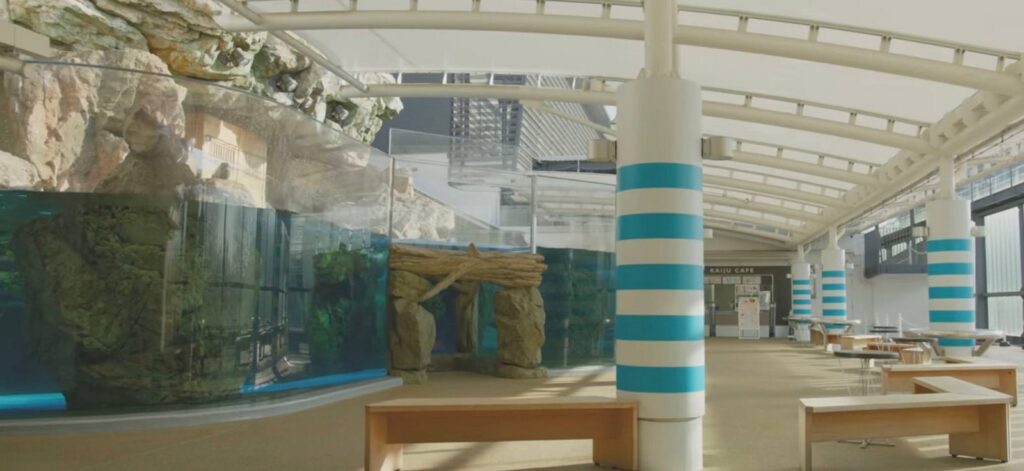
Kyoto river life and giant salamanders
This captivating opening zone introduces the freshwater ecosystems tied directly to Kyoto’s local rivers. Its main highlight is the Japanese giant salamander, one of the aquarium’s signature creatures and a major reason this venue feels so distinct from a standard city aquarium. Starting the route here works beautifully because it immediately anchors the experience in Kyoto’s unique natural environment, moving beyond typical tropical fish or ocean displays.
Opening Hours: Included in general aquarium opening hours.
Included with the Kyoto Aquarium admission ticket.
Tip from the itinerary expert: Don’t rush through this introductory zone, even if the kids are eager to see the larger animals. The salamander exhibit grounds the entire visit in a authentic local context and stands out as one of the most geographically distinctive features of the aquarium.

Distance/Time: At the start of the aquarium route
Seal and Sea Lion Areas
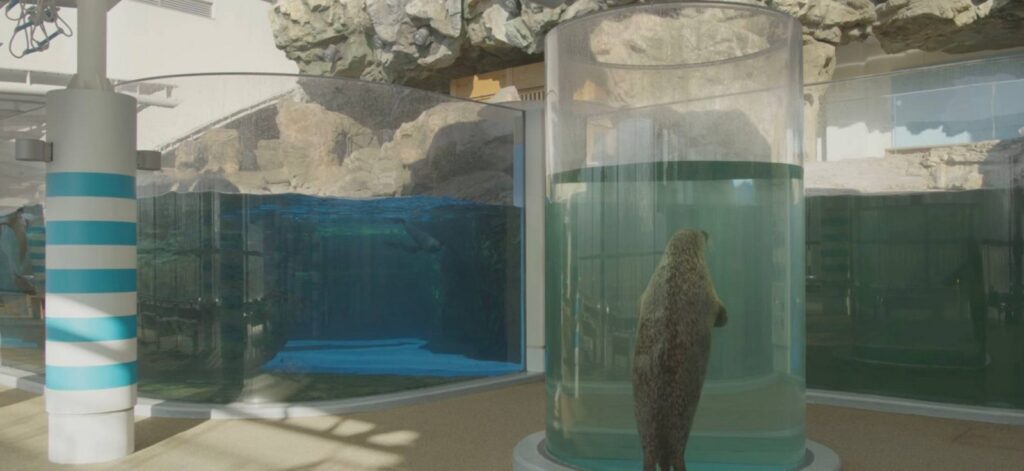
Observation zones with seals and sea lions
The seal and sea lion exhibits inject a playful, energetic dynamic into the self-guided route. A particularly engaging feature is the clever viewing setup, where seals frequently glide through a clear tube-like section, making the encounter feel remarkably direct compared to watching a standard tank. This is an ideal spot to pause for a few moments, as children often spot subtle movements and behavioral quirks before adults do.
Opening Hours: Included in general aquarium opening hours.
Included with the Kyoto Aquarium admission ticket.
Distance/Time: Along the main indoor route
The Sea of Kyoto
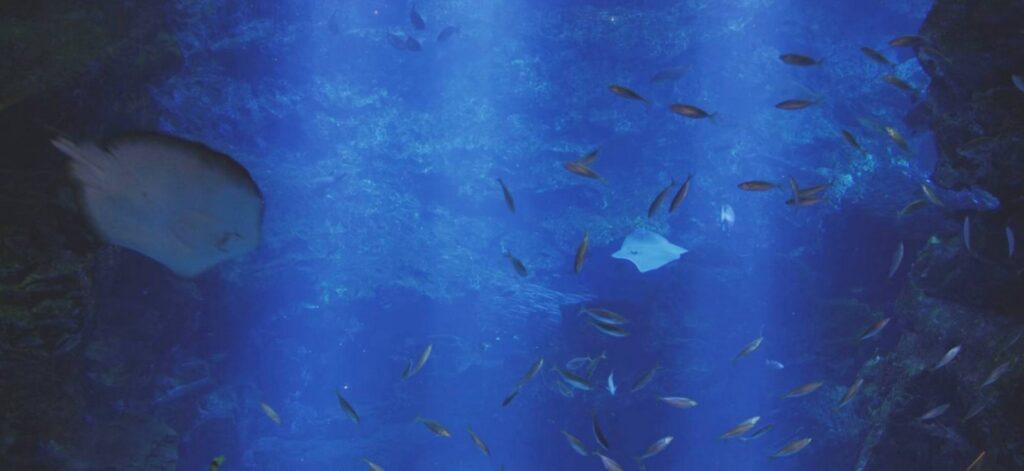
Large tank with marine life from Kyoto Prefecture
The Sea of Kyoto is easily one of the most atmospheric spaces within the aquarium. This expansive tank replicates the rich marine life of northern Kyoto Prefecture, which borders the Sea of Japan, and holds roughly 500 tons of artificial seawater. Be sure to look beyond the initial viewing platform, as the tank offers completely different perspectives from alternative angles. Shifting schools of fish, rays, and other marine life give this zone a serene, spacious feel that contrasts nicely with the smaller exhibits.
Opening Hours: Included in general aquarium opening hours.
Included with the Kyoto Aquarium admission ticket.
Tip from the itinerary expert: Use this massive tank as your primary quiet break during the visit. If the crowds start to feel overwhelming, sit here for a few minutes to recharge before moving on to the next exhibit.
Distance/Time: One of the main central exhibits
Cape Penguins
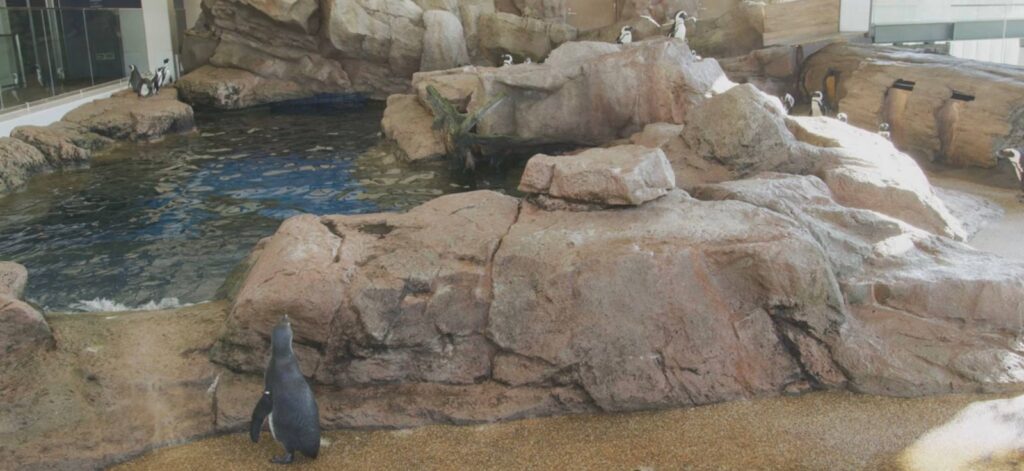
Penguin area at Kyoto Aquarium
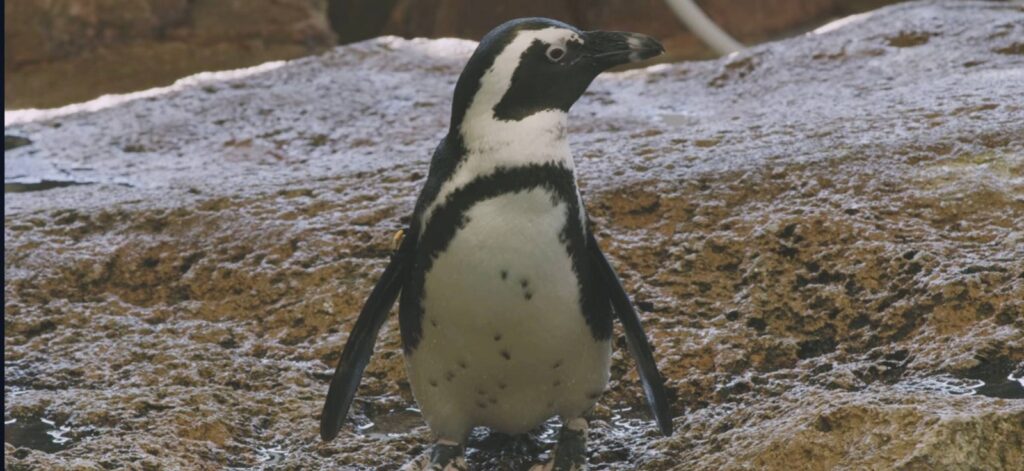
The penguin exhibit is a natural favorite for families because it is highly active, visual, and instantly engaging without requiring any background knowledge. Rather than just showcasing a group of birds, the aquarium highlights the distinct behaviors and social dynamics within the colony. Watching them swim, waddle, and interact introduces a lighter, cheerful rhythm right after the grand ocean tank and freshwater zones.
Opening Hours: Included in general aquarium opening hours.
Included with the Kyoto Aquarium admission ticket.
Distance/Time: Along the main visitor route
Jellyfish Wonders
Jellyfish exhibits and tunnel
Jellyfish Wonders stands out as one of the most visually mesmerizing spaces in the building. The fluid choreography, subtle lighting, and minimalist display style give this area a tranquil, almost dreamlike quality compared to the high-energy penguin or dolphin sections. Educational displays also track the fascinating growth stages of young jellyfish, making the exhibit both beautiful and informative without feeling like a dry biology lesson.
Opening Hours: Included in general aquarium opening hours.
Included with the Kyoto Aquarium admission ticket.
Distance/Time: Inside the aquarium route
Dolphin Stadium
Dolphin program area
Dolphin Stadium serves as the most dynamic, performance-focused segment of the aquarium, making it well worth planning your itinerary around. The live dolphin presentations run for about 20 minutes, and the open-air stadium format offers a grand, high-energy transition from the indoor galleries. Keep in mind that the front splash rows will get wet, so families carrying electronics, cameras, or traveling with toddlers may prefer to secure seats higher up.
Opening Hours: Program times vary by day; check the schedule before visiting.
Included with the Kyoto Aquarium admission ticket.
Distance/Time: Separate stadium area inside Kyoto Aquarium
Cafés, Rest Areas and Souvenir Shop
Food, breaks and aquarium-themed gifts
The aquarium is far more enjoyable when you treat the cafés and rest zones as part of the overall experience rather than an afterthought. The on-site facilities offer straightforward snacks, light meals, ice cream, fries, and kid-friendly portions alongside whimsical, animal-themed treats. Handily, visitors are welcome to bring their own snacks, making downtime simple to manage. Before heading out, check out the souvenir shop, which is excellent for finding unique plushies and gifts inspired by the local giant salamanders and jellyfish.
Opening Hours: Available during aquarium operating hours, with details depending on the facility schedule.
Food and souvenirs are paid separately from admission.
Distance/Time: Inside the aquarium, near rest and exit areas
What Is Near Kyoto Aquarium and Worth Visiting?
- Umekoji Park: The easiest addition to your itinerary is Umekoji Park, simply because the aquarium sits right inside its grounds. After exploring the indoor exhibits, this expansive green space is the natural spot to let children run around, enjoy a quick picnic, or reset before the next part of the day. It provides a refreshing outdoor contrast, especially if your morning was spent navigating busy Kyoto streets.
- Playground and open green space: The park features excellent play areas, making it easy to transition your aquarium visit into a relaxed, slow-paced family afternoon. Instead of heading out the moment you finish the exhibits, carve out some time for outdoor movement—a welcome shift after the darker jellyfish rooms and indoor galleries. This combination works beautifully when the weather is pleasant and you want a reliable indoor anchor in your plans.
- Kyoto Railway Museum: Located just a short walk away, the Kyoto Railway Museum pairs perfectly with the aquarium for a full, well-rounded family day out. It is a fantastic choice for kids who love trains, vehicles, and hands-on interactive displays. However, trying to squeeze both major attractions into a single afternoon can feel rushed; if you decide to combine them, keep the rest of your day’s schedule completely open.
- Cafés and simple food stops around Umekoji Park: While the aquarium has its own dining options, the surrounding park area offers much more flexibility for lunch or a quick snack. This is incredibly helpful if the kids need a bite to eat before moving on, or if you prefer to avoid the busy aquarium café lines. A relaxed stop nearby keeps your day calm and less dependent on strict show times.
- Toji Temple: Toji Temple is a worthy addition if your family still has the energy for one more historic Kyoto landmark. Because it offers a different pace than the aquarium or park, it works best as a brief cultural stop rather than a deep, exhausting temple tour. The standard admission fee is generally around ¥500–¥800, though prices may vary during special seasonal exhibitions.
Click here to learn more about creating a personal itinerary
Tip from the itinerary expert: Avoid packing Kyoto Aquarium, the Kyoto Railway Museum, and several major city shrines into one tight schedule. The best itinerary logic here is simple: start with the aquarium, step out into Umekoji Park to relax, and only then decide if the family has enough steam left for the railway museum or a nearby cultural landmark.
Who Is Kyoto Aquarium Suitable For?
- Families with children: Kyoto Aquarium is highly convenient for parents because the flow is compact, visually engaging, and easy to enjoy without long, complex explanations. Kids can seamlessly move from giant salamanders to penguins, seals, jellyfish, and the dolphin stadium without spending the whole day trapped indoors. It also pairs effortlessly with Umekoji Park, helping you strike a great balance between quiet observation and active outdoor play.
- Rainy-day sightseeing in Kyoto: This is one of Kyoto’s most practical indoor options when shrines, traditional gardens, and long outdoor walks become less comfortable due to the weather. The aquarium provides plenty of variety to fill a few hours without forcing you to commute across the city. Plus, its proximity to Kyoto Station makes it an ideal stop for arrival or departure days.
- Visitors who prefer compact attractions: This is not a massive, overwhelming all-day venue, and that is a major part of its appeal. It perfectly suits travelers looking for a focused visit of about 60–120 minutes, or roughly 2–3 hours if you include child-led pacing, a café break, and the dolphin program. For families who find sprawling mega-museums exhausting, this manageable size is a real advantage.
- People interested in local nature: The aquarium shines brightest when viewed as a regional, water-themed attraction rather than just a generic marine-life display. The Japanese giant salamander exhibit, the local river zones, and The Sea of Kyoto tank give the facility a distinct local identity deeply connected to the freshwater ecosystems and the northern coastline of Kyoto Prefecture.
- Visitors with strollers or limited mobility: The layout is exceptionally comfortable and fully accessible, featuring ample seating areas, clean restrooms, elevators, and wide ramps throughout the route. This makes navigating the space smooth and stress-free whether you are pushing a stroller, traveling with grandparents, or simply pacing yourself. The shorter walking distance keeps the outing from becoming physically draining.
- Animal-welfare-sensitive visitors: Certain travelers may naturally feel uncomfortable with the presence of a dolphin program or the dimensions of specific animal enclosures. If this is a consideration for you, the aquarium can easily be visited selectively: you can focus entirely on the brilliant salamander exhibits, the sweeping Sea of Kyoto tank, the jellyfish gallery, and the educational zones, while easily skipping the dolphin stadium altogether.
Tip from the itinerary expert: For a family trip, treat Kyoto Aquarium as a comforting, low-stress pause in your vacation rather than a heavy sightseeing destination. It works best when used to bring warmth, shelter, and an easy change of pace from temples—without overloading your daily schedule.
Kyoto Aquarium 2-Day Family Itinerary
Trip Duration: 2 days
Day 1 — Kyoto Aquarium, Umekoji Park and Toji Temple
10:00 — Start from Kyoto Station and walk to Kyoto Aquarium. From the Central Gate of JR Kyoto Station, allow about 15 minutes on foot to reach Kyoto Aquarium inside Umekoji Park. If your family is already tired or the weather turns against you, taking a taxi from Kyoto Station to the Umekoji Park / Kyoto Aquarium area is a stress-free alternative, typically costing around ¥1,000–¥2,000 depending on traffic. City bus access is also highly practical, with the standard Kyoto City Bus flat fare set at ¥230 for adults and ¥120 for children.
10:20–12:30 — Visit Kyoto Aquarium. Begin your exploration at the Rivers of Kyoto zone to spot the rare Japanese giant salamander, then continue through the playful seal and sea lion areas, the massive The Sea of Kyoto tank, Cape Penguins, and the mesmerizing Jellyfish Wonders. While the aquarium can easily be covered in 60–120 minutes, budgeting a full two hours allows for a much more natural pace when traveling with children. Admission for 2026 is ¥2,600 for adults, ¥2,000 for high school students, ¥1,400 for elementary / junior high school students, and ¥900 for children from age 3.
12:30–13:30 — Lunch near the aquarium. Keep lunch simple by utilizing the Kyoto Aquarium café for quick drinks, light meals, fries, ice cream, or dedicated kid-friendly options. Alternatively, you can opt for a casual restaurant just outside the gates. A practical mid-day food budget in Kyoto ranges from ¥1,200–¥2,500 for a simple restaurant meal, while a satisfying bowl of local ramen or udon typically runs about ¥900–¥1,500. If you prefer to pack familiar snacks, visitors are welcome to bring their own food, which is incredibly convenient for managing midday low-energy moments.
13:30–15:00 — Umekoji Park playground, flowers and rest time. After finishing the indoor aquarium route, step directly out into Umekoji Park instead of rushing to another paid sight. The park is completely free and features open lawns, an excellent playground, seasonal flower spots, and a charming café concept housed inside a vintage Chinchin tram. This serves as the easiest part of the day for children to run around, unpack some energy, and unwind without requiring any extra transit logistics.
15:00–16:00 — Optional Suzaku Garden and Forest of Life. If everyone still has some energy left but you want to avoid museum crowds, consider adding Suzaku Garden and the Forest of Life within the park grounds. With a modest entrance fee of ¥200, it is a low-risk, highly rewarding addition. Treat this as a peaceful nature walk rather than a structured sightseeing obligation.
16:00–17:30 — Walk or ride toward Toji Temple. Toji Temple serves as a wonderful, culturally authentic finish to your day, offering a glimpse of a classic Kyoto landmark without overwhelming the kids with multiple shrines. The standard entry fee is around ¥500–¥800, though it may vary during special seasonal openings. Keep your visit relaxed and focused on strolling the temple grounds, viewing the iconic five-story pagoda, and snapping a few family photos.
17:30–18:00 — Dinner around Kyoto Station. Head back toward Kyoto Station for dinner, as the area provides an exceptional variety of family-friendly restaurants and an easy transition back to your accommodations. A casual dinner in the city generally averages ¥2,000–¥4,500 per person, while evening drinks or light desserts might add an extra ¥400–¥1,000. Booking a hotel near Kyoto Station or the Umekoji area is highly recommended, allowing you to kick off Day 2 without unnecessary morning commutes.
Tip from the itinerary expert: I would highly discourage squeezing the Kyoto Railway Museum into this same afternoon unless your kids are absolute train enthusiasts. Combining the Kyoto Aquarium, Umekoji Park, and a brief stop at Toji Temple already delivers a perfect blend of wildlife, nature, local food, and culture without turning your vacation into a stressful race.
Overnight Location: Kyoto Station / Umekoji Park area
Day 2 — Kyoto Railway Museum, Park Time and Local Snacks
10:00 — Return to the Umekoji area. Begin your morning by making your way back to the park. If you are starting from Kyoto Station, it is a pleasant 15-minute walk, or you can hop over to the JR Umekoji-Kyotonishi Station, which positions you just a 7-minute stroll from the heart of the action. This day is intentionally designed with a slower, more deliberate rhythm since your primary aquarium visit was successfully completed yesterday.
10:15–12:15 — Kyoto Railway Museum. Dedicate your morning to exploring the Kyoto Railway Museum, widely celebrated as one of the premier railway exhibitions in Japan. A typical family visit naturally fills about 90–120 minutes, making it a perfect anchor for the morning. The space is incredible for children, packed with massive real-life locomotives, interactive technical displays, model train panoramas, and engaging driving simulators. Entry fees are currently ¥1,500 for adults, ¥1,300 for university / high school students, ¥500 for elementary / junior high school students, and ¥200 for kids aged 3 and up.
12:15–13:15 — Lunch at the museum restaurant or nearby casual food stop. For an easy dining option, check out the museum’s upper-floor restaurant, which offers wide windows overlooking active train lines—an absolute hit for kids still buzzing from the exhibits. If you prefer to stretch your legs, wander back toward the park or station for local favorites like ramen or udon. Expect to spend roughly ¥900–¥1,500 for noodle bowls, or ¥1,200–¥2,500 for a standard restaurant lunch set.
13:15–14:45 — Second walk through Umekoji Park. Revisit the park with a fresh perspective; instead of focusing solely on the playground, use this window for a slow, photographic loop through the lawns and seasonal flower beds. The open green spaces and old-fashioned tramways offer a great chance for kids to simply move and play without being overloaded with information. If the afternoon turns out warm, it is also the perfect time to stop for refreshing cold drinks.
14:45–15:30 — Hishiiya Usubane snack stop. Take a brief stroll to Hishiiya Usubane, located just on the northern edge of Umekoji Park, for an authentic local culinary treat. This historic neighborhood shop specializes in traditional, handmade Kyoto rice crackers (arare and okaki), highlighting distinctive local seasonings like tangy yuzu and aromatic mountain pepper. Keep in mind that this venue operates strictly on a cash-only basis, so be sure to have some yen handy.
15:30–16:30 — Lounge or café break near Umekoji Park. Before transitioning into the evening, find a cozy neighborhood café or local hotel lounge to rest your feet over drinks and sweets. Budget around ¥400–¥800 for coffee, teas, or juices, and roughly ¥400–¥1,000 for pastries or light snacks. Choosing this relaxed pause over a third major sightseeing spot ensures the family stays refreshed after two days of exploration.
16:30–18:00 — Easy shopping and dinner near Kyoto Station. Wrap up your two-day adventure around Kyoto Station, where you can easily browse for regional souvenirs, pick up travel snacks, and select a great dinner venue without any extra transit fatigue. Casual dining options typically range from ¥2,000–¥4,500 per person, while a premium dining experience can range between ¥8,000–¥15,000+. Keep the final hours flexible: if the kids are winding down, pick a welcoming, simple eatery right inside the station complex rather than cross the city for a specific restaurant.
Tip from the itinerary expert: I highly recommend arriving at the Kyoto Railway Museum right at opening time, particularly if you are visiting on a weekend or school holiday. The popular hands-on simulators and interactive train cabs are far easier to experience before the heavier afternoon crowds arrive, and dining on-site keeps your schedule beautifully streamlined.
Overnight Location: Kyoto Station / Umekoji Park area
Traveler Impressions of Kyoto Aquarium

Laura Mitchell
Visited in April 2024

I came with my two children on a rainy Kyoto morning, and honestly, it saved the day. The giant salamanders near the entrance were stranger and bigger than I expected, and the jellyfish rooms were beautiful in a quiet way. We ended up staying about three hours because the kids kept asking to go back to the penguins.
Daniel Cooper
Visited in November 2023
Small, but easy to manage. We walked from Kyoto Station in about 15 minutes, and it was simple enough with a stroller. The Sea of Kyoto tank was the best part for me. The café food was fine, not amazing, but the animal-shaped snacks made my daughter happy.
Maya Rosen
Visited in July 2025

The jellyfish section was lovely, and the penguins were fun, but I felt uncomfortable in the dolphin area. The pool looked small to me, and the show did not sit well with our family. We still enjoyed the calmer exhibits, especially the salamanders and the large fish tank.
Thomas Evans
Visited in December 2022
We went mainly because it was close to Umekoji Park and Kyoto Railway Museum. That combination worked really well: aquarium in the morning, lunch, then park time outside. The kids liked the seal tube more than I expected. It was crowded near the entrance, but the flow improved once we moved deeper inside.
Sofia Martin
Visited in May 2019
I loved how local it felt, not just another aquarium with random tropical fish. The Kyoto river area and the giant salamander displays gave the place a different mood. My son was obsessed with the penguin relationship signs. Silly detail, but it made us stop longer than planned.
Adam Wilson
Visited in August 2018
Too expensive for the time we spent there. We were done quickly, and some of the animal spaces felt too tight, especially around the larger animals. The jellyfish were the only part I really liked. If you are already visiting bigger aquariums in Japan, this one may feel limited.
Nina Carter
Visited in March 2025
We bought tickets online the day before, which was a good move because there was already a line before opening. Inside, the first area got packed, so we did not stop too long there and circled back later. The café seats filled fast before the dolphin program. Bring snacks if your kids get hungry suddenly.
Oliver Bennett
Visited in October 2021
The aquarium was not huge, and that was actually useful for us. My youngest did not get tired, toilets were easy to find, and there were places to sit. The souvenir shop was dangerous in a funny way — salamander magnets, jellyfish items, cute little things everywhere. We left with more than planned.

Tips from the Itinerary Expert

Use the station walk only in good weather
I walk from Kyoto Station only when the weather is comfortable. The route takes about 15 minutes, but if the children are tired or it starts to rain, I switch to JR Umekoji-Kyotonishi Station or take a short taxi ride, so the family saves its energy for the aquarium itself.
Do not linger too long at the first tank
The entrance area can feel crowded because almost everyone slows down near the first Kyoto river exhibits. I usually take a quick look, move deeper into the aquarium, and return later if the route allows. The later zones often feel easier to enjoy.
Use The Sea of Kyoto as a calm pause
When children start rushing from tank to tank, I pause at The Sea of Kyoto. The large tank can be viewed from several angles, and sitting there for a few minutes resets the pace without needing to leave the aquarium.
Choose dolphin seats carefully
For the dolphin program, I avoid the closest rows if the family is carrying phones, cameras, or bags. The front area may get wet, so sitting slightly farther back keeps the view good and removes the minor panic of protecting devices.
Plan café time before everyone crashes
I do not wait until everyone is hungry before looking for seats. The café area can fill quickly before popular program times, so I use it earlier for a drink or snack, then continue to the penguins or jellyfish at a calmer pace.
Use Umekoji Park as the second half of the visit
After the darker indoor rooms, I move the route straight into Umekoji Park. The playground and open space make the aquarium feel like a proper family half-day, rather than just an indoor stop that ends at the gift shop.
Pair the Railway Museum only if the day is light
I combine Kyoto Aquarium with Kyoto Railway Museum only when the morning is not already overloaded. The aquarium, lunch, park, and railway museum can work well together, but adding temples or long cross-city transfers on top makes the day too heavy.
Bring cash for the local snack stop
If I add Hishiiya Usubane north of Umekoji Park, I keep cash ready. The handmade Kyoto arare and okaki make a nice local snack stop, but card payment is not something I would rely on there.
Skip the dolphin program if it bothers your family
If the dolphin area feels uncomfortable, I do not force it into the plan. The salamanders, jellyfish, penguins, seal viewing area, and The Sea of Kyoto still give enough variety for a complete visit without building the day around the show.
Insights from the Itinerary Expert
I visited Kyoto Aquarium in November 2024 on a gray afternoon when the original idea of doing outdoor walking around Kyoto no longer felt realistic. The walk from Kyoto Station was fine — about 15 minutes — but with children, I would not choose it in heavy rain or after a busy morning. Inside, the first salamander area was busier than I expected, so I moved on and came back later. That small change made the visit much easier.
The parts I would definitely keep in a family route are the Japanese giant salamanders, The Sea of Kyoto tank, Jellyfish Wonders, and the penguins. The large tank is where I would slow the visit down on purpose; it gives everyone a quiet pause without leaving the aquarium. The dolphin area is more complicated. Some families will enjoy the program, but if animal shows make you uncomfortable, the aquarium still works well without making that the main focus.
Kyoto Aquarium is a practical, comfortable stop in Japan when you want wildlife, shelter, simple food, and Umekoji Park close by. If you want, we can build a custom Kyoto and Japan itinerary around places like this — not overloaded, but comfortable, varied, and realistic for your family.
Kyoto Aquarium Prices and Travel Budget
| Name | Amount | Description |
|---|---|---|
| Budget hotel / simple business hotel | ¥7,000–¥15,000 per night JPY | A typical range for simple budget accommodation in Kyoto. From March 2026, Kyoto accommodation tax should be added separately, starting from ¥200 per person per night, depending on the room price. |
| Mid-range 3–4★ hotel in a convenient area | ¥12,000–¥25,000 per night JPY | A realistic range for a comfortable Kyoto hotel in an area with good transport access. This works well for families who want to stay near Kyoto Station, Umekoji Park, and Kyoto Aquarium without making every transfer complicated. |
| Comfort / premium hotel | ¥25,000–¥50,000+ per night JPY | Higher-comfort hotels in Kyoto can rise above this range quickly in busy seasons. Kyoto accommodation tax is charged separately per person per night, so it should be included when comparing hotel options. |
| Public transport | ¥230 adult / ¥120 child for Kyoto City Bus; ¥220–¥360 adult / ¥110–¥180 child for Kyoto City Subway JPY | Kyoto City Bus has a standard flat fare in the central zone, while subway fares depend on distance. A taxi from Kyoto Station to the Umekoji Park / Kyoto Aquarium area is usually around ¥1,000–¥2,000, depending on traffic. |
| Restaurant meal | ¥1,200–¥2,500 for a simple lunch; ¥2,000–¥4,500 for a casual dinner JPY | For a lighter meal, ramen or udon usually costs around ¥900–¥1,500. A better Kyoto restaurant lunch can start from about ¥2,500, while a higher-level dinner may reach ¥8,000–¥15,000+. |
| Kyoto Aquarium ticket | ¥2,600 adult / ¥2,000 high school student / ¥1,400 elementary or junior high school student / ¥900 child from age 3 JPY | Official 2026 admission prices for Kyoto Aquarium. This is the main paid attraction in the Umekoji Park area. |
| Kyoto Railway Museum nearby | ¥1,500 adult / ¥1,300 university or high school student / ¥500 elementary or junior high school student / ¥200 child from age 3 JPY | A useful second family attraction if you want to combine Kyoto Aquarium with another major stop in the Umekoji Park area. |
| Umekoji Park and Suzaku Garden | Umekoji Park free; Suzaku Garden and Forest of Life ¥200 JPY | Umekoji Park is the easiest free addition after Kyoto Aquarium. Suzaku Garden and Forest of Life is a low-cost optional stop inside the park. |
Kyoto Aquarium FAQ
What we propose

Emma Heidi
Customer Experience Manager
Take all the stress out of planning your trip!
With our experts, you can create the perfect itinerary for you – complete, comfortable, and tailored to all your dreams, wishes, and needs.
We take care of every little detail, so you can simply focus on enjoying your journey.
We’ve been designing personalized itineraries since 2015, and over the years we’ve created thousands of custom itineraries for happy clients.

Save time, avoid confusion – we do the work for you. Our service saves you weeks of searching, reading, comparing, and complicated planning. Instead of wasting endless hours – you receive a ready-to-use, accurate and clear itinerary.

A tailor-made itinerary – built just for you. Your itinerary is personally designed based on our experts’ real field experience and genuine feedback from hundreds of travelers – including hidden discoveries and insider tips that don’t appear in any travel guide.

Smart accommodation selection – often saves you hundreds or even thousands of dollars. We help you choose verified and recommended places to stay, checking availability for your exact travel dates. Sometimes we suggest hotels not “in the center,” but in safe, convenient, and highly strategic locations – which can significantly reduce travel costs and save you even thousands of dollars.

We’re by your side even during the trip. We stay with you throughout your vacation – providing professional help whenever needed. If the weather changes, there’s a strike, a local event, heavy crowds, or any unexpected situation – we are here to update, guide, and adjust your itinerary in real time.

Easy-to-use itinerary – with direct navigation links. Your itinerary includes direct Waze / Google Maps links – no need to search for parking addresses, no stress, no mistakes. Just tap – and go.

Service cost: from only $420. (Special price for short itineraries up to 5 days). Clients tell us the itinerary saves them costly mistakes, fines, wrong choices – plus exclusive discounts on car rentals, better-priced accommodations, and money-saving local tips.
Want to know if it’s really worth it?
Take a look at the experiences of travelers who built their personal itinerary with us.
Click here and let’s start building the itinerary that will save you time, money, and stress – and turn your vacation into perfection.
Of course, your first inquiry is completely free – with no commitment whatsoever.
How it works


- You are welcome to contact us
- We discuss your trip
- You fill out a special form
- We create your itinerary
- You get it with all useful tips
- We are in touch with you all the time