My love for Japan began the moment I arrived in Tokyo. The country amazed me with its harmony of ancient traditions, cutting-edge technology, breathtaking nature, and a culture unlike any other. Since then, Japan has become a part of my life, and I return there again and again. Today I help travelers discover the real Japan: I create personalized itineraries, give lectures, and prepare guests for their unforgettable journey. I would be delighted to open Japan for you too!

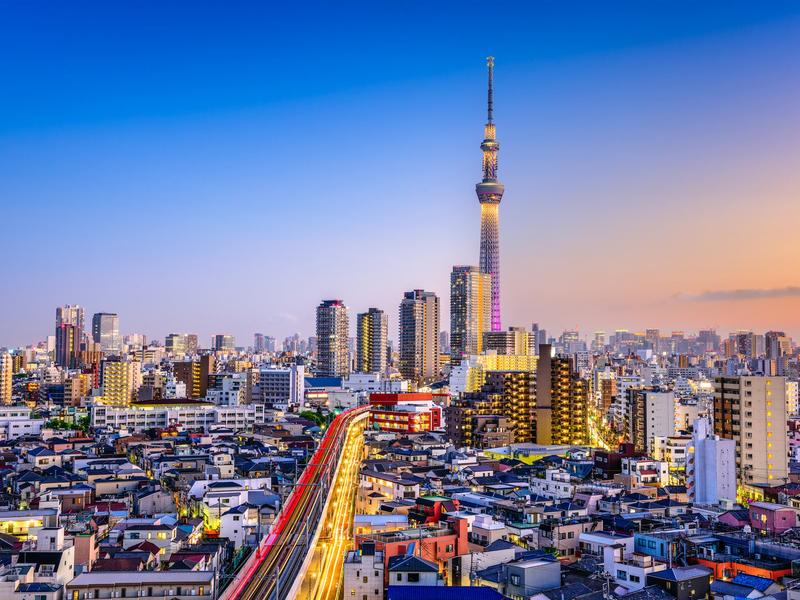


Fuji Five Lakes
Fuji Five Lakes stretches along the northern base of Mount Fuji, with each lake offering a distinct rhythm for your journey. Some areas are perfect for easy sightseeing, while others offer a more rugged, outdoorsy feel with cycling routes, quiet nature, and hidden caves. You will find lakeside paths lined with seasonal flowers and those iconic views of Fuji rising across the water. For a first visit, the best starting point is choosing between Lake Kawaguchiko and Lake Yamanakako, as they represent the clear difference between a convenient sightseeing hub and an open, active lakeside experience.
Lake Kawaguchiko in Fuji Five Lakes: the easiest base for a first trip
Lake Kawaguchiko is the most practical choice for a first-time itinerary. Everything here is easy to navigate: Kawaguchiko Station, sightseeing buses, hotels, and cafes are all clustered within a convenient zone. You’ll find museums, boat rides, and several of the most famous Mount Fuji viewpoints just a short distance apart.
While it isn’t the wildest part of the region, that’s exactly why it works. You can arrive by train or bus, drop your luggage, and explore without the day becoming a transport puzzle. It offers the perfect balance of stunning photo spots, gentle walks, and relaxed dining options.
Click here to learn more about creating a personal itinerary
Lake Kawaguchiko
Lake Kawaguchiko is rated **4.6** and stands as one of the most photogenic spots in the Fuji Five Lakes area. The northern shore is particularly rewarding, offering that classic view of Mount Fuji beyond the water. The scenery transforms with the seasons — from cherry blossoms in spring and lavender in summer to vibrant autumn colors and crisp, clear views in winter.
The lake offers enough variety for a full day. You can combine a walk through Oishi Park with a sightseeing boat tour, head to the ropeway for a high vantage point, or explore unique spots like the Kawaguchiko Music Forest Museum. Cycling along the shore is a wonderful way to move between viewpoints, though it’s best to keep distances realistic if you are traveling with children or in colder weather.
Location & How to Get There
Lake Kawaguchiko is located in Fujikawaguchiko Town, Yamanashi Prefecture, with **Kawaguchiko Station** serving as the primary gateway. From Tokyo or Shinjuku, you can reach the area by train via Otsuki Station and the Fujikyuko Line, or take a direct express bus.
For budgeting, the highway bus from Shinjuku to Kawaguchiko Station is approximately **¥2,200 one way for an adult** and **¥1,100 for a child**, with a travel time of about **1 hour 45 minutes**. A train from Shinjuku with a reserved seat on the Fuji Excursion is better budgeted at around **¥4,000 one way**. Once at the lake, the Red Line sightseeing bus is the most convenient way to reach the main attractions.
Why Choose It
Choose Lake Kawaguchiko if you want a straightforward experience without relying on a car. It is the best option for travelers seeking iconic views, easy transport, and plenty of dining and accommodation choices in one accessible area.
It’s also a reliable choice when the weather is unpredictable. If Mount Fuji is hidden by clouds, the day remains enjoyable thanks to the local cafes, museums, and the ropeway. The **Lake Kawaguchiko Sightseeing Boat “Appare” costs ¥1,000 for adults and ¥500 for children**, offering a great perspective of the mountain from the water on clear days.
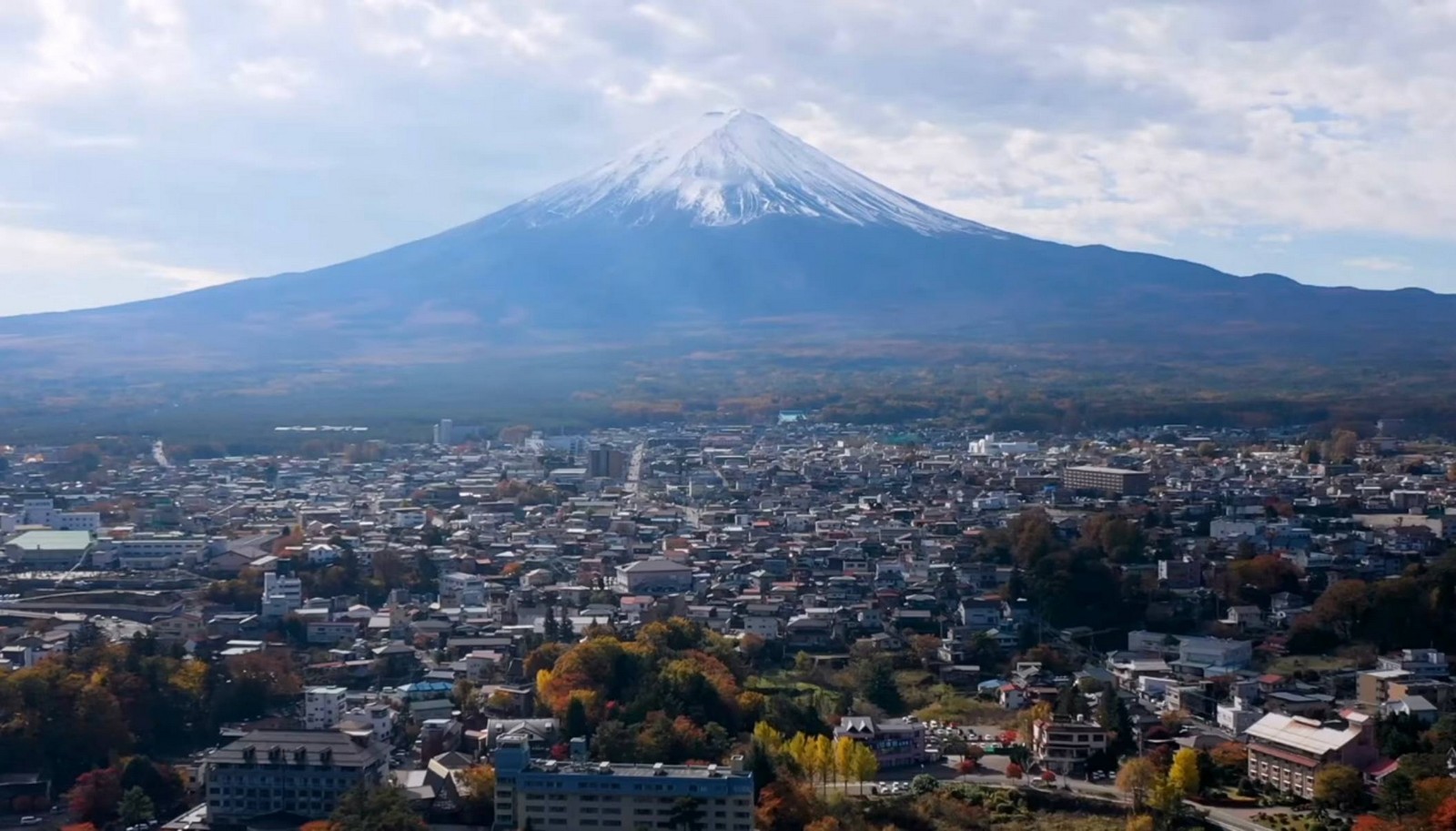
A wide panoramic view of Mount Fuji rising above the town near the Fuji Five Lakes area. The scene shows the scale of the mountain and the peaceful landscape surrounding it.
Best For
Lake Kawaguchiko is perfect for those who want to experience nature without sacrificing comfort. For families, it is especially practical as facilities like toilets, shops, and transport are much easier to find here than at the quieter lakes.
It also suits travelers who prefer shorter walks or a more manageable pace. Most highlights are close to the main roads, though the best photos still require a bit of timing and choosing the right side of the lake for the light.
Time Needed: Minimum: half a day. Recommended: a full day. If staying overnight to visit multiple museums and the northern shore, plan for 1–2 days.
Price Level: Moderate; simple meals range from ¥800–1,500, local hoto noodles cost around ¥1,100–1,800. Standard hotels average ¥20,000–35,000 per night, while premium onsen hotels with Fuji views range from ¥35,000–60,000.
Tip from the itinerary expert: To get the best views of Lake Kawaguchiko, head to the **northern shore early in the morning**. Keep your plans for the boat or ropeway flexible; clouds often gather around the peak later in the day, so prioritize view-dependent spots first.
Lake Yamanakako in Fuji Five Lakes: a wider, more active day by the water
Lake Yamanakako offers a sense of openness that you won’t find at Kawaguchiko. As the largest of the five lakes, it sits on the eastern edge of the region, featuring broad shores, extensive cycling paths, and wide-angle views of Mount Fuji.
The pace here is less about ticking off sights and more about space and movement. It works best when you have time to actually be by the water—whether that’s walking, cycling, or taking a boat ride. It’s also the perfect gateway to the traditional springs of Oshino Hakkai.

Since 2015, our website has specialized in individual planning of unique routes, taking into account personal preferences and desires.
Each of you will receive a unique PDF file from us, which contains everything you need: travel routes, car rentals, hotels, the best tourist attractions, attractions for kids and everything you need for a perfect vacation.
During the trip, we are available for you by phone via WhatsApp.
Our personal service provides information from A to Z, taking into account many small details that can become a decisive factor on the way from a wasted trip to an unforgettable vacation.
Our service will make your trip comfortable, save a lot of time on planning and preparation, and most importantly – will allow you to become freer and fully enjoy the pleasure of the trip.
Lake Yamanakako
Lake Yamanakako is rated **4.5** and is known for its spacious, airy feel. The landscape is broad, offering long views across the water and a more active resort vibe compared to the quieter lakes to the west.
It is ideal for a half-day or full-day outdoor break. You can enjoy a cruise on the “Swan Lake” pleasure boat, explore Nagaike Shinsui Park, or wander through the lakeside shop district. In winter, the lake is famous for the **Diamond Fuji Weeks** and the **Ice Candle Festival**, where the mountain views become the centerpiece of the festivities.
Location & How to Get There
Lake Yamanakako is located in Yamanakako Village on the eastern side of the region. Being the highest of the five lakes, it is accessible by bus from Kawaguchiko Station or via Mt. Fuji Station.
The Fujikko-go sightseeing bus connects Mt. Fuji Station with Oshino Hakkai, the local flower fields, and major lakeside stops like Asahigaoka. For the Oshino Hakkai to Lake Yamanakako route, fares are roughly ¥1,030 for adults and ¥500 for children, though it is always wise to check seasonal schedules before you head out.
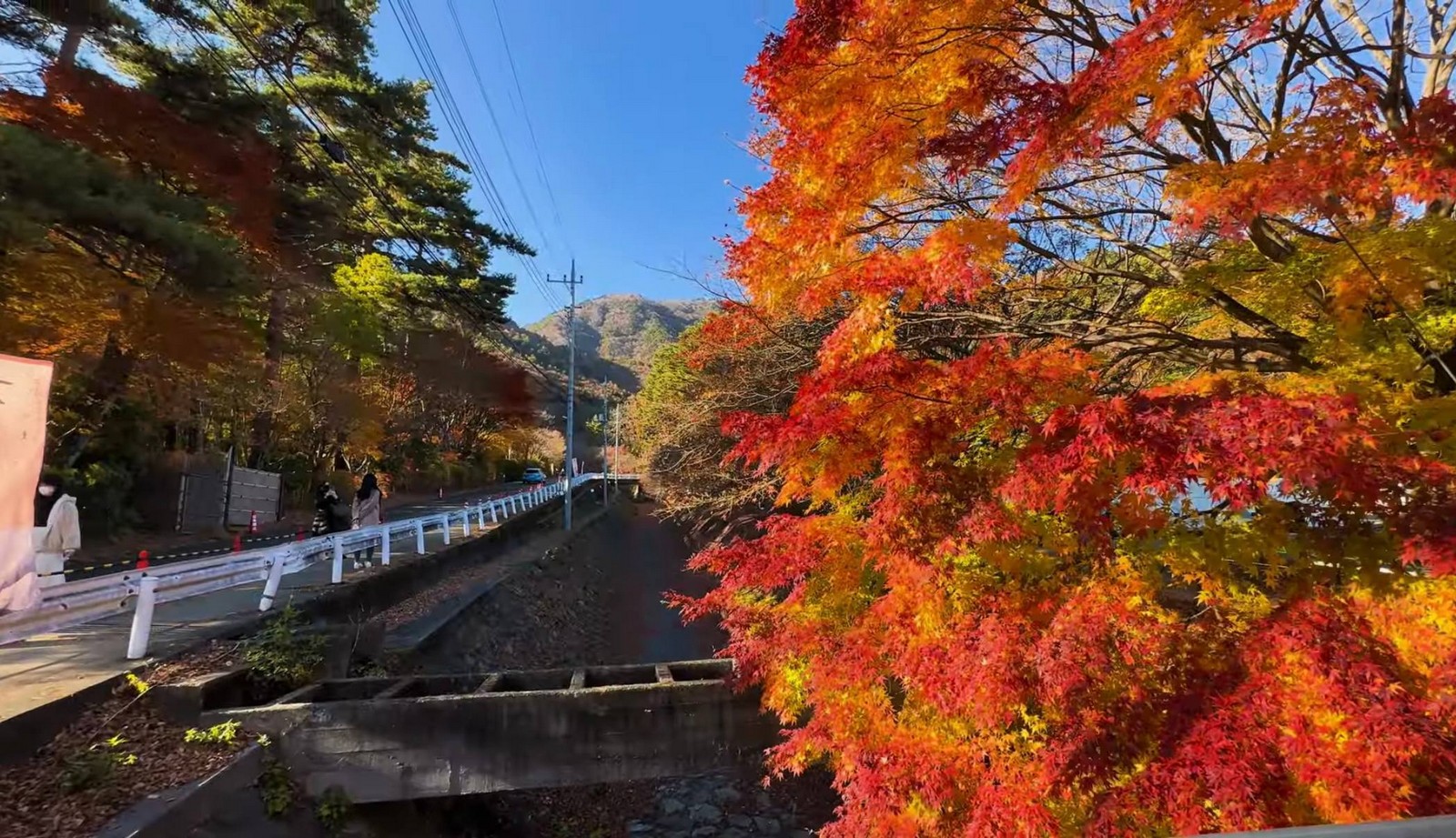
Bright autumn colors along a quiet road near the Fuji Five Lakes. The red and orange maple leaves create a beautiful seasonal frame for a relaxed walk.
Why Choose It
Choose Lake Yamanakako if you prefer an active day with plenty of room to breathe. It’s a superior choice for cycling and long walks where you don’t want the itinerary to feel compressed or limited to just one famous photo point.
This lake also pairs naturally with a car trip. Having your own wheels makes it much easier to visit Panoramadai, Oshino Hakkai, and various lakeside parks without waiting for buses. A compact car rental in the area typically costs between ¥8,800–12,500 for 24 hours, which often proves more convenient for a multi-stop day.
Best For
Lake Yamanakako is for travelers who crave fresh air and a gentle outdoor pace. It feels less urban than Kawaguchiko and is perfect for those who want a day that revolves around the natural landscape.
For families, I recommend picking a few specific spots rather than trying to circle the entire lake. A short break by the water, a boat ride, and a relaxed lunch usually make for a much better experience than trying to pack in too many transfers.
Time Needed: Minimum: 2–3 hours. Recommended: half a day or a full day if including cycling, Oshino Hakkai, or the lakeside parks.
Price Level: Moderate; budget around ¥800–1,500 for simple meals, ¥1,100–1,800 for hoto noodles, and ¥1,800–3,500 for a standard restaurant dinner.
Tip from the itinerary expert: At Lake Yamanakako, don’t try to walk the entire lakeside loop unless you are looking for a serious hike. A better approach is to pick one great viewpoint, one activity, and one local food stop, using the bus or a car to bridge the gaps between them.
Lake Saiko in Fuji Five Lakes: forests, caves and a quieter nature route
Lake Saiko is the ideal choice when you want your Fuji Five Lakes experience to feel like a true nature retreat, rather than just a quick photo stop. The atmosphere here is noticeably calmer than around Lake Kawaguchiko, defined by deep blue water, dense forests, and the refreshing mountain air that flows from the nearby Aokigahara Forest.
This area shines as a “greener” alternative once you have explored the main sights of the region. Rather than looking for rows of cafes or busy entertainment, come to Lake Saiko to explore volcanic caves and enjoy a slower, more intentional pace of travel.
Lake Saiko
Lake Saiko lies just west of Lake Kawaguchiko but feels worlds apart with its forested shores and lack of resort-style crowds. It is the perfect destination for those seeking quiet water views and a landscape that feels more raw and unusual than the typical Mount Fuji tourist spots.
The lake’s greatest strength is its connection to the volcanic history of the area. The Fugaku Wind Cave, Narusawa Ice Cave, and Saiko Bat Cave are all located nearby, allowing you to combine lakeside relaxation with a journey through ancient lava formations. Tickets for the Wind and Ice caves are roughly **¥350 for adults** and **¥200 for children**, while the Bat Cave is about **¥300–350 for adults**.
Location & How to Get There
Lake Saiko is located west of Lake Kawaguchiko in the Fujikawaguchiko Town area. It is accessible from Kawaguchiko Station via the Green Line sightseeing bus, which stops at the main natural landmarks and cave entrances.
While the bus is an option, a car makes exploring Lake Saiko much more efficient—especially if you plan to visit several caves and forest viewpoints in one day. Compact car rentals in the region typically cost between **¥8,800–12,500 for 24 hours**, providing the flexibility needed when bus schedules are less frequent.
Why Choose It
Choose Lake Saiko if you want to avoid the crowds and immerse yourself in nature. Its primary advantage is how easily it pairs with the Aokigahara Forest and volcanic caves, making your day feel like a diverse adventure rather than just a simple walk by the water.
It is also an excellent option for a second day in the region. After the energy of Kawaguchiko, Lake Saiko offers a more peaceful rhythm, fewer urban distractions, and a deeper sense of Mount Fuji’s natural wilderness.
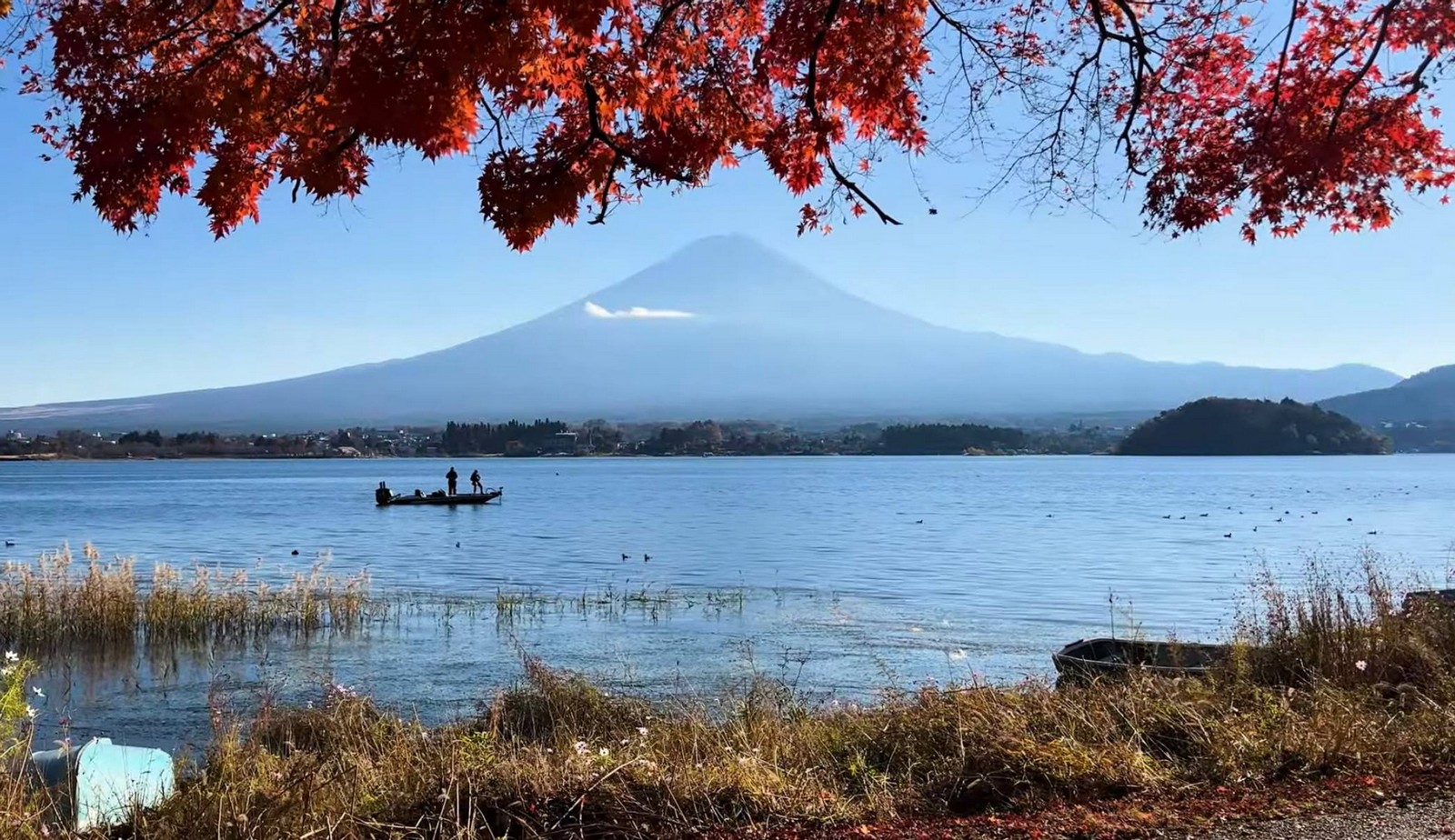
Mount Fuji viewed across the calm waters of Lake Kawaguchiko, framed by autumn leaves. This is one of the classic scenic views in the Fuji Five Lakes region.
Best For
Lake Saiko is best for nature enthusiasts, travelers with a car, and families with children old enough to enjoy exploring caves and forest trails. It offers a more active alternative to the standard sightseeing route.
For seniors or those with limited mobility, it’s best to stick to the easy roadside viewpoints. Some of the cave interiors and forest paths can be damp or uneven, so it is important to keep the itinerary manageable based on the weather and your group’s energy levels.
Time Needed: Plan for 1–2 hours for the lake itself. If you include the caves and forest walks, allow at least half a day.
Price Level: Moderate; cave entry fees are low, but total costs will depend on your choice of transport between sites.
Tip from the itinerary expert: Treat Lake Saiko as a **nature cluster** rather than a single destination. The most rewarding route starts with a lakeside view, followed by one or two caves, and ends with a short forest walk; this keeps the day engaging without feeling like you are constantly in transit.
Lake Shojiko in Fuji Five Lakes: a short, quiet stop between bigger lakes
As the smallest of the Fuji Five Lakes, Lake Shojiko offers a very different experience than its larger neighbors. There is minimal infrastructure and fewer organized activities here, which makes it the perfect spot for a quiet, contemplative pause on the western side of the region.
Shojiko works best as a scenic transition between Lake Saiko and Lake Motosuko. Instead of trying to build a full program here, use this stop for a short walk and a few peaceful photos before moving on to the next highlight of your route.
Click here to learn more about creating a personal itinerary
Lake Shojiko
Lake Shojiko reveals a more modest and tranquil side of the area. It lacks the development of Kawaguchiko and the active resort feel of Yamanakako, but that is exactly where its charm lies. It provides a useful change of pace for any traveler.
This lake serves as a reminder that the region is about more than just famous landmarks. Keep your visit simple: arrive, enjoy the view across the water toward the mountain, and appreciate the stillness of a less commercialized part of the Fuji Five Lakes.
Location & How to Get There
Lake Shojiko is nestled between Lake Saiko and Lake Motosuko. From Kawaguchiko Station, you can reach it via the Blue Line sightseeing bus, which continues onward to Lake Motosuko.
By car, Shojiko fits seamlessly into a western Fuji Five Lakes loop: Saiko — Shojiko — Motosuko. This is the most comfortable way to visit, as it allows you to make a brief stop without being strictly tied to the bus timetable.
Why Choose It
Choose Lake Shojiko if you want a moment of peace away from the crowds. It is a practical addition when your route is already taking you through the western region and you want to see a softer, more natural side of the area.
While it doesn’t require much time, a stop here makes the journey feel complete. It acts as a natural bridge between the forested landscape of Saiko and the open waters of Motosuko, offering a quieter perspective on the mountain scenery.
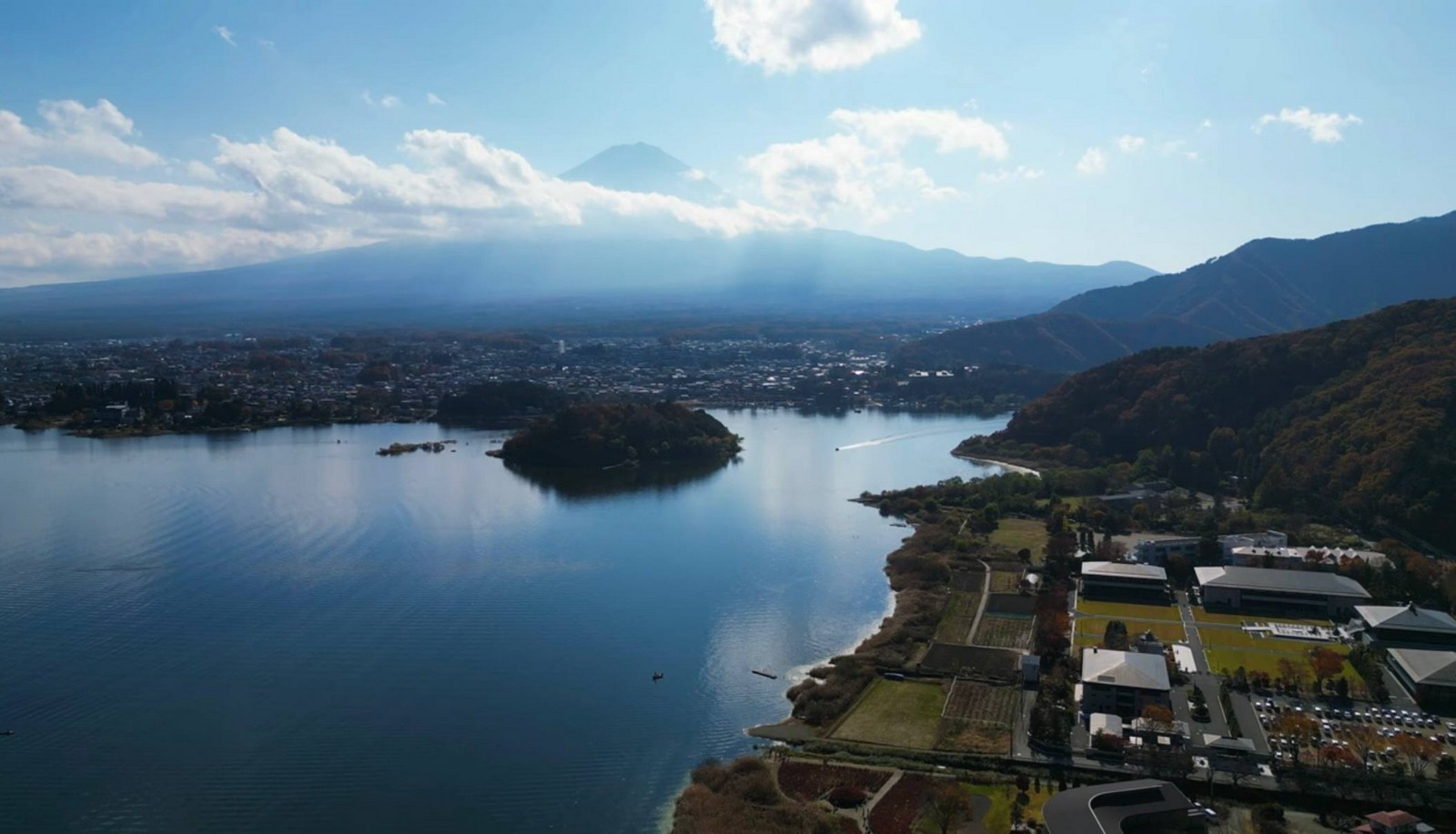
An aerial view over Lake Kawaguchiko with Mount Fuji in the background. The islands, shoreline and surrounding hills show why this area is so popular for scenic drives and photo stops.
Best For
Lake Shojiko is a favorite for photographers and travelers who prefer serene landscapes over structured tourist attractions. It is particularly well-suited for couples looking for a quiet moment during their road trip.
For families with young children, it works best as a quick scenic break. Pairing it with a nearby nature stop ensures the day remains varied and engaging for everyone.
Time Needed: 30–60 minutes is usually sufficient. If you want to linger for photography or a longer walk, plan for 1–1.5 hours.
Price Level: Low to moderate; the lake is primarily a free scenic stop, so expenses are limited to transport and meals.
Tip from the itinerary expert: Don’t overthink your visit to Lake Shojiko. Use it as a **breathing point** in your itinerary—a chance to take a few photos and enjoy the silence before continuing your journey west.
Lake Motosuko in Fuji Five Lakes: the most natural western lake scenery
Lake Motosuko is one of the most impressive natural landmarks in the region, especially on a clear day. It feels more vast and less developed than the central lakes, making it a top choice for travelers who prioritize raw scenery and open space over a long list of attractions.
This lake serves as the grand finale to a western Fuji Five Lakes route. After the intimacy of Lake Shojiko, the drive toward Motosuko opens up into a rugged, expansive landscape that showcases the more wild side of the Mount Fuji area.
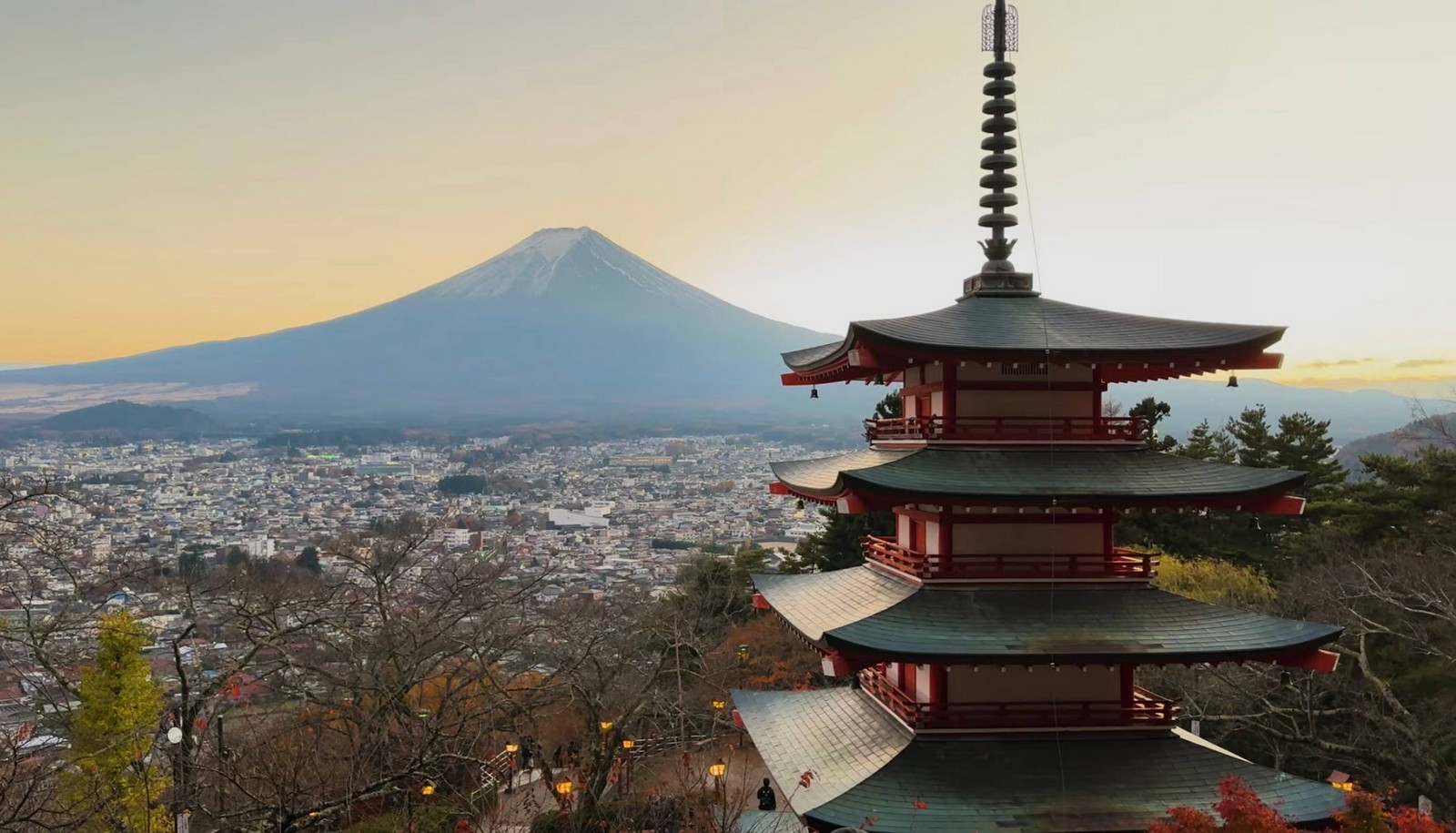
The Chureito Pagoda with Mount Fuji in the background, one of the most iconic views near the Fuji Five Lakes. The combination of the pagoda, city and mountain creates a postcard-like scene.
Lake Motosuko
Lake Motosuko is best experienced as a place of quiet power and visual impact. While it isn’t the easiest lake to reach without a car, it rewards those who make the effort with a landscape that feels like a genuine wilderness rather than a tourist resort.
The lake is a paradise for photography. If the weather is clear, the view of Mount Fuji from here is often the highlight of the entire trip. Even if the mountain is behind clouds, the vast, calm waters provide a sense of scale and peace that you won’t find in the busier sightseeing zones.
Location & How to Get There
Lake Motosuko is the westernmost of the Fuji Five Lakes. It is connected to Kawaguchiko Station by the Blue Line sightseeing bus, which also serves Lake Shojiko along the way.
A car is highly recommended for a flexible visit, as it allows you to explore different viewpoints and adjust your schedule based on the weather. Having your own transport makes it easy to combine Motosuko with Shojiko and Saiko into one powerful western-region itinerary.
Why Choose It
Choose Lake Motosuko for its untouched nature and superior photography opportunities. While it requires a bit more effort to reach, it is the most rewarding lake for those who want to venture further from the main tourist hubs.
The main practical benefit is how well it rounds out a western route. Together with Saiko and Shojiko, it creates a diverse journey through forests and caves that culminates in this stunning, open-water landscape.
Best For
Lake Motosuko is a top pick for nature lovers, photographers, and road-trippers who prefer quiet, undeveloped shores. It’s also an excellent choice for couples looking for a scenic escape away from the crowds.
For families, it works well if you have a plan in place. The key is to avoid a long day of driving just for photos; instead, choose one or two spots by the water to relax and enjoy the fresh air together.
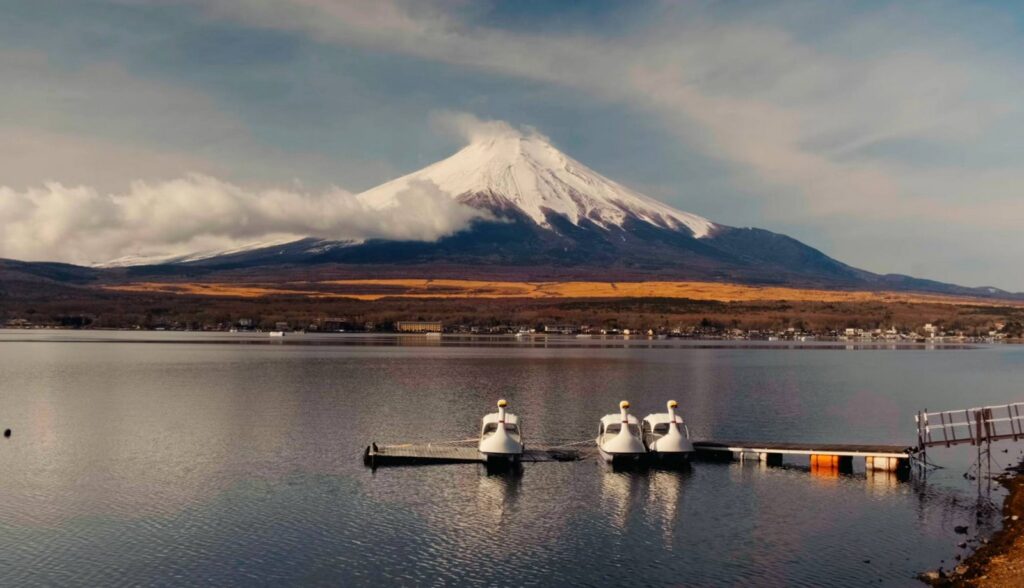
Mount Fuji reflected in the quiet waters of Lake Yamanakako, with swan boats waiting by the pier. The view feels especially peaceful and is perfect for a slower stop by the lake.
Time Needed: Minimum 1 hour. For a more relaxed experience with photography and light walking, plan for 2–3 hours. A full western lake tour usually takes at least half a day.
Price Level: Low to moderate; the lake itself is a natural attraction, so costs are primarily related to your transport and dining choices.
Tip from the itinerary expert: Make Lake Motosuko your **final scenic highlight** of the day. If the sky is clear, give yourself extra time for photos; if it’s cloudy, keep the stop brief and spend more time exploring the caves at Lake Saiko.
Fuji Five Lakes 2-Day Itinerary
Trip Duration: 2 days
Day 1: Lake Kawaguchiko, Oshino Hakkai and Lake Yamanakako
10:00–10:30 — Start at Kawaguchiko Station. If you arrive by train or express bus, this is the most practical starting point to pick up a rental car. From Shinjuku, the highway bus to Kawaguchiko Station is approximately ¥2,200 one way for adults and ¥1,100 for children. A reserved-seat train is budgeted at about ¥4,000 per adult. Renting a compact car for the region typically costs ¥8,800–12,500 for 24 hours, which makes navigating the lakes significantly smoother than relying on bus schedules.
10:30–12:00 — Lake Kawaguchiko Northern Shore and Oishi Park. Drive to the northern side of Lake Kawaguchiko for one of the most famous views of Mount Fuji rising across the water. Oishi Park is perfect for a gentle walk among seasonal flowers and a visit to the local souvenir shops. If the sky is clear, take your time here—this often proves to be the most stunning viewpoint of the journey.
12:00–13:00 — Lunch near Lake Kawaguchiko. Sample the regional specialty, hoto noodles, or choose a simple udon or soba shop near the station. Hoto typically costs ¥1,100–1,800 per person, while lighter cafe meals or rice bowls are around ¥800–1,500. For a family of four, a realistic lunch budget is approximately ¥5,000–9,000.
13:00–14:00 — Lake Kawaguchiko Sightseeing Boat “Appare”. If visibility allows, enjoy a short cruise across the lake. Tickets are ¥1,000 for adults and ¥500 for children (preschoolers usually ride for free). If the mountain is hidden by clouds, skip the boat and enjoy a lakeside coffee or a longer walk instead.
14:00–15:00 — Drive to Oshino Hakkai. The drive takes about 30–40 minutes. Entrance to the village area is free, though a few private museums may have a small fee. The highlight is the crystal-clear spring water and traditional thatched-roof buildings, which create a beautiful foreground for Mount Fuji when the weather is on your side.
15:00–17:30 — Lake Yamanakako and Nagaike Shinsui Park. Continue to the largest of the five lakes, a 20-minute drive from Oshino Hakkai. Visit Nagaike Shinsui Park for wide, open views of the mountain and a relaxed atmosphere. This lake feels more spacious than Kawaguchiko, making it ideal for a quiet stroll or watching the swan boats on the water.
17:30–18:00 — Dinner and Overnight. Stay near Lake Yamanakako for a quiet resort feel, or return to Kawaguchiko for a wider variety of evening dining. Budget about ¥1,800–3,500 per person for a standard restaurant dinner. Local favorites include Yoshida udon or seasonal lake smelt.
Tip from the itinerary expert: Prioritize the northern shore of Lake Kawaguchiko early in the day. Clouds often gather around Mount Fuji by the afternoon, so it’s best to secure your landscape photos first and save the boat ride or museums for later.

Overnight Location: Lake Kawaguchiko or Lake Yamanakako
Day 2: Lake Saiko, Lake Shojiko and Lake Motosuko
10:00–10:30 — Leave Lake Kawaguchiko toward Lake Saiko. Having a car is particularly beneficial today, as the western lakes are more remote. The route today is a nature-focused drive through quieter, more forested landscapes.
10:30–12:30 — Lake Saiko and Volcanic Caves. Explore the quieter side of the region. Lake Saiko is surrounded by deep forest and pairs perfectly with the nearby lava caves. Fugaku Wind Cave and Narusawa Ice Cave cost ¥350 for adults and ¥200 for children. I recommend picking one or two caves to explore, as the damp and cool conditions can be surprisingly tiring.
12:30–13:30 — Lunch around Lake Saiko or Narusawa. This is the last practical area for lunch before heading further west. Enjoy a set meal or local noodles here. It is a good idea to keep some snacks in the car, as dining options become very limited around Shojiko and Motosuko.
13:30–14:30 — Lake Shojiko. Drive west to the smallest of the five lakes. Treat this as a peaceful scenic pause rather than a long activity. Spend 30–60 minutes enjoying the stillness and the unique “Kodaki Fuji” view, where the mountain appears to be cradling a smaller peak.
14:30–16:30 — Lake Motosuko. Continue to the most natural and expansive lake in the chain. It is famous for its exceptionally clear water and the specific view of Mount Fuji featured on the 1,000-yen banknote. Avoid over-scheduling here; the lake is best enjoyed by simply taking in the silence and the landscape.
16:30–18:00 — Return toward Lake Kawaguchiko. The drive back takes roughly 50–70 minutes. For your final dinner, the restaurants around Kawaguchiko offer the most reliable options for wrapping up your trip with local flavors like hoto or grilled fish.
Tip from the itinerary expert: Reserve Lake Motosuko as your afternoon focus only if the weather is clear. If it’s a cloudy day, you’ll get more value by spending extra time exploring the fascinating caves and forest paths around Lake Saiko instead.
Overnight Location: Lake Kawaguchiko, Lake Yamanakako or return to Tokyo
Traveler Experiences from Fuji Five Lakes

Daniel Morgan
Visited in November 2018

We stayed near Lake Kawaguchiko during the peak of the maple season, and the autumn colors were absolutely unreal. Even the kids went quiet for a few minutes just taking in the sight of Mount Fuji across the water. We rented bikes near the station and found ourselves stopping so often for photos that we never actually finished the loop. No regrets, though—it was beautiful.
Sophie Bennett
Visited in July 2019

Lake Yamanakako felt much more spacious and less crowded than Kawaguchiko. We enjoyed a long walk by the water, watched the swan boats, and found a simple, charming spot for lunch nearby. The only challenge was navigating the area without a car. While the buses are reliable, we spent a lot of time checking schedules instead of fully relaxing.
Michael Turner
Visited in February 2023
I visited primarily to see Mount Fuji, but the mountain stayed hidden behind the clouds for most of the day. Lake Kawaguchiko itself was clean and peaceful, but without that iconic view, the experience felt a bit quiet. The boat ride was a nice addition, though it was incredibly cold—my hands were freezing while I was trying to get a few steady shots.
Laura Collins
Visited in April 2017
The northern shore of Lake Kawaguchiko was easily the highlight of our trip. Seeing the cherry blossoms, the lake, and Mount Fuji all together was incredible. We stopped for a huge portion of local hoto noodles for lunch, which was delicious. By mid-afternoon, our youngest was getting tired, so the short boat ride provided the perfect relaxing break.
Adam Clarke
Visited in August 2024
Fuji Five Lakes is much more spread out than I anticipated. We tried to visit Kawaguchiko, Saiko, and Motosuko in a single day using the bus, and it quickly became exhausting. We spent too much time waiting at stops and not enough time by the water. I think the experience would feel completely different and much more enjoyable with a rental car.
Emily Carter
Visited in October 2022
Lake Saiko was much quieter than the other lakes, which was exactly what we were looking for. The volcanic caves offered a fun change of pace from the typical lakeside views, though the paths were quite damp and chilly. My son loved the adventure, while my daughter felt the cold immediately. Definitely bring a light jacket along, even if the morning starts out warm.
Thomas Wright
Visited in January 2025
We headed to Lake Kawaguchiko early in the morning, hoping to see the ‘Upside-Down Fuji’ reflection. It was freezing, but for a few minutes, the water became perfectly still and everyone just stopped talking in awe. The wind picked up shortly after and the reflection vanished. In this area, timing and a little bit of luck really do matter.
Maya Anderson
Visited in May 2016
Lake Motosuko is stunning, but it felt a bit too isolated for our family after lunchtime. The water is incredibly clear and the views of Mount Fuji are impressive when the clouds part, but there are far fewer places to grab a meal compared to Kawaguchiko. It’s a beautiful spot for a quick visit, but perhaps not for a long stay with kids.
Oliver Hughes
Visited in September 2021
Using Lake Kawaguchiko as our base was definitely the right move. Having the station, bike rentals, and plenty of cafes nearby made everything very easy, especially when we needed to duck indoors to avoid the rain. While parts of the town feel a bit commercial, you completely forget the buildings the moment you reach the shoreline.

Tips from the Itinerary Expert

Prioritize Lake Kawaguchiko's North Shore
If Mount Fuji is visible in the morning, head straight to the northern shore of Lake Kawaguchiko, particularly around Oishi Park. Secure your landscape photos early before clouds, haze, or wind alter the scene, then decide on the sightseeing boat later.
Establish a Single Base at Lake Kawaguchiko
For a seamless family trip, avoid changing hotels between the lakes. Staying near Lake Kawaguchiko is highly efficient as the station, cafes, boats, and transport hubs are all concentrated there, making the other lakes perfect for easy day trips.
Rent a Car for the Western Lakes
A rental car is strongly recommended for exploring Lake Saiko, Lake Shojiko, and Lake Motosuko. Relying on buses can lead to long wait times; a car offers the flexibility to explore caves and viewpoints at a pace that suits your family.
Explore Caves Before Scenic Lake Stops
Plan visits to the Fugaku Wind Cave or Narusawa Ice Cave before heading to the quieter lakes. Since cave exploration is active and cool, a subsequent stop at Lake Saiko or Shojiko serves as a natural, relaxing break for the children.
Keep Lake Shojiko as a Brief Scenic Pause
While Lake Shojiko is stunning, it is best enjoyed as a short scenic stop rather than a primary destination. For families, 30–60 minutes is usually sufficient for photography and a quiet lakeside moment before moving toward Lake Motosuko.
Maintain Flexibility for Boat Trips
If Mount Fuji is obscured by clouds, consider skipping the Lake Kawaguchiko Sightseeing Boat. Redirect that time toward a lakeside cafe or Oishi Park; the boat experience is significantly more rewarding when the mountain is visible.
Dine Before Heading West
Ensure you have lunch near Lake Kawaguchiko or Lake Saiko before driving further west. Dining options become scarce around Lake Shojiko and Motosuko, and having well-fed travelers makes the remote scenery much more enjoyable.
Engage with Lake Yamanakako Through Activity
Treat Lake Yamanakako as more than just a photo op. This area is ideal for active experiences: try the lakeside walking paths, rent cycles, or take out a swan boat to truly appreciate the expansive scale of the lake.
Have a Weather Backup Near the Station
If the weather turns, use the infrastructure around Lake Kawaguchiko Station as your backup. The nearby museums, craft shops, and cafes allow you to have a fulfilling day without the frustration of driving for views hidden by clouds.
Insights from the Itinerary Expert
Visiting the Fuji Five Lakes in November 2024 confirmed one thing: this region is not meant for a rushed checklist. Lake Kawaguchiko serves as the most practical base, offering easy access to cafes, boats, bike rentals, and hotels. The northern-shore views are spectacular, especially when the clouds clear. In the early morning, the water is often still; however, as the wind picks up, the reflection of Mount Fuji can vanish in minutes, so timing is everything.
Logistics present the biggest challenge. While Lake Saiko, Lake Shojiko, and Lake Motosuko look close on a map, managing bus schedules and food breaks with children can make the day feel much longer. It is essential to keep snacks in the car when heading toward the western lakes and to avoid over-scheduling activities after visiting the caves.
The Fuji Five Lakes region is wonderful, but it requires an itinerary built around weather, driving times, and real family energy. Together, we can create a personalized route for the lakes and the rest of Japan, matching food stops and activities to your unique pace.
Fuji Five Lakes Travel Prices
| Name | Amount | Description |
|---|---|---|
| Budget hotel, minshuku, or basic guesthouse | ¥6,000–15,000 per night JPY | A realistic range for modest accommodation without a direct Mount Fuji view. For 2026, it is advisable to allow extra buffer in the budget, especially for weekends and peak seasons. |
| Mid-range hotel near Lake Kawaguchiko | ¥20,000–35,000 per night JPY | A practical range for standard hotels in the Lake Kawaguchiko area. This serves as the most convenient base for access to transport, cafes, boat rides, and lake views. |
| Premium hotel or ryokan with Mount Fuji view | ¥35,000–60,000 per night JPY | Lakeside properties with a Mount Fuji view command a premium. High-end ryokans with private onsen facilities can range from ¥45,000 to over ¥105,000 per night. |
| Compact car rental | ¥8,800–12,500 per 24 hours JPY | Essential for reaching Lake Saiko, Shojiko, and Motosuko efficiently. Renting a car is highly recommended for families to avoid the limitations of local bus schedules. |
| Public transport (Bus Pass) | ¥1,500 (1 day) / ¥2,000 (2 days) JPY | Covers local bus routes for all five lakes. For arrival from Shinjuku, budget approximately ¥2,200 for a highway bus or ¥4,000 for a reserved train seat. |
| Restaurant dining | ¥1,800–3,500 per person JPY | Standard dinner price excluding alcohol. Casual options like ramen or donburi cost ¥800–1,500, while regional <strong>hoto</strong> noodles typically range from ¥1,100–1,800. |
| Parking fees | Around ¥300–500 JPY | Standard fee for parking in high-traffic areas like Oshino Hakkai. It is recommended to keep coins ready as many smaller lots do not accept credit cards. |
| Supermarket or convenience-store meals (2 people) | ¥3,500–4,000 per day JPY | A cost-effective alternative combining supermarket sushi packs, bento boxes, and snacks. (Converted from USD to JPY for consistency with the overall budget). |
Fuji Five Lakes FAQ
What we propose

Emma Heidi
Customer Experience Manager
Take all the stress out of planning your trip!
With our experts, you can create the perfect itinerary for you – complete, comfortable, and tailored to all your dreams, wishes, and needs.
We take care of every little detail, so you can simply focus on enjoying your journey.
We’ve been designing personalized itineraries since 2015, and over the years we’ve created thousands of custom itineraries for happy clients.

Save time, avoid confusion – we do the work for you. Our service saves you weeks of searching, reading, comparing, and complicated planning. Instead of wasting endless hours – you receive a ready-to-use, accurate and clear itinerary.

A tailor-made itinerary – built just for you. Your itinerary is personally designed based on our experts’ real field experience and genuine feedback from hundreds of travelers – including hidden discoveries and insider tips that don’t appear in any travel guide.

Smart accommodation selection – often saves you hundreds or even thousands of dollars. We help you choose verified and recommended places to stay, checking availability for your exact travel dates. Sometimes we suggest hotels not “in the center,” but in safe, convenient, and highly strategic locations – which can significantly reduce travel costs and save you even thousands of dollars.

We’re by your side even during the trip. We stay with you throughout your vacation – providing professional help whenever needed. If the weather changes, there’s a strike, a local event, heavy crowds, or any unexpected situation – we are here to update, guide, and adjust your itinerary in real time.

Easy-to-use itinerary – with direct navigation links. Your itinerary includes direct Waze / Google Maps links – no need to search for parking addresses, no stress, no mistakes. Just tap – and go.

Service cost: from only $420. (Special price for short itineraries up to 5 days). Clients tell us the itinerary saves them costly mistakes, fines, wrong choices – plus exclusive discounts on car rentals, better-priced accommodations, and money-saving local tips.
Want to know if it’s really worth it?
Take a look at the experiences of travelers who built their personal itinerary with us.
Click here and let’s start building the itinerary that will save you time, money, and stress – and turn your vacation into perfection.
Of course, your first inquiry is completely free – with no commitment whatsoever.
How it works


- You are welcome to contact us
- We discuss your trip
- You fill out a special form
- We create your itinerary
- You get it with all useful tips
- We are in touch with you all the time