My love for Japan began the moment I arrived in Tokyo. The country amazed me with its harmony of ancient traditions, cutting-edge technology, breathtaking nature, and a culture unlike any other. Since then, Japan has become a part of my life, and I return there again and again. Today I help travelers discover the real Japan: I create personalized itineraries, give lectures, and prepare guests for their unforgettable journey. I would be delighted to open Japan for you too!


Jigokudani Monkey Park
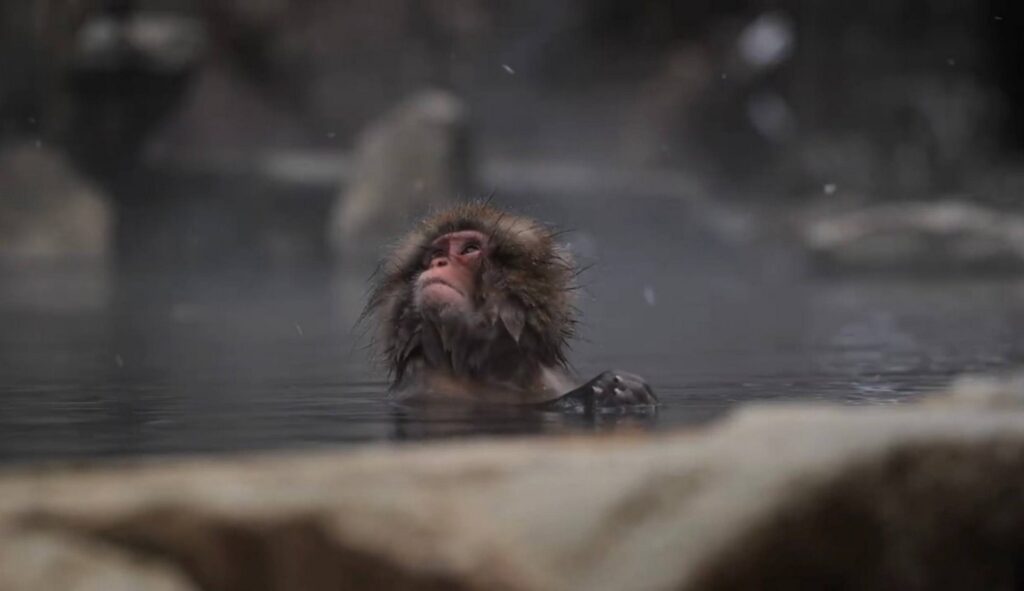
Jigokudani Monkey Park offers one of Japan’s most distinctive wildlife encounters, allowing you to observe wild Japanese macaques in their natural mountain habitat. While the park is world-famous for the iconic sight of monkeys soaking in hot springs during winter, the experience is much richer than just a photo op. The walk through the quiet forest, the mist rising from the valley, and the chance to watch the monkeys interact—grooming, playing, and moving freely—create a deep sense of connection with nature. There are no cages or staged performances here, providing a rare opportunity to witness their authentic behavior in a truly wild setting.
Jigokudani Monkey Park: Key information for planning
Jigokudani Monkey Park is nestled in the Yamanouchi area of Nagano Prefecture, within the scenic Joshinetsu Kogen National Park in the Japanese Alps. Reaching the park from Tokyo usually involves taking the shinkansen to Nagano, followed by a local train to Yudanaka and a short bus ride, or a direct express bus from Nagano Station. From the final stop, the journey continues on foot along a forest path of about 1.6–2 km. This walk typically takes 30–40 minutes, though it may take longer with children or when the trail is snowy and muddy.
Opening hours vary by season: approximately 9:00–16:00 in winter and 8:30–17:00 during the warmer months. Admission is ¥800 for adults and ¥400 for children, with free entry for children up to 5 years old. Most visits take between 1.5–3 hours including the walk, but it is wise to budget extra time, especially if the trail is slippery or if you want to spend more time observing the monkeys.
The most convenient bases for public transport are Nagano and Yudanaka. Local buses cost ¥390 one way from Yudanaka Station to Snow Monkey Park and ¥250 one way from Shibu Onsen. In 2026, the Snow Monkey Pass is priced at ¥4,800 for adults and ¥2,400 for children, while the direct bus pass from Nagano Station also costs ¥4,800 for adults following the April 2026 update. Travelers arriving by car can park for free at Kanbayashi Hot Springs, while parking in Shibu Onsen costs approximately ¥300 per hour or ¥1,000 for 24 hours.
While the hot spring is the main draw, the experience encompasses the entire valley. The macaques move freely across the paths, rocks, and trees, so there is always plenty to see even when fewer monkeys are bathing. Winter is undeniably the most photogenic season, but spring brings the chance to see newborns, autumn offers stunning fall colors, and summer visits provide a great look at the monkeys’ general social activity.
This is a fantastic destination for nature lovers and photographers, but it does require some physical effort. Strollers are difficult to navigate on the trail, and the uphill sections can be challenging in icy or muddy conditions. Facilities near the entrance include restrooms, a small gift shop, and a café. Visitors should remember to keep a respectful distance, avoid carrying visible food, and never attempt to feed or touch the animals.
Click here to learn more about creating a personal itinerary
Tip from the itinerary expert: Aim to arrive early, particularly during the winter season. The trail is much quieter, the viewing area is less crowded, and the return walk is far more pleasant before the midday peak. For families, early timing makes the walk significantly more manageable—and remember, sturdy, waterproof footwear is far more important here than a stylish winter outfit.

What to see in Jigokudani Monkey Park
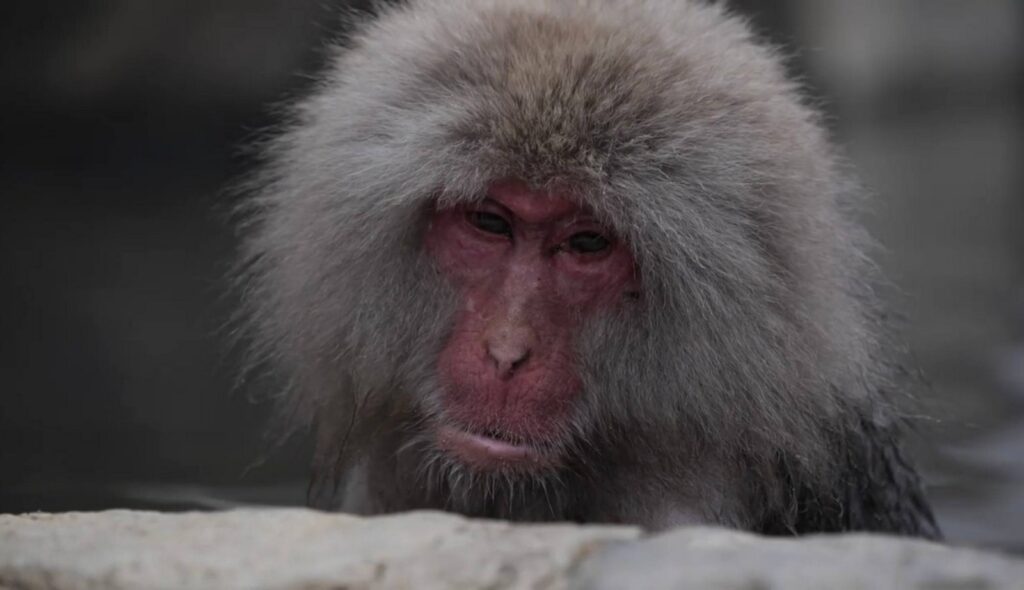
- Hot spring area (onsen) — the primary viewing spot where the macaques gather, particularly during the colder months. This is the classic scene of red-faced monkeys soaking in steaming water against a snowy backdrop. It is worth noting that they do not stay in the water all day; their presence in the pool fluctuates based on the temperature and feeding schedules.
- Free-roaming macaques — the monkeys move without restriction throughout the park, often lounging on rocks, climbing trees, or wandering along the forest paths, sometimes just a few feet from visitors. The absence of barriers or cages makes the encounter feel authentic and remarkably close.
- Monkey social dynamics — take a moment to observe how the group interacts. You will see intricate grooming rituals, playful energy, and clear social hierarchies. In spring, the sight of mothers with their newborns adds a particularly intimate and touching dimension to the visit.
- Playful younger monkeys — the juveniles are usually the most active, constantly running, jumping, and testing their surroundings. They tend to congregate in open areas and near the bridges, where their lively behavior is easiest to follow.
- Feeding times — at scheduled intervals, park staff provide grain or barley, causing large groups of monkeys to gather quickly. These moments are energetic and offer a different perspective on their behavior compared to the quieter, more relaxed periods.
- The forest trail — the walk to the park is a highlight in its own right. The path winds through a serene mountain forest lined with towering cedar trees and a flowing river, with steam rising from geothermal vents along the way, setting a tranquil tone for the experience.
- River and geothermal landscape — throughout the route and near the park entrance, the natural warmth of the earth is visible. Steam, rugged rocks, and the rushing water of the Yokoyu River create a dramatic landscape that feels worlds away from the city.

Since 2015, our website has specialized in individual planning of unique routes, taking into account personal preferences and desires.
Each of you will receive a unique PDF file from us, which contains everything you need: travel routes, car rentals, hotels, the best tourist attractions, attractions for kids and everything you need for a perfect vacation.
During the trip, we are available for you by phone via WhatsApp.
Our personal service provides information from A to Z, taking into account many small details that can become a decisive factor on the way from a wasted trip to an unforgettable vacation.
Our service will make your trip comfortable, save a lot of time on planning and preparation, and most importantly – will allow you to become freer and fully enjoy the pleasure of the trip.
Tip from the itinerary expert: Don’t focus solely on the onsen pool. Some of the most fascinating interactions happen away from the water—on the rocks, in the trees, or right along the walking paths—where the monkeys’ behavior is more varied and often more engaging to observe.
What to visit near Jigokudani Monkey Park
The area surrounding Jigokudani Monkey Park is perfect for a full day of exploration or even a relaxed overnight stay. By adding a few nearby stops, you can beautifully balance the rugged natural setting of the park with traditional onsen towns and a touch of city atmosphere—all without the need for long transfers.
Shibu Onsen
A charming hot spring town defined by narrow stone-paved streets, traditional wooden ryokan, and a profound sense of history. Walking through the town in the evening, as guests move between public baths in yukata and wooden geta sandals, feels like stepping back into a more traditional era of Japan. It is one of the most atmospheric destinations in the region and a natural extension of a visit to the monkey park.
Tip from the itinerary expert: Staying overnight here completely changes the pace of your trip. You can visit the monkey park first thing in the morning to avoid the crowds, then return for a long, relaxed evening in the thermal baths instead of rushing back to a major city.
Distance/Time: Short drive or bus ride from the park area
Yudanaka Onsen
A practical and convenient base for visiting the monkeys, offering a wider range of accommodations and seamless transport connections. While it may feel slightly more modern than Shibu Onsen, it works exceptionally well logistically, making it an ideal choice for shorter stays or late-night arrivals.
Distance/Time: Close to the park, accessible by bus
Nagano
The regional capital and the primary gateway for most visitors. Beyond its role as a transport hub, Nagano offers a rich mix of experiences—from historic temples and local culinary specialties to gateway access for the surrounding mountain ranges—making it a valuable addition for those looking to expand their itinerary beyond the park.
Tip from the itinerary expert: If you are traveling from Tokyo, consider spending a night in Nagano. It makes your morning logistics much simpler and allows you to reach the park early enough to beat the heavy tourist influx.
Distance/Time: About 1–1.5 hours from the park area
Who is Jigokudani Monkey Park suitable for?
Jigokudani Monkey Park is an ideal destination for travelers who appreciate nature, wildlife, and experiences that diverge from standard tourist sights. This is a place where you don’t just visit—you spend time observing, waiting, and noticing the subtle details of animal life. The rare opportunity to watch wild macaques at such close range, in an entirely natural environment, makes it particularly rewarding for photography enthusiasts and those who prefer the outdoors over structured attractions.
The park is also a fantastic choice for families. The visit feels active and engaging, as children are usually captivated by watching the monkeys play, move freely, and interact with one another. However, it is important to note that the walk to the park requires some physical effort. During winter, snow and ice can make the trail more demanding, and strollers are generally not practical. The final section includes a set of steps, so it is essential to plan your pace accordingly.
Click here to learn more about creating a personal itinerary
For older travelers or those with limited mobility, the 1.6–2 km walk over uneven terrain can be challenging. Sturdy, reliable footwear is a must, especially in colder months when the path often becomes slippery or muddy. While the experience is deeply rewarding, it is worth realistically considering the physical requirements when planning your day.
This might not be the best fit for those seeking a quick or highly predictable attraction. The macaques are wild, and their presence fluctuates throughout the day—sometimes they gather in large numbers, while at other times they may stay away from the main pool area. This unpredictability is exactly what makes the park special, but it also means your visit depends on timing, weather, and a bit of patience.
Tip from the itinerary expert: If you are traveling with children or simply prefer a more relaxed pace, treat this as a dedicated half-day experience. By starting early and taking your time on the forest trail, you can enjoy the monkeys without feeling rushed—a slower approach truly makes the visit more memorable.
Jigokudani Monkey Park: 2-Day Family Itinerary
Trip Duration: 2 days
Day 1 — Arrival in Nagano, Transfer to Yudanaka, and a Relaxed Evening in Shibu Onsen
Morning: Arrive in Nagano and transition toward the hot spring district of Yudanaka. From Tokyo, the shinkansen journey takes approximately 1.5–2 hours, with a one-way fare typically ranging between ¥10,650–11,180 per adult. From Nagano Station, you can board the Nagano Dentetsu train to Yudanaka or utilize the Snow Monkey transport pass if you plan to visit the park the following morning.
Lunch: Stop at Japanese Dining GOEN, located conveniently near Yudanaka Station. It is a reliable, high-quality option for your arrival day that keeps the logistics simple. The menu features local favorites such as deep-fried chicken (¥748), Nozawana tempura (¥528), fresh sushi (from ¥1,000), and premium sashimi boxes (¥2,860).
Afternoon: Check in at your ryokan or hotel in Yudanaka or Shibu Onsen. Budget-friendly accommodations start at roughly ¥5,500–5,850 per person, while comfortable traditional ryokan with half-board (breakfast and dinner) range from ¥12,600 to ¥34,650 per person. Spend your afternoon wandering the narrow, stone-paved streets of Shibu Onsen, where preserved wooden buildings and rising steam create a timeless Japanese atmosphere.
Evening: Conclude your day with a soothing onsen soak. Day visitors can use the historic Shibu Oyu bath for ¥800 per adult and ¥500 per child, while guests staying overnight in the town often receive a key to access all nine public bathhouses. If your ryokan includes dinner, enjoy the local kaiseki cuisine; otherwise, GOEN remains a practical and welcoming choice for an evening meal.
Tip from the itinerary expert: Avoid trying to squeeze the monkey park into your arrival day unless you reach the area very early. The experience is significantly more rewarding when you spend a night locally and start your forest walk fresh the next morning.
Overnight Location: Shibu Onsen or Yudanaka Onsen
Day 2 — Jigokudani Monkey Park, Forest Trail, and Return via Nagano
Morning: Start your day early and head to Jigokudani Monkey Park to beat the crowds. From Yudanaka, the bus fare is ¥390 one way, and from Shibu Onsen, it is approximately ¥250. After the bus stop, you will follow a beautiful 1.6 km forest trail (about 30–40 minutes) to reach the monkeys. The park usually opens at 9:00 in winter and 8:30 during the rest of the year. Admission is ¥800 for adults and ¥400 for children (6–17).
Budget around 1.5–3 hours for the full experience. While the hot spring pool is the most famous sight, some of the best moments occur away from the water—watching the macaques play on rocks, groom each other along the river, or move through the trees. In winter, the snow-covered scenery is breathtaking, but the trail can be slippery, making sturdy footwear essential.
Lunch: After walking back, stop at ENZA Café, located just before the forest trail exit. It is the most convenient spot for a meal, offering ramen, burgers, and quality coffee, with prices usually between ¥1,000–2,000 per person.
Afternoon: Return to the onsen towns for a final bit of relaxation. Even if you aren’t staying another night, you can visit public baths like Shibu Oyu or book private onsen sessions at Koishiya or Kadoya (from ¥1,000), Biyu no Yado (¥3,000), or Aburaya Tousen (¥2,100). This plan is ideal for families as it gets the most physical activity out of the way early in the day.
Evening: Head back to Nagano Station to continue your journey. If you are leaving the area today, ensure you have a buffer for transport schedules and weather conditions. Before boarding your train, Koishiya Café & Restaurant is an excellent spot for a light dinner or coffee, offering sandwiches (¥1,000) and artisan coffee (from ¥550).
Tip from the itinerary expert: Aim to reach the trail as early as possible. The viewing area around the onsen pool is relatively small, so arriving before the late-morning peak ensures a much calmer and more intimate experience for your family.
Overnight Location: No overnight required, or optional second night in the area
Traveller Reviews of Jigokudani Monkey Park

Daniel
February 2025

Arriving early in the morning completely transformed my visit. The walk through the snowy forest was peaceful and remains one of my favorite memories. By the time I left, the onsen area was becoming quite crowded, so the early start really paid off. A word of advice: wear proper hiking boots—the trail is stunning but can be very slippery in winter.
Maya
January 2024

I visited with my children, and the macaques were easily the highlight of their entire trip. Watching the babies cling to their mothers and the juveniles play among the rocks was an unforgettable experience. However, the walk felt longer than anticipated with kids, and the final uphill stretch was a bit tiring. I definitely wouldn’t recommend bringing a stroller, especially in the snow.
Omar
March 2023
While the monkeys were active, fewer were in the water since the weather was milder than expected. Regardless, it didn’t take away from the trip; they were everywhere—on the rocks, by the river, and right along the paths. My advice is to come for the overall wildlife experience rather than just the single iconic hot spring photo.
Sophie
June 2022
I visited in early summer, so while I missed the snowy postcard view, I actually enjoyed seeing the monkeys more active outside the pool. There were many young ones, and the whole park felt lively and playful. The trail was much easier to navigate than in winter, though still muddy in parts—definitely wear shoes you don’t mind getting a bit dirty.
Adam
December 2021
This was a major highlight of our Japan journey. We chose to stay overnight nearby rather than rushing from Tokyo, which made the experience much better. Starting early meant fewer crowds and a calmer atmosphere, leaving us plenty of time to relax in the onsen town afterward. Just be prepared for the cold—once you stop walking, the temperature drops quickly, especially for kids.
Leila
November 2019
I wasn’t sure if we’d actually see many monkeys, but they were there and surprisingly unbothered by us. I loved how natural the setting felt—the macaques mostly just ignored the visitors. The forest trail was the most challenging part due to some wet and uneven sections. I’d suggest packing light and ensuring you don’t have any visible food in your bags.
James
January 2018
I had seen photos of the snow monkeys for years, but being there in person was something else entirely. The sight of them in the steaming water, surrounded by deep snow and forest, felt almost cinematic. The park area itself is quite compact, but the journey takes time. Plan for at least half a day and try to get there as early as possible.
Tip from the itinerary expert
- I always aim for an early start. The forest trail is much quieter, the views are easier to appreciate, and the viewing area is far less crowded than during the late-morning rush.
- Don’t treat this as a quick stop. Between the transport, the 1.6 km forest walk, the final climb, and time spent observing the macaques, it naturally works best as a dedicated half-day experience.
- In winter, quality footwear is essential. I always prioritize grip and warmth over style—icy and muddy patches will significantly slow you down if you aren’t prepared.
- I would strongly advise against bringing a stroller in snowy or wet conditions. The trail and the final steps can be uneven and taxing, so it’s much easier to plan a slower walk with older children.
- Remember not to focus solely on the hot spring pool. Some of the most fascinating interactions happen away from the water—on the rocks, along the forest path, or near the riverbanks.
- Avoid carrying visible food or snacks near the monkeys. This keeps the encounter relaxed and prevents drawing unnecessary attention when the animals move close to the path.
- On milder days, it helps to adjust your expectations. The monkeys will still be around, but fewer may choose to soak in the water, so approach it as a general wildlife experience rather than a single photo op.
- I highly recommend pairing your visit with an overnight stay in Shibu Onsen or Yudanaka. It removes the pressure of a rushed day trip and makes it much easier to reach the park entrance early.
- I usually pack an extra pair of socks or simple shoe covers during the colder months. Even if the trail seems fine at first, mud and slush can make the return journey less comfortable.
- After your visit, leave time for a warm drink or an onsen soak before heading back. That small pause makes the entire day feel more balanced and relaxed, especially after a cold morning outdoors.
Insights from the itinerary expert
When I visited Jigokudani Monkey Park in February 2024, what stayed with me most wasn’t just the famous hot spring scene—it was the journey leading up to it. The 1.6 km forest walk felt like a gradual transition into a different world: quiet, snow-covered, and slightly demanding in places where the path had turned icy. By the time I reached the main area, the macaques were already everywhere—lounging on rocks, moving along the river, and occasionally passing close by with total indifference to the visitors.
The hot spring is the image everyone recognizes, but the real experience unfolds when you slow down and simply observe. The troop’s behavior—intricate grooming rituals, playful bursts of energy, and subtle social tensions—creates a sense of life that shifts from minute to minute. For families, this works remarkably well because the encounter feels dynamic and unscripted. That said, the walk can be tiring, and in winter it absolutely requires sturdy footwear and a fair bit of patience.
Timing and weather play a much larger role here than many travelers expect. On milder days, fewer monkeys remain in the water, so it is better to approach the visit as a broader wildlife experience rather than focusing solely on one specific photo op. Starting early and staying nearby in Shibu Onsen or Yudanaka makes the entire day flow much more naturally.
Jigokudani Monkey Park is a destination where the atmosphere, the rugged setting, and the wildlife come together naturally. It is less about checking a landmark off a list and more about being present in the moment. If you are planning a trip, it is worth shaping your itinerary around your own pace to truly appreciate the magic of the valley.
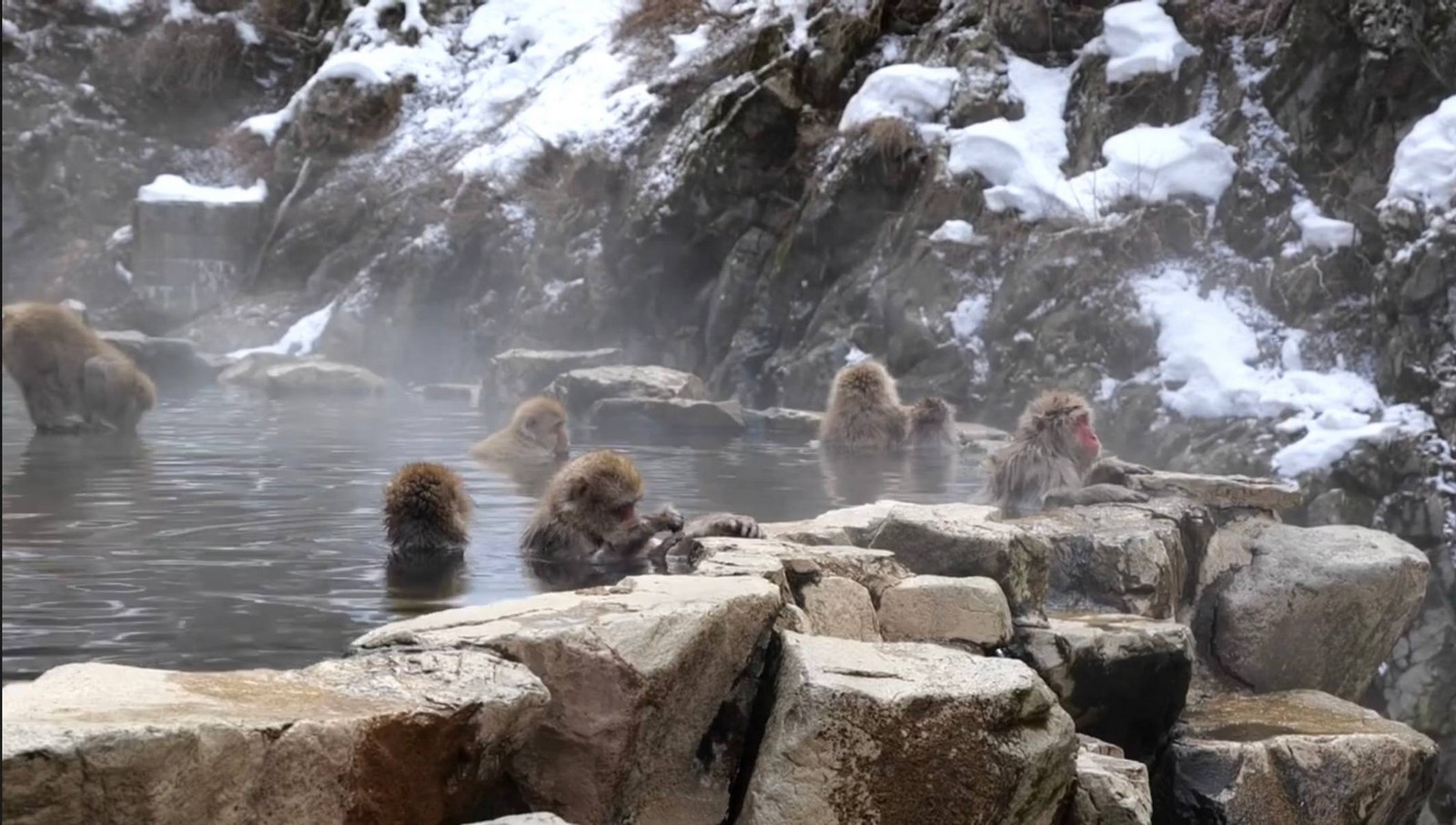
Snow monkeys relax together in a steaming hot spring, surrounded by snowy rocks – a rare and iconic winter scene in Jigokudani Monkey Park.
Costs for Jigokudani Monkey Park and the Surrounding Area
| Name | Amount | Description |
|---|---|---|
| Budget hotels (per couple) | ¥6,400–11,700 JPY | Simple stays including basic rooms or dorm-style accommodations in Shibu Onsen, usually ranging from ¥3,200 to ¥5,850 per person. |
| Mid-range hotels / ryokan (per couple) | ¥25,200–69,300 JPY | Comfortable ryokan stays with half-board (breakfast and dinner) included, typically averaging ¥12,600–34,650 per person. |
| High-end hotels / ryokan (per couple) | ¥60,000–100,000+ JPY | Premium options featuring upgraded amenities or private hot spring baths, often starting from ¥30,000–50,000+ per person. |
| Family apartments (up to 5 people) | ¥30,000–60,000 JPY | Estimated cost for larger vacation rentals or multi-room suites, depending on the season and the specific property. |
| Public transport | ¥250–¥4,800 JPY | Local buses cost between ¥250 and ¥390 one way. The comprehensive Snow Monkey Pass is priced at approximately ¥4,800, covering transport and park entry. |
| Dining (per person) | ¥1,000–3,000 JPY | Casual meals start around ¥1,000, while most standard restaurant dinners fall between ¥1,500 and ¥3,000 per person. |
| Parking | Free – ¥1,000 JPY | Free parking is available near the Kanbayashi trailhead. In Shibu Onsen, parking costs about ¥300 per hour or ¥1,000 for a full 24-hour period. |
| Basic groceries (2 people) | ¥1,000–1,500 JPY | An estimated daily budget for two people for basic supermarket items, snacks, or light meals. |
FAQ about Jigokudani Monkey Park
What we propose

Emma Heidi
Customer Experience Manager
Take all the stress out of planning your trip!
With our experts, you can create the perfect itinerary for you – complete, comfortable, and tailored to all your dreams, wishes, and needs.
We take care of every little detail, so you can simply focus on enjoying your journey.
We’ve been designing personalized itineraries since 2015, and over the years we’ve created thousands of custom itineraries for happy clients.

Save time, avoid confusion – we do the work for you. Our service saves you weeks of searching, reading, comparing, and complicated planning. Instead of wasting endless hours – you receive a ready-to-use, accurate and clear itinerary.

A tailor-made itinerary – built just for you. Your itinerary is personally designed based on our experts’ real field experience and genuine feedback from hundreds of travelers – including hidden discoveries and insider tips that don’t appear in any travel guide.

Smart accommodation selection – often saves you hundreds or even thousands of dollars. We help you choose verified and recommended places to stay, checking availability for your exact travel dates. Sometimes we suggest hotels not “in the center,” but in safe, convenient, and highly strategic locations – which can significantly reduce travel costs and save you even thousands of dollars.

We’re by your side even during the trip. We stay with you throughout your vacation – providing professional help whenever needed. If the weather changes, there’s a strike, a local event, heavy crowds, or any unexpected situation – we are here to update, guide, and adjust your itinerary in real time.

Easy-to-use itinerary – with direct navigation links. Your itinerary includes direct Waze / Google Maps links – no need to search for parking addresses, no stress, no mistakes. Just tap – and go.

Service cost: from only $420. (Special price for short itineraries up to 5 days). Clients tell us the itinerary saves them costly mistakes, fines, wrong choices – plus exclusive discounts on car rentals, better-priced accommodations, and money-saving local tips.
Want to know if it’s really worth it?
Take a look at the experiences of travelers who built their personal itinerary with us.
Click here and let’s start building the itinerary that will save you time, money, and stress – and turn your vacation into perfection.
Of course, your first inquiry is completely free – with no commitment whatsoever.
How it works


- You are welcome to contact us
- We discuss your trip
- You fill out a special form
- We create your itinerary
- You get it with all useful tips
- We are in touch with you all the time