
My name is Neta Gimpel, and I have been working in the tourism industry for over 13 years. Today I manage partnerships with leading travel service providers – from car rentals and insurance to hotels, airlines, local guides, and top attractions worldwide. In addition, I am an active travel blogger and an expert who lives and breathes travel every day. If you are planning a trip and want to make it comfortable, well-planned, and truly unforgettable, I will be happy to help. Let’s turn your travel dream into reality!


Walk on Walls of Jerusalem
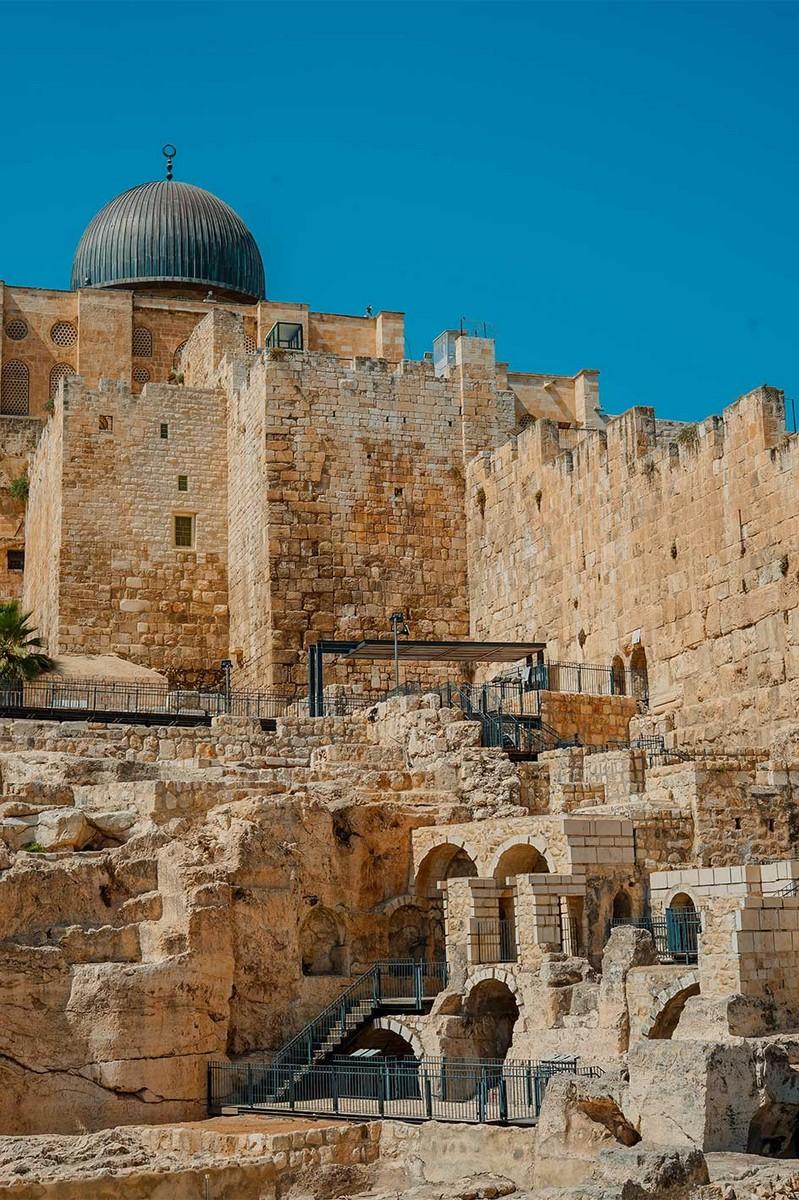
Most visitors to Jerusalem stick to the famous sites—the Western Wall, Church of the Holy Sepulchre, Temple Mount. But there’s a spectacular experience hiding in plain sight that most tourists never discover: walking on top of Jerusalem’s ancient walls.
This isn’t your typical tourist trail. It’s a 4-kilometer journey that offers breathtaking 360-degree views of the Old City’s four quarters, modern Jerusalem, and the Mount of Olives. Best of all? You’ll likely have stretches of the walkway almost to yourself.
Getting Started: Entry Points and Tickets
Where to Begin
The main entrance is near the Tower of David, just beside Jaffa Gate. Look for the ticket booth on the opposite side of the gate from the main Old City entrance—it’s easy to miss if you don’t know where to look.
Pro tip: Don’t get fooled by the name “Tower of David.” This impressive structure was actually built by King Herod 2,000 years ago, not the biblical King David who lived 3,000 years earlier. The locals just preferred David’s name over the unpopular Herod.
Practical Details
- Cost: 25 shekels (about $7 USD)
- Duration: 3-4 hours for the full accessible route
- Distance: Approximately 4 kilometers
- Ticket scanning: Required at entry point
- Operating hours: Check current times as they vary seasonally
The Route: What to Expect
The Reality Check
Here’s what guidebooks won’t tell you: this isn’t a complete circuit. The walls are divided into two main sections, and you can’t walk the entire perimeter due to security restrictions around the Temple Mount. The accessible route runs from Jaffa Gate to near Lions Gate, covering about half the Old City’s perimeter.
Physical Demands
Don’t underestimate this walk. The ramparts include:
- Numerous steep stairs up and down
- Uneven stone surfaces
- Average wall height of 12 meters
- Multiple tower climbs for better viewpoints
Fitness level needed: Moderate to good. If you struggle with stairs or have mobility issues, this might not be for you.
Timing Your Visit
Best Times
Morning (8-10 AM): Ideal for photography with eastern light hitting the Mount of Olives. Temperature around 29°C (84°F) in summer.
Late afternoon (4-6 PM): Perfect lighting for western views, but can reach 33°C (91°F) in peak summer.
Weather warning: Jerusalem’s dry climate is deceptive. You’ll dehydrate faster than expected, even if you don’t feel particularly hot.
What to Bring
- Water: At least 1 liter per person—non-negotiable
- Sun protection: Hat and sunscreen essential
- Comfortable walking shoes: Avoid sandals or heels
- Camera: The views are spectacular and unique
The Journey: Gate by Gate
Starting at Jaffa Gate
The walk begins with panoramic views over both old and new Jerusalem. From here, you can see the King David Hotel, the distinctive yellow Jerusalem stone architecture, and get your first taste of the four quarters below.
New Gate Section
This 19th-century addition offers views into the Christian Quarter. You’ll spot various church spires and the Latin Patriarchate building with its distinctive yellow and white Vatican flag. The contrast between ancient walls and modern satellite dishes creates fascinating urban photography opportunities.
Damascus Gate: The Busiest Stretch
This is where things get lively. Damascus Gate is the main entrance to the Muslim Quarter, and the energy is palpable even from above. Look for the statue of Suleiman the Magnificent, the Ottoman ruler who rebuilt most of these walls in the 16th century.
Insider tip: The view from Damascus Gate’s tower includes the golden Dome of the Rock, Church of the Holy Sepulchre’s grey dome, and the white dome of the Hurva Synagogue—a perfect shot of Jerusalem’s three major religions in one frame.
Herod’s Gate Area
Despite the name (another historical misnomer), this smaller gate offers some of the walk’s most dramatic views. From here, you can see the rocky outcrop known as Skull Hill or Gordon’s Calvary, and the nearby Garden Tomb. The elevated perspective helps you understand Jerusalem’s Biblical geography in a way that’s impossible from street level.
The Eastern Stretch
As you head toward Lions Gate, the character changes dramatically. You’re now walking above the Muslim Quarter, Jerusalem’s largest and most densely populated section. The architecture is more chaotic here—a mix of ancient stone, modern concrete additions, and improvised structures that create a fascinating urban patchwork.
Since 2015, our website has specialized in individual planning of unique routes, taking into account personal preferences and desires. Each of you will receive a unique PDF file from us, which contains everything you need: travel routes, car rentals, hotels, the best tourist attractions, attractions for kids and everything you need for a perfect vacation. During the trip, we are available for you by phone via WhatsApp. Our personal service provides information from A to Z, taking into account many small details that can become a decisive factor on the way from a wasted trip to an unforgettable vacation. Our service will make your trip comfortable, save a lot of time on planning and preparation, and most importantly – will allow you to become freer and fully enjoy the pleasure of the trip.
What You’ll See From Above
The Four Quarters
Each quarter has its distinct personality, visible from the walls:
Christian Quarter: Organized around various denominational churches, with clear architectural planning and well-maintained courtyards.
Armenian Quarter: The smallest quarter, identifiable by Armenian flags and dating back to the 4th century when Armenia became the first nation to adopt Christianity.
Jewish Quarter: Modern reconstruction after 1967, featuring contemporary architecture and the prominent white dome of the Hurva Synagogue.
Muslim Quarter: The largest and most crowded, with narrow alleys, bustling markets, and a mix of architectural styles reflecting centuries of organic growth.
Unexpected Discoveries
The elevated view reveals Jerusalem’s hidden side:
- Rooftop solar water heaters on nearly every building
- Small football fields tucked between ancient walls
- Pomegranate trees growing in wall-side gardens (especially beautiful before Rosh Hashanah)
- The modern light rail cutting through the ancient cityscape
Historical Context (The Essential Bits)
The Walls’ Age
Most of what you’re walking on dates to the 16th century, built by Ottoman Sultan Suleiman the Magnificent. However, some sections incorporate stones from much earlier periods—some dating back 2,000 years to Herod’s time.
Why walls? Jerusalem was destroyed 20 times and besieged over 40 times throughout history. These walls weren’t decorative—they were literally matters of life and death.
Architectural Features
The walls include 26 defensive towers, each offering different vantage points. The narrow windows you’ll see were designed for archers to shoot out while remaining protected from return fire.

Practical Challenges and Limitations
Route Interruptions
You’ll need to descend and walk at street level for one section near the Temple Mount due to security restrictions. This isn’t a flaw in planning—it’s simply the reality of modern Jerusalem’s complex political situation.
Crowds and Timing
Peak season challenges: Summer brings heat and more visitors, though the ramparts walk remains less crowded than major sites.
Off-season advantages: Winter offers comfortable temperatures but shorter daylight hours and possible rain.
Photography Considerations
Morning light: Best for eastern views (Mount of Olives, Temple Mount) Afternoon light: Ideal for western perspectives (new city, sunset shots) Midday: Harsh shadows but good for architectural details
Click here to create a personal itinerary for IsraelPro Tips for the Best Experience
Money-Saving Strategies
- Combine with other nearby attractions like the Tower of David Museum
- Bring your own water rather than buying from vendors
- Pack snacks—there are no food stops along the route
Hidden Gems
- Bruno’s Garden: A peaceful spot with pomegranate trees and flowers
- Football field overlook: Great for unique urban shots
- Rockefeller Museum views: Visible from the eastern section
What to Skip
Don’t feel obligated to rush through every section. The Damascus Gate area and the eastern stretch toward Lions Gate offer the most dramatic views and photo opportunities.
Planning Your Visit
Before You Go
- Check current opening hours and any temporary closures
- Wear layers—morning can be cool, midday hot
- Download offline maps—GPS can be spotty in some areas
- Consider combining with a visit to the Tower of David Museum
After the Walk
The ramparts walk ends near Lions Gate, putting you in perfect position to:
- Visit the Church of St. Anne and Pool of Bethesda
- Explore the Muslim Quarter’s markets
- Head to the Western Wall (15-minute walk)
What we propose Emma Heidi Take all the stress out of planning your trip! With our experts, you can create the perfect itinerary for you – complete, comfortable, and tailored to all your dreams, wishes, and needs. We take care of every little detail, so you can simply focus on enjoying your journey. We’ve been designing personalized itineraries since 2015, and over the years we’ve created thousands of custom itineraries for happy clients. Save time, avoid confusion – we do the work for you. Our service saves you weeks of searching, reading, comparing, and complicated planning. Instead of wasting endless hours – you receive a ready-to-use, accurate and clear itinerary. A tailor-made itinerary – built just for you. Your itinerary is personally designed based on our experts’ real field experience and genuine feedback from hundreds of travelers – including hidden discoveries and insider tips that don’t appear in any travel guide. Smart accommodation selection – often saves you hundreds or even thousands of dollars. We help you choose verified and recommended places to stay, checking availability for your exact travel dates. Sometimes we suggest hotels not “in the center,” but in safe, convenient, and highly strategic locations – which can significantly reduce travel costs and save you even thousands of dollars. We’re by your side even during the trip. We stay with you throughout your vacation – providing professional help whenever needed. If the weather changes, there’s a strike, a local event, heavy crowds, or any unexpected situation – we are here to update, guide, and adjust your itinerary in real time. Easy-to-use itinerary – with direct navigation links. Your itinerary includes direct Waze / Google Maps links – no need to search for parking addresses, no stress, no mistakes. Just tap – and go. Want to know if it’s really worth it? Take a look at the experiences of travelers who built their personal itinerary with us. Click here and let’s start building the itinerary that will save you time, money, and stress – and turn your vacation into perfection. Of course, your first inquiry is completely free – with no commitment whatsoever. How it works
Customer Experience Manager


Service cost: from only $420. (Special price for short itineraries up to 5 days). Clients tell us the itinerary saves them costly mistakes, fines, wrong choices – plus exclusive discounts on car rentals, better-priced accommodations, and money-saving local tips.


Latest articles

Natural History Museum Vienna

Natural History Museum Vienna (Natural History Museum Vienna) is one […]





Kaprun Dam (Hochgebirgsstauseen)

Kaprun Dam (Kaprun Hochgebirgsstauseen) is a high-altitude reservoir complex set […]