I have been working in the tourism industry for over 15 years. During this time, I have built strong partnerships with leading service providers — from car rentals and insurance to hotels, airlines, local guides, and the best attractions around the world. I specialize in creating personalized itineraries, paying attention to every detail to ensure that each traveler has unforgettable experiences. Additionally, I actively run a travel blog, sharing my knowledge with a wide audience of travelers worldwide. If you are planning your trip and want it to be comfortable, well-planned, and truly memorable, I am here to help you turn your dream into reality.

Electrical outlet in Switzerland
Planning a family trip to Switzerland usually means thinking about mountains, lakes, cable cars, and scenic drives. But there’s one practical detail that often catches travelers off guard the moment they arrive at their hotel: electrical outlets in Switzerland are different from most of Europe.
I’ve seen this surprise play out many times-parents unpack chargers, kids wait for tablets to power up after a long day, and suddenly nothing fits. Switzerland is not part of the EU, and that independence shows up even in everyday basics like plugs and sockets. A little preparation can save you time, money, and unnecessary frustration.
What Type of Electrical Outlet Is Used in Switzerland?
When it comes to electrical outlets in Switzerland, the key term to remember is Type J. This is the standard Swiss socket used in homes, hotels, apartments, and many public buildings.
Swiss Type J outlets have three round holes: two for power and one for grounding. They can look similar to European sockets at first glance, but the spacing and pin thickness are different-and that small difference is exactly why many European plugs won’t fit.
You’ll find Type J outlets almost everywhere, including hotels and apartments, mountain lodges, train stations, cafés, and restaurants. In newer buildings, outlets are often compact and arranged efficiently-sometimes with three sockets grouped in a space where you might expect only one. This design reflects how Swiss homes adapted to the growing number of electronic devices over time.
Click here to learn more about creating a personal itinerary
Tip from the Itinerary Expert: Even in modern hotels, don’t assume “European” means compatible. I’ve stayed in places where every socket was strictly Swiss Type J, with no alternative.
Do European Plugs Fit Swiss Electrical Outlets?
This is where most confusion around electrical outlets in Switzerland begins. Many travelers assume that standard European plugs will work-but that’s only partly true.
Which plugs work without an adapter?
Type C plugs (two thin round pins) usually fit Swiss sockets without any issue. These are common on phone chargers, camera chargers, power banks, and most laptop power supplies. Because the pins are slim and correctly spaced, they generally slide into Type J outlets without resistance.
From first-hand experience, most modern chargers fall into this category. That’s why some families arrive without an adapter and think everything is fine-until they try to plug in something larger.
Which plugs do NOT fit?
Type F / Schuko plugs (thick round pins) do not fit Swiss sockets. These are commonly found on hair dryers, curling irons, electric kettles, and some multi-socket power strips.
The issue isn’t subtle: the pins are simply too thick. Many travelers describe the same moment-trying to plug something in and realizing it just won’t go in. This isn’t a defect or a faulty socket; it’s a different electrical standard.
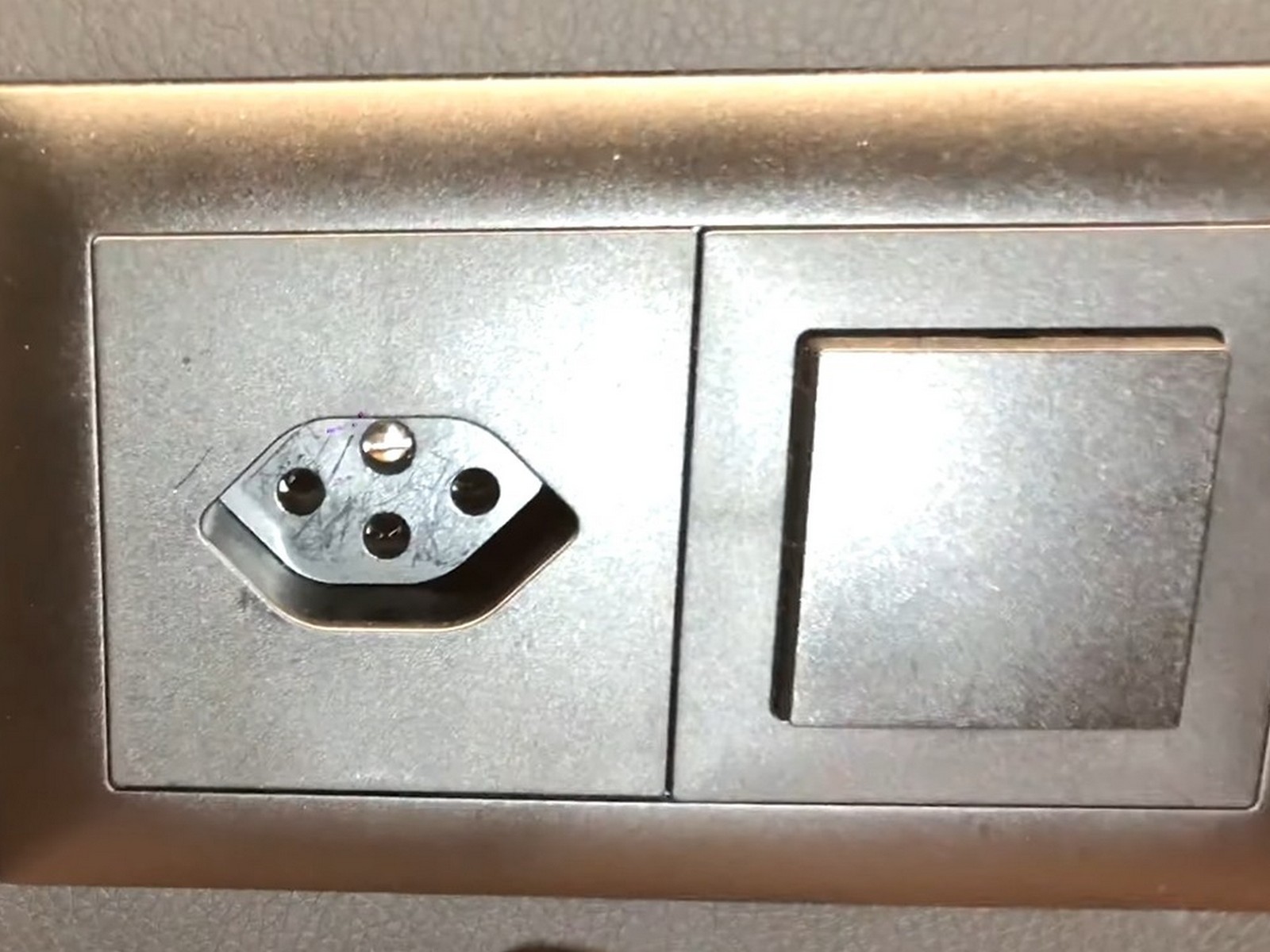
Standard Swiss wall socket (Type J). It has a unique shape, so many European plugs won’t fit without an adapter.
Tip from the Itinerary Expert: If your device has thick round pins, don’t waste time forcing it. You need an adapter-no exceptions.
Do You Need an Adapter for Switzerland?
You will definitely need an adapter if you bring any device with a Schuko (Type F) plug, travel with multiple devices charging at the same time, or pack hair tools, medical equipment, or baby devices. Families usually notice the problem in the evening, when phones, tablets, watches, power banks, and cameras all compete for the same one or two sockets.
When might you get away without an adapter?
You may manage without one if all your devices use thin two-pin plugs, or if your hotel has USB or USB-C ports built into the wall. That said, USB-equipped rooms are not guaranteed, even in newer hotels.
What about “universal” adapters?
Universal adapters only work if they specifically support Swiss Type J. Several travelers reported that adapters labeled “Europe” did not fit Swiss outlets at all, despite what the packaging promised.

Tip from the Itinerary Expert: I always pack one Swiss-specific adapter plus a compact power strip. One wall socket turns into four charging points-especially useful when traveling with kids.
Voltage and Frequency: Is Swiss Power Safe for Your Devices?
Understanding electrical outlets in Switzerland also means knowing the power specifications behind them.
Switzerland uses 230 V voltage and a 50 Hz frequency. This setup is fully compatible with most modern electronics. Nearly all phone, tablet, laptop, and camera chargers are designed to support 100-240 V, which means they work safely in Switzerland without a voltage converter.
The main risk comes from high-power devices such as hair dryers, curling irons, and straighteners. If these devices are designed only for lower voltage, they may overheat or stop working. Several travelers recommend using hotel-provided hair dryers instead of bringing personal ones.
Tip from the Itinerary Expert: I always check the label on every device before packing. If it clearly states 100-240 V, it’s safe to use. If not, I leave it at home.
Where Can You Buy an Adapter in Switzerland?
If you forget an adapter, it’s not a disaster-but it usually costs more than buying one before the trip.
Swiss adapters are commonly sold in supermarkets (Migros and Coop), electronics stores, major train stations, and airport shops. Availability is generally good, but prices are noticeably higher than online purchases made in advance.
Travelers frequently mention that adapters are easy to find but rarely inexpensive, especially in airports and central train stations.
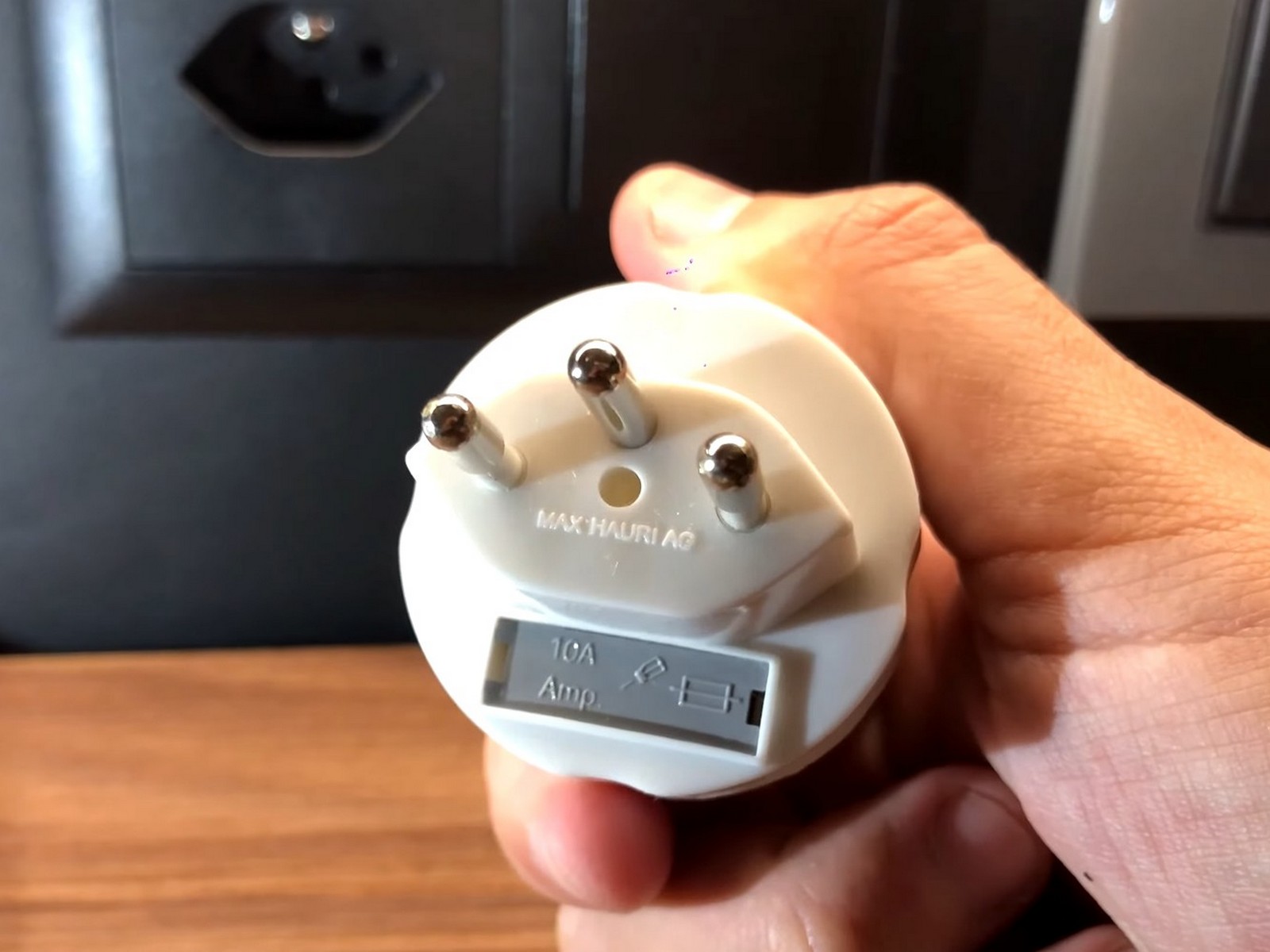
I always check the plug first – Switzerland uses a three-pin Type J plug, so a travel adapter is essential.
Tip from the Itinerary Expert: Buy adapters before you travel. Airport convenience often comes with a premium price.
How Many Swiss Adapters Does a Family Need?
Based on real travel experience, most families underestimate how many adapters they actually need.
A practical setup usually includes at least one Swiss adapter per room, plus one power strip or multi-USB adapter. Many families also carry an optional backup adapter in a day bag, just in case.
Hotels often provide only one or two sockets near the bed. Add tablets charging overnight, parents’ phones, watches, and a camera battery, and it quickly becomes a juggling act.
Tip from the Itinerary Expert: I learned this the hard way – one adapter is never enough when traveling as a family.
Are Swiss Hotels Well Equipped for Charging Devices?
Most modern Swiss hotels are reasonably well equipped, but there are clear limitations.
What you will usually find includes Swiss Type J sockets, occasional combined sockets that accept more than one plug type, and sometimes USB ports, mainly in newer hotels. These features vary widely by property and should not be assumed.
What you should not rely on is European Schuko compatibility, multiple outlets per bed, or the availability of extension cords. Older or more “rustic” accommodations may have fewer sockets or outlets placed in less convenient locations.

Practical Family Advice for Electrical Outlets in Switzerland
After many trips and plenty of trial and error, a few clear lessons stand out when it comes to electrical outlets in Switzerland.
It’s best to bring at least one Swiss-specific adapter, add a power strip or multi-USB charger, and check voltage labels on every device before packing. European adapters should not be relied on, and personal hair dryers are usually better left at home in favor of hotel-provided ones.

Since 2015, our website has specialized in individual planning of unique routes, taking into account personal preferences and desires.
Each of you will receive a unique PDF file from us, which contains everything you need: travel routes, car rentals, hotels, the best tourist attractions, attractions for kids and everything you need for a perfect vacation.
During the trip, we are available for you by phone via WhatsApp.
Our personal service provides information from A to Z, taking into account many small details that can become a decisive factor on the way from a wasted trip to an unforgettable vacation.
Our service will make your trip comfortable, save a lot of time on planning and preparation, and most importantly – will allow you to become freer and fully enjoy the pleasure of the trip.
Tip from the Itinerary Expert: One small adapter can determine whether your evening is calm or chaotic-especially after a long day out with tired children waiting for their devices to charge.
Common Limitations and Honest Downsides
Swiss electrical outlets are safe, compact, and well designed-but they are not particularly traveler-friendly.
The main downsides include incompatibility with most thick European plugs, the confusing “almost fits” situation that misleads many visitors, and the fact that so-called universal adapters often fail. In some accommodations, the number of available sockets is simply limited.
Once you understand how the system works, it’s easy to manage. Ignoring it, however, often leads to unnecessary stress during an otherwise smooth family trip.
Key Takeaways About Electrical Outlets in Switzerland
Switzerland uses Type J electrical outlets, which differ from standard European sockets. Thin two-pin plugs usually work without an adapter, while thick European plugs do not. For families, bringing at least one Swiss-compatible adapter is strongly recommended.
The local power supply is 230 V / 50 Hz, which is safe for most modern electronics. Chargers labeled 100-240 V work without a converter, while high-power devices require caution. Buying adapters in Switzerland is possible, but prices are generally higher than purchasing them in advance.
This small technical detail is easy to manage once understood. Preparing in advance allows families to focus on the real highlights of their trip-time together, beautiful scenery, and smooth, stress-free evenings after long days outdoors.
Click here to learn more about creating a personal itinerary
Tip from the Itinerary Expert: When the basics are handled in advance, travel feels lighter. Adapters are small, but the comfort they bring at the end of the day is significant.
What we propose

Emma Heidi
Customer Experience Manager
Take all the stress out of planning your trip!
With our experts, you can create the perfect itinerary for you – complete, comfortable, and tailored to all your dreams, wishes, and needs.
We take care of every little detail, so you can simply focus on enjoying your journey.
We’ve been designing personalized itineraries since 2015, and over the years we’ve created thousands of custom itineraries for happy clients.

Save time, avoid confusion – we do the work for you. Our service saves you weeks of searching, reading, comparing, and complicated planning. Instead of wasting endless hours – you receive a ready-to-use, accurate and clear itinerary.

A tailor-made itinerary – built just for you. Your itinerary is personally designed based on our experts’ real field experience and genuine feedback from hundreds of travelers – including hidden discoveries and insider tips that don’t appear in any travel guide.

Smart accommodation selection – often saves you hundreds or even thousands of dollars. We help you choose verified and recommended places to stay, checking availability for your exact travel dates. Sometimes we suggest hotels not “in the center,” but in safe, convenient, and highly strategic locations – which can significantly reduce travel costs and save you even thousands of dollars.

We’re by your side even during the trip. We stay with you throughout your vacation – providing professional help whenever needed. If the weather changes, there’s a strike, a local event, heavy crowds, or any unexpected situation – we are here to update, guide, and adjust your itinerary in real time.

Easy-to-use itinerary – with direct navigation links. Your itinerary includes direct Waze / Google Maps links – no need to search for parking addresses, no stress, no mistakes. Just tap – and go.

Service cost: from only $420. (Special price for short itineraries up to 5 days). Clients tell us the itinerary saves them costly mistakes, fines, wrong choices – plus exclusive discounts on car rentals, better-priced accommodations, and money-saving local tips.
Want to know if it’s really worth it?
Take a look at the experiences of travelers who built their personal itinerary with us.
Click here and let’s start building the itinerary that will save you time, money, and stress – and turn your vacation into perfection.
Of course, your first inquiry is completely free – with no commitment whatsoever.
How it works


- You are welcome to contact us
- We discuss your trip
- You fill out a special form
- We create your itinerary
- You get it with all useful tips
- We are in touch with you all the time