My love for Japan began the moment I arrived in Tokyo. The country amazed me with its harmony of ancient traditions, cutting-edge technology, breathtaking nature, and a culture unlike any other. Since then, Japan has become a part of my life, and I return there again and again. Today I help travelers discover the real Japan: I create personalized itineraries, give lectures, and prepare guests for their unforgettable journey. I would be delighted to open Japan for you too!


Mount Koya
Mount Kōya (Kōyasan) is one of the most spiritual and fascinating places in Japan – a high plateau surrounded by vast forests of ancient cryptomeria, more than 100 active temples, mist-covered paths, and an atmosphere that feels completely outside of time. Despite its thousand-year history, Kōyasan is also a pleasant, compact, and family-friendly destination: powerful nature, peaceful walks among centuries-old trees, very few crowds, and a quiet that is hard to find anywhere else in the world.
Tip from the Itinerary Expert: This is an excellent destination for families who want nature and tranquility – without crowds or pressure.
How to get to Mount Kōya – and should you rent a car?
The most common way to reach Mount Kōya is from Osaka:
Take a Nankai train to the lower station
Ride the funicular up the mountain
From the upper station, take a short bus ride to central Kōyasan
The entire journey takes around three hours.
There is a convenient Railway Pass costing about $30, which includes the train, the funicular, and unlimited bus rides inside Kōyasan for two days.
Parking is available but limited. There are free parking lots at the main entrances, such as the one near Nakanohashi, from where you can walk directly to the Oku-no-in trail.
Tip from the Itinerary Expert: A car makes traveling easier-especially for families. Distances are short, but the inclines and slopes inside the town are significant, and on rainy days it is much more comfortable to move around by car.
Where to start – and how not to get lost on Mount Kōya?
Kōyasan is a small, enclosed, and easy-to-navigate town with a population of about 4,000 residents. There is one main street, and from it branch the paths leading to temples and forest trails. Most major sites are within a 5-20 minute walking distance from each other, which makes orientation simple even for first-time visitors.
Standing at an altitude of 800-1000 meters, the air in Kōyasan is humid and cool, even during summer months. This contributes to the calm atmosphere and makes walking pleasant throughout the day.
Tip from the Itinerary Expert: When visiting with children, plan a rhythm such as “half a day exploring – rest – half a day exploring.” Distances are short, but the atmosphere is deep, quiet, and visually rich, and there is no need to rush.
Click here to learn more about creating a personal itineraryWhat to see on Mount Kōya – and how to plan the day?
Mount Kōya and the Oku-no-in area – is this the main family attraction?
Yes – without a doubt. Oku-no-in is not only the most sacred place in Kōyasan, but also one of the most impressive forest trails in Japan.
- It is the largest cemetery in Japan, with more than 200,000 graves, some over 1,200 years old.
- The forest contains cryptomeria trees that reach up to 50 meters in height, many centuries old.
- Among the gravestones are memorials dedicated to shoguns, daimyo, poets, warriors, and even modern monuments created by companies such as Panasonic, Hitachi, Nissan, and UCC Coffee.
The main trail is about 2 km long, completely flat, shaded, and very comfortable for families. It begins with ancient bridges and continues past Buddha statues, stone lanterns, and moss-covered figures.
Tip from the Itinerary Expert: Walking the trail in the morning provides gentle light and a quiet atmosphere, ideal for families.
Is it scary for children?
Not at all. Even though Oku-no-in is a cemetery, it feels more like a peaceful forest walk filled with ancient statues. Many local families walk the trail, and the overall atmosphere is calm rather than frightening.
Kobo Daishi’s Mausoleum – do you have to go in?
At the end of the Oku-no-in trail is the mausoleum of Kobo Daishi (Kūkai), the founder of Shingon Buddhism. According to tradition, he remains in “eternal meditation.” Photography, running, and loud speech are prohibited in this area.
This is a meaningful and memorable place for families, but it is important to explain the behavior rules to children beforehand.
Tip from the Itinerary Expert: Walk slowly and quietly. Children often sense the uniqueness of the place thanks to the soft lighting and the dense, enclosed forest.
Click here to create a personal itinerary for JapanDanjo Garan Complex – what must you see there?
Danjo Garan is the historic core of Kōyasan, established by Kūkai:
- The Konpon Daitō Pagoda – a large and striking red pagoda
- Ancient prayer halls, some several centuries old
- Spacious open areas with tall trees, offering a sense of openness after the darker forest trails
This part of Kōyasan is wide, bright, and very comfortable for children to explore.
Tip from the Itinerary Expert: The late-afternoon light on the pagoda is especially beautiful and ideal for family photos.
Kongōbu-ji – is it worth going inside?
Kongōbu-ji is the main temple of Shingon Buddhism and one of the most impressive sites in Kōyasan. Inside, visitors can see:
- Ancient wall paintings
- Wide wooden halls
- The largest rock garden in Japan, designed with 140 stones symbolizing two dragons protecting the mountain
The visit is suitable for children aged 8 and up, provided they can remain quiet.
The temple concludes the visit with a warm cup of tea and a traditional sweet – a pleasant break before continuing the day.
Torodō – should you visit the Hall of Eternal Lanterns?
Yes. Torodō contains thousands of lanterns that burn continuously, some donated by emperors and others by families. The soft golden light creates a moving and peaceful atmosphere, and children often find the space captivating.
Who is Mount Kōya suitable for – and is it good for families?
Is Mount Kōya good for families with children?
Yes. Mount Koya is one of the most comfortable and relaxed destinations for families in Japan. It offers abundant nature, clean air, easy walking trails, and a slow, calm rhythm without crowds or noise. There are no amusement parks here, but the scenery is memorable and deeply peaceful.
What about seniors or visitors with mobility limitations?
- The main street is easy to walk.
- Most temples are accessible.
- Some sections of the Oku-no-in trail contain uneven stones.
Visitors with significant mobility limitations should remain in the flatter, first parts of the path, which are the most accessible.
Short nature walks suitable for children on Mount Kōya
- Oku-no-in trail – the top recommendation (2 km, flat).
- Paths near Danjo Garan – open, bright, and easy.
- Daimon Gate – a large historic gate leading to simple forest trails.
Fog is common in the area and often enhances the atmosphere, turning walks into particularly memorable experiences.
Since 2015, our website has specialized in individual planning of unique routes, taking into account personal preferences and desires. Each of you will receive a unique PDF file from us, which contains everything you need: travel routes, car rentals, hotels, the best tourist attractions, attractions for kids and everything you need for a perfect vacation. During the trip, we are available for you by phone via WhatsApp. Our personal service provides information from A to Z, taking into account many small details that can become a decisive factor on the way from a wasted trip to an unforgettable vacation. Our service will make your trip comfortable, save a lot of time on planning and preparation, and most importantly – will allow you to become freer and fully enjoy the pleasure of the trip.
Family itinerary for Mount Kōya (Kōyasan) – 2 days / Temple stay
Day 1 – Introduction to Oku-no-in and the spiritual heart of the mountain
Arrival at Mount Kōya is by rental car from Osaka, a drive of about three hours. Upon reaching the area, it is convenient to park near Nakanohashi Parking, close to the Okunoin-mae bus stop, where the main walking trail begins. From the parking area, you continue on foot toward Ichinohashi Bridge and follow the flat, two-kilometer path into the Oku-no-in cemetery. At the end of the trail lie the Kobo Daishi Mausoleum and Torodō, which are open to visitors until late afternoon.
After completing the walk, return toward Okunoin-mae and stop for lunch at one of the simple local eateries offering warm Japanese dishes such as Udon or Oden. This is a comfortable break, especially during cooler seasons.
Next, take a short ride by car or bus to Danjo Garan, the central temple complex of Kōyasan. The area includes several sacred buildings, pleasant walking paths, and the Konpon Daitō Pagoda, open during daytime hours. The visit is done entirely on foot and offers a quiet introduction to the region’s architecture and natural surroundings.
Those who wish can extend the experience with a guided night tour of Oku-no-in, which includes another two-kilometer walk through the gently lit forest, depending on season and availability.
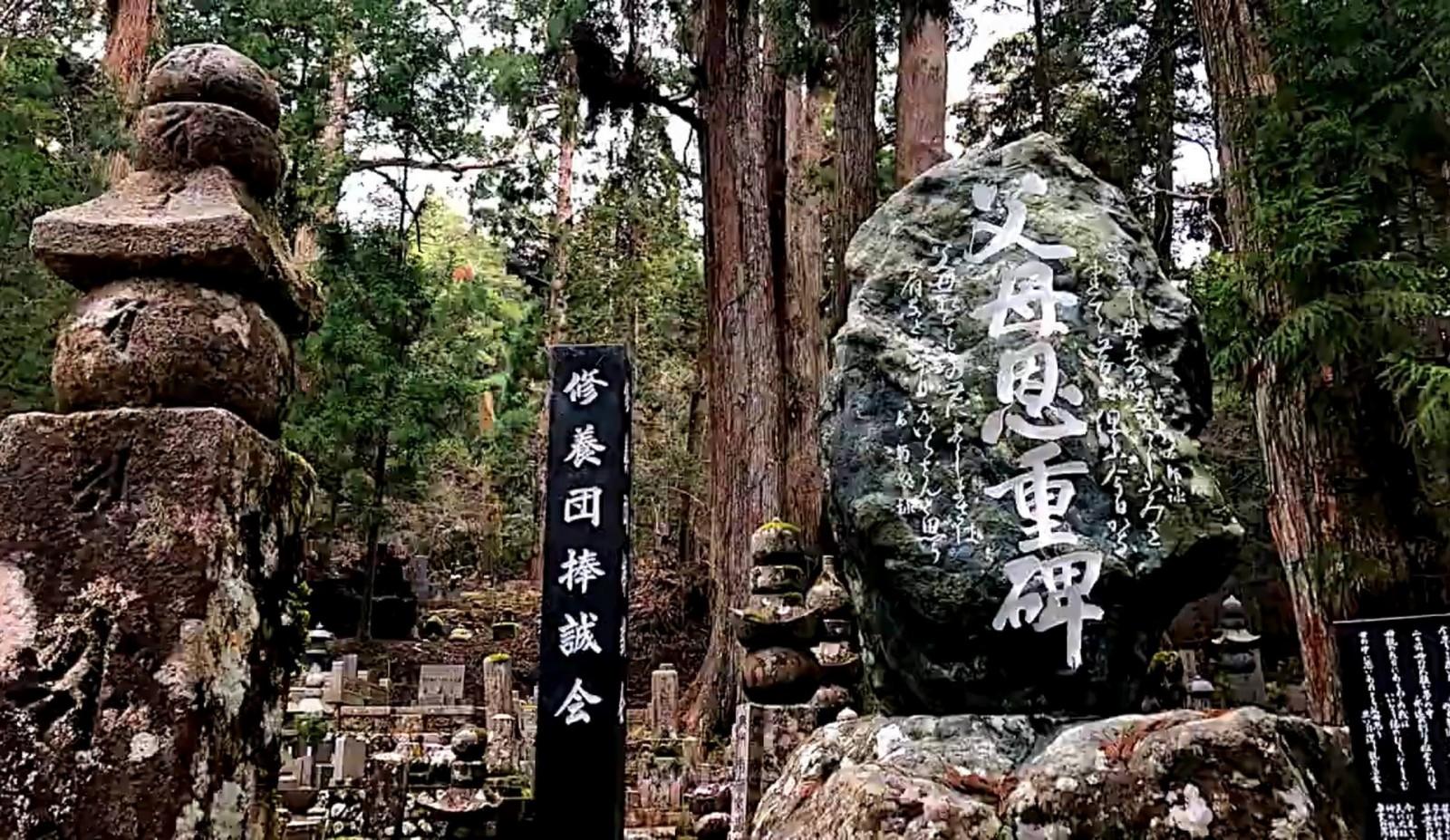
Sacred stones standing among towering trees — a place where time feels completely still.
Day 2 – Temples, rock garden, and Daimon Gate
After spending the night at a temple (Shukubō), begin the day with a visit to Kongōbu-ji, the main temple of Shingon Buddhism. It can be reached by a short walk or drive from central Kōyasan. The complex features ancient halls, rooms with delicate wall paintings, and the largest rock garden in Japan. A typical visit lasts between 1.5 and 2 hours.
Continue with lunch at one of the restaurants in the town center, which offer a combination of traditional temple-style vegetarian dishes and simple, family-friendly Japanese meals. After lunch, spend some time exploring the small shops along the main street, where you can find items such as incense, small Buddha statues, and miniature stone lanterns.
Then drive to Daimon Gate, the iconic entrance to the area. A short forest path nearby provides fresh air and open views – perfect for a relaxed walk. This is a fitting place to conclude your visit to Mount Kōya before beginning the three-hour drive back to Osaka.
Traveler Reviews – Mount Kōya (Kōyasan)
- Emma Roberts – visited in 2019
I visited Kōyasan with my family, and the walk through Oku-no-in impressed all of us. The path between the tall cryptomeria trees felt peaceful rather than eerie, even for the children. The bridges, stone lanterns, and moss-covered statues created a magical atmosphere. It became one of our favorite family walks in Japan. - Daniel Carter – visited in 2021
Staying at a temple on Mount Kōya exceeded my expectations. The meditation session, the quiet wooden halls, and the early morning atmosphere made the experience unforgettable. My children enjoyed exploring the temple gardens and watching the lanterns at dusk. It was a gentle and calming experience, perfect for families needing a break from city life. - Laura Mitchell – visited in 2024
The Danjo Garan complex was a highlight for us. The large red pagoda and spacious courtyards gave the children plenty of room to explore safely. The architecture and colors are striking in person, and the afternoon light made our photos turn out beautifully. - Michael Brown – visited in 2018
I wasn’t sure how family-friendly Kōyasan would be, but the main routes were surprisingly easy. The walk from Ichinohashi Bridge through the cemetery felt more like a nature trail with history than a traditional cemetery. Even our youngest enjoyed spotting the small statues hidden between the trees. - Chloe Adams – visited in 2023
Kongōbu-ji Temple was peaceful and very impressive. The rock garden is enormous, and the painted sliding doors fascinated my older daughter. We took our time exploring the wooden corridors and enjoyed the tea served at the exit. A perfect cultural stop between nature walks. - Jason Miller – visited in 2022
We reached Daimon Gate near the end of the day, and the huge wooden structure impressed everyone. We took a short walk into the nearby forest – quiet, cool air, and almost no visitors. It’s a great place for families who enjoy easy walks in nature. - Sarah Thompson – visited in 2025
Traveling with two children, we appreciated how compact and calm Kōyasan is. The buses made moving around easy, and distances between major sites were short. Even walking along the main street felt relaxed. The combination of nature, temples, and quiet paths suited our family perfectly. - Adam Walker – visited in 2019
Experiencing Oku-no-in at dusk was unforgettable. The soft lighting, tall trees, and quiet path created a mysterious but comforting mood. It didn’t scare the children – they said it felt like walking through a fantasy forest. The no-photo zone near the mausoleum encouraged us to slow down and appreciate the moment more deeply.
Tips from the Itinerary Expert
- Start your Oku-no-in walk from Ichinohashi Bridge, not the bus stop.
Based on my own visit, beginning at Ichinohashi makes the 2 km forest trail feel calmer and more atmospheric. The ancient bridges, moss-covered statues, and soft forest light keep children engaged throughout the walk. - Visit Danjo Garan in the late afternoon for the best family photos.
The red Konpon Daitō Pagoda looks especially beautiful when the sunlight becomes softer. The open courtyards give children plenty of safe space to explore while adults enjoy taking photos without crowds. - Choose a temple stay only if your children enjoy calm experiences.
I stayed at a shukubō with my family, and the quiet dinner and meditation session were highlights – but best suited for children who appreciate peaceful activities. If you prefer more flexibility, stay in town and join the activities that interest you. - Use the early hours for Kongōbu-ji.
The temple is quieter in the morning, giving families time to explore the large rock garden and wide wooden halls at a comfortable pace. The tea offered at the exit is a pleasant warm break before continuing the day. - For families with a car – stop at Daimon Gate on the way out.
When I drove down from Kōyasan, stopping at Daimon Gate created a perfect ending. The parking area is close, the gate is impressive in size, and the short forest walk nearby is suitable even for young children. - If there is fog – don’t cancel your walk.
Some of my most memorable moments were in light fog around Oku-no-in. The trees, lanterns, and stone statues become even more atmospheric, and many children find the “mystery” exciting rather than scary. - Bring warm layers even in late spring.
Kōyasan sits at 800-1000 meters, and even in May the evening air feels cold – especially near forested areas. Children cool down faster, so packing jackets and gloves is important. - Don’t rush between sites – everything is closer than it seems.
Kōyasan is compact, and slowing down allows children to enjoy the surroundings rather than feeling hurried. The main attractions – Oku-no-in, Kongōbu-ji, and Danjo Garan – are connected by short, easy walks.

Insights from the Itinerary Expert
I visited Mount Kōya (Kōyasan) in 2023, and it quickly became one of the most memorable nature-focused destinations I have explored with families in mind. What impressed me immediately was how compact, calm, and well-organized everything felt. The walk through Oku-no-in didn’t feel like a cemetery at all – more like a quiet forest trail filled with towering cryptomeria, soft light, and small moss-covered statues appearing between the trees. Even children respond to the place with curiosity rather than fear.
Later that day, entering the open courtyards of Danjo Garan felt like stepping into a completely different environment – spacious grounds, the vivid red Konpon Daitō Pagoda, and plenty of room for children to walk freely without rushing. Although distances are short, I found that the slopes inside the town can feel tiring on rainy days, so having a car is often helpful for families.
One challenge during my visit was the temperature. Even in warmer months, evenings felt surprisingly cold because of the altitude, especially near the forest trails. Packing warm layers for everyone is important. At the same time, the cool mountain air is part of what makes Kōyasan refreshing and peaceful.
Mount Kōya offers a rare combination of tranquility, nature, easy walking paths, and a gentle rhythm that suits families exceptionally well. If you’re looking for a peaceful mountain experience with atmosphere and unforgettable scenery, I’ll be glad to help you design a personalized itinerary for Mount Kōya – and for the rest of Japan.
Click here to learn more about creating a personal itineraryPrice List – Mount Kōya (Kōyasan)
| Category | Notes | Estimated Price (USD) |
| Budget meal (per person) | Light snacks or simple dishes in the main town of Kōyasan | 8-12 |
| Mid-range lunch/dinner (person) | Local restaurants in town or near the temple complexes | 15-25 |
| Public transport (round trip) | Koyasan World Heritage Digital Ticket – trains + buses | ≈ 24 |
| Cable car / Funicular (one way) | From Gokurakubashi to Kōyasan Station | ≈ 8 |
| Parking (per hour) | Parking in town or near the main station (approx.) | 3-5 |
| Temple / hall entrance (person) | Konpon Daitō Pagoda or Kongōbu-ji (approx.) | ≈ 7-10 |
| Souvenirs (per person) | Small shops around the temple district | 3-10 |
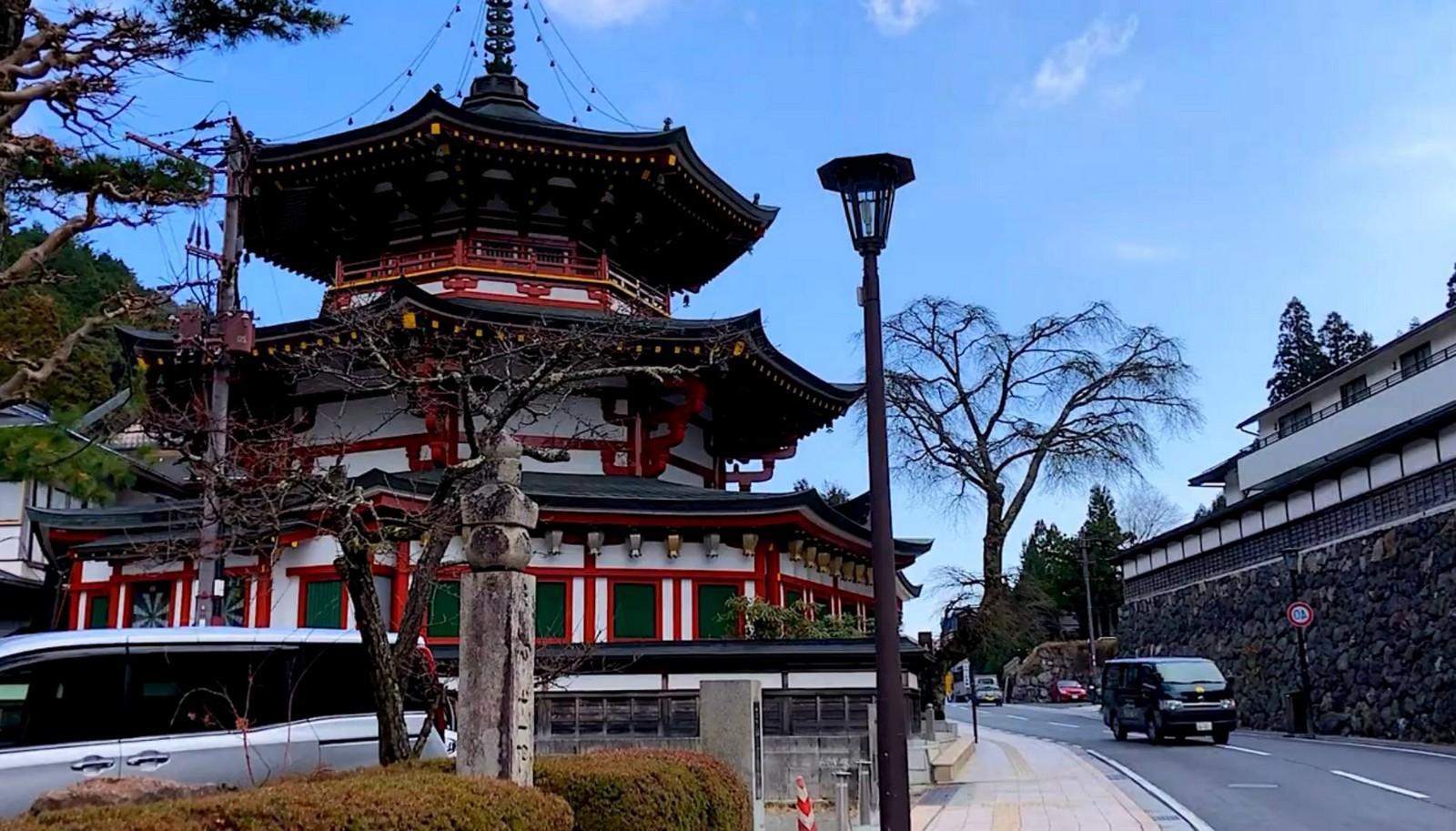
Walking through Kōyasan’s quaint streets, with the pagoda rising proudly between traditional houses.
FAQ – Mount Kōya (Kōyasan)
- Is Mount Kōya suitable for families with children?
Yes. The area is quiet, compact, and surrounded by nature. The main routes, especially the Oku-no-in trail, are flat, shaded, and easy for children to walk. - How long does the walk through Oku-no-in take?
The main trail is about 2 km and usually takes 2-3 hours at a relaxed, family-friendly pace. It is one of the most accessible and comfortable walks on the mountain. - Do children find Oku-no-in scary since it’s a cemetery?
No. It feels more like a mystical forest walk with statues, lanterns, and tall trees. Many families explore it calmly, and the atmosphere is peaceful rather than frightening. - Is it better to explore Kōyasan with a car?
Yes. Distances are short, but slopes and rainy conditions can make walking tiring for children. A car provides flexibility and makes it easier to reach main areas such as Daimon Gate. - Are the main attractions far from each other?
No. Kōyasan is a compact town with one main street, and most major sites are within a 5-20 minute walk. - Are there age restrictions for visiting Kongōbu-ji or Danjo Garan?
There are no strict age limits. However, Kongōbu-ji is better suited for children around age 8+ who can stay quiet in indoor areas. Danjo Garan is more open and easier for younger children to enjoy. - What nature spots are best for short family walks?
The 2 km Oku-no-in trail, the open forest paths around Danjo Garan, and the easy trails near Daimon Gate are the most recommended for families. - Does Mount Kōya get cold?
Yes. Sitting at 800-1000 meters, the area remains cool even in summer. Warm layers are recommended, especially for children. - Is Kōyasan overwhelming or crowded for kids? (first-hand experience)
Based on my own visit, it felt peaceful throughout the day. The wide paths, quiet forests, and slow rhythm make it ideal for children who prefer calm nature over busy attractions. - Is it worth visiting both Danjo Garan and Oku-no-in in one day? (first-hand experience)
Yes. I have done exactly this – Oku-no-in in the morning and Danjo Garan in the afternoon works very well. The lighting at Danjo Garan is especially beautiful later in the day, and the pace remains relaxed.
What we propose Emma Heidi Take all the stress out of planning your trip! With our experts, you can create the perfect itinerary for you – complete, comfortable, and tailored to all your dreams, wishes, and needs. We take care of every little detail, so you can simply focus on enjoying your journey. We’ve been designing personalized itineraries since 2015, and over the years we’ve created thousands of custom itineraries for happy clients. Save time, avoid confusion – we do the work for you. Our service saves you weeks of searching, reading, comparing, and complicated planning. Instead of wasting endless hours – you receive a ready-to-use, accurate and clear itinerary. A tailor-made itinerary – built just for you. Your itinerary is personally designed based on our experts’ real field experience and genuine feedback from hundreds of travelers – including hidden discoveries and insider tips that don’t appear in any travel guide. Smart accommodation selection – often saves you hundreds or even thousands of dollars. We help you choose verified and recommended places to stay, checking availability for your exact travel dates. Sometimes we suggest hotels not “in the center,” but in safe, convenient, and highly strategic locations – which can significantly reduce travel costs and save you even thousands of dollars. We’re by your side even during the trip. We stay with you throughout your vacation – providing professional help whenever needed. If the weather changes, there’s a strike, a local event, heavy crowds, or any unexpected situation – we are here to update, guide, and adjust your itinerary in real time. Easy-to-use itinerary – with direct navigation links. Your itinerary includes direct Waze / Google Maps links – no need to search for parking addresses, no stress, no mistakes. Just tap – and go. Want to know if it’s really worth it? Take a look at the experiences of travelers who built their personal itinerary with us. Click here and let’s start building the itinerary that will save you time, money, and stress – and turn your vacation into perfection. Of course, your first inquiry is completely free – with no commitment whatsoever. How it works
Customer Experience Manager


Service cost: from only $420. (Special price for short itineraries up to 5 days). Clients tell us the itinerary saves them costly mistakes, fines, wrong choices – plus exclusive discounts on car rentals, better-priced accommodations, and money-saving local tips.


Latest articles