My love for Japan began the moment I arrived in Tokyo. The country amazed me with its harmony of ancient traditions, cutting-edge technology, breathtaking nature, and a culture unlike any other. Since then, Japan has become a part of my life, and I return there again and again. Today I help travelers discover the real Japan: I create personalized itineraries, give lectures, and prepare guests for their unforgettable journey. I would be delighted to open Japan for you too!
Iwate
Iwate is Japan’s second-largest prefecture and one of its most beautifully sparsely populated regions, stretching across the northeastern corner of the country between Aomori and Miyagi. Here, dramatic ocean cliffs meet deep-forested mountains, and traditional hot springs hide in quiet valleys where regional dishes still reflect a proud local identity. Centuries ago, this area held a cultural importance that rivaled Kyoto, and that deep historical legacy still shapes the peaceful atmosphere you feel today.
Visitors don’t come to Iwate for neon lights or packed shopping streets. They come for the luxury of space, silence, and places that invite you to slow down. From UNESCO-listed temple complexes to rugged coastal scenery and peaceful beaches, the experience here unfolds at an unhurried pace. The real magic of Iwate lies in giving yourself time-time to notice the shifting seasonal colors, to wander without a strict agenda, and to fully absorb the perfect balance of nature and heritage that defines the region.
How to reach Iwate and move around the region?
The fastest and most comfortable way to reach Iwate is by taking the Tohoku Shinkansen from Tokyo to Ichinoseki, a convenient gateway that connects smoothly to local rail lines across the prefecture. For travelers on a tighter budget, overnight or long-distance buses to Morioka offer more affordable fares and flexible departure times. Once you are in the region, trains and buses link the main towns with coastal viewpoints, limestone caves, and other key attractions.
That said, if you plan to explore remote stretches of the Sanriku coastline, mountain scenery, or smaller countryside towns, renting a car makes a world of difference. Daily rental prices depend on the vehicle category and season, and it’s wise to factor in fuel and expressway tolls when calculating your budget. In cities like Morioka, parking usually operates on short-term paid systems with daily maximum limits, while most natural sites offer convenient on-site parking spaces.
Click here to learn more about creating a personal itinerary
Tip from the Itinerary Expert: A rental car is especially helpful along the Sanriku coast and in rural folklore areas where public transport runs infrequently. Group nearby sights into the same driving day to save time, reduce backtracking, and keep transportation costs under control.

When is the best season to visit Iwate?
Iwate changes its personality beautifully with every season. In winter, snow blankets the landscape and the underground lakes inside limestone caves appear strikingly clear, creating a quiet, almost cinematic atmosphere. Autumn brings rich foliage that transforms temple grounds and parks into glowing landscapes of red and gold, perfect for slow walks and reflective moments.
Summer is ideal for coastal drives along the Sanriku shoreline, refreshing beach stops, and long days on nature trails. The warmer months make it much easier to combine cliffside views and seaside exploration within a single itinerary. Because seasonal conditions shape both the accessibility and the views, choosing your travel dates based on the specific experience you want-whether it’s snowy landscapes or fresh sea air-will make the trip far more rewarding.

Since 2015, our website has specialized in individual planning of unique routes, taking into account personal preferences and desires.
Each of you will receive a unique PDF file from us, which contains everything you need: travel routes, car rentals, hotels, the best tourist attractions, attractions for kids and everything you need for a perfect vacation.
During the trip, we are available for you by phone via WhatsApp.
Our personal service provides information from A to Z, taking into account many small details that can become a decisive factor on the way from a wasted trip to an unforgettable vacation.
Our service will make your trip comfortable, save a lot of time on planning and preparation, and most importantly – will allow you to become freer and fully enjoy the pleasure of the trip.
Tip from the Itinerary Expert: If your schedule allows flexibility, build your trip around the season’s highlight: coastal exploration in summer, foliage walks in autumn, or dramatic cave and snow scenery in winter. Matching timing to the landscape makes Iwate feel truly unforgettable.
Which top attractions should you visit in Iwate?
Iwate is a destination where UNESCO-listed temples, dramatic ocean scenery, and relaxed cities come together in perfect harmony. Its highlights are scattered between quiet mountain valleys, cultural hubs, and the rugged Sanriku coastline. Planning a thoughtful route is the secret to enjoying these striking natural landmarks without feeling rushed by long transfers.
Hiraizumi and Chuson-ji Temple
Once a powerful political and cultural center that rivaled Kyoto, Hiraizumi remains one of Iwate’s most significant heritage sites. Recognized as a UNESCO World Heritage Site, its crown jewel is the Golden Hall (Konjikido)—a structure richly adorned with gold leaf and intricate details meant to reflect a vision of a Buddhist paradise. Walking through these temple grounds feels like stepping into a preserved chapter of Japan’s spiritual history.
Admission is required for entry to the Golden Hall and its treasure museum.
Tip from the Itinerary Expert: Arrive early to walk the cedar-lined path in near silence. The calm morning atmosphere adds a layer of magic to the visit before the day’s groups begin to arrive.
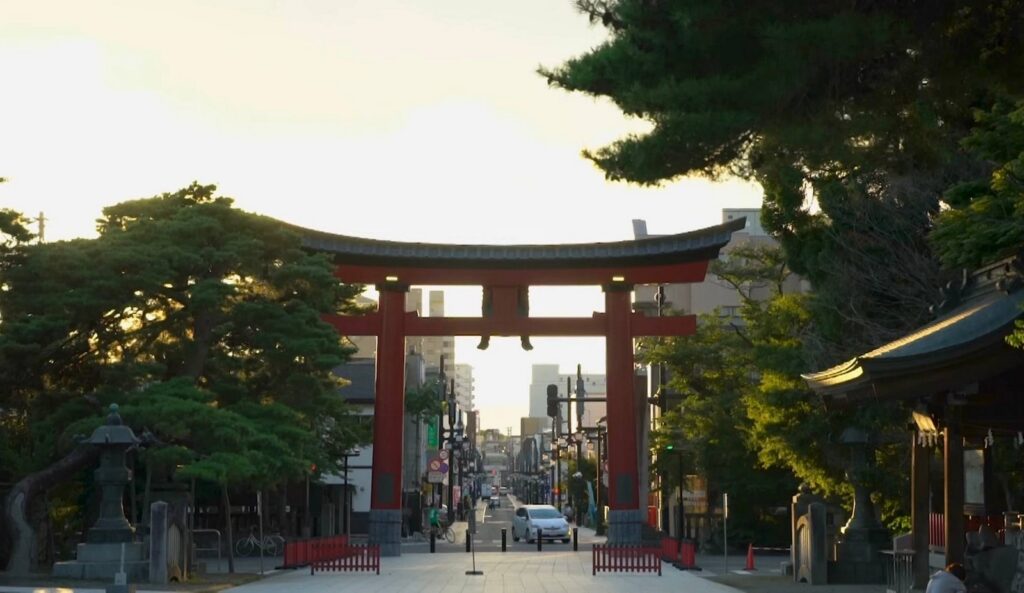
Takkoku no Iwaya Temple
Built directly into a rugged cliff face over 1,200 years ago, this dramatic temple is one of the region’s most visually arresting sacred sites. The wooden structure appears almost suspended against the stone, blending seamlessly with the forested surroundings. It is a powerful example of the harmony between ancient architecture and the raw beauty of nature.
Tip from the Itinerary Expert: Plan this stop together with Hiraizumi on the same day. The short travel distance keeps your schedule smooth and avoids any unnecessary backtracking.
Morioka City
As the welcoming capital of Iwate, Morioka offers a calm urban atmosphere defined by traditional crafts, historic temples, and wonderfully walkable streets. The city feels approachable and authentic, filled with local eateries, independent cafés, and relaxed neighborhoods that invite you to put away the map and explore at your own pace.
Tip from the Itinerary Expert: An overnight stay in Morioka helps break up longer travel days and gives you time to dive into the local food scene—like the famous wanko soba—without rushing onward.
Jodogahama Beach
With its striking white stone shoreline, crystal-clear calm water, and jagged rock formations rising from the sea, Jodogahama feels like a landscape from a dream. Well-maintained walking paths and lookout points frame the coastal scenery from every angle, while local boat rides offer a closer look at the distinctive islets and hidden coves.
Tip from the Itinerary Expert: A short sightseeing boat ride reveals hidden corners of the coastline and keeps the visit engaging for travelers of all ages.
Kitayamazaki Cliffs
These towering sea cliffs rise dramatically above the Pacific, forming one of the most impressive coastal panoramas in all of Japan. Observation platforms provide sweeping views of the Pacific horizon, and for those seeking a more immersive experience, paths descending toward the water reveal the true, massive scale of the rugged Sanriku shoreline.
Tip from the Itinerary Expert: Choose a clear-weather day and allow time to walk down toward the water. The shifting angles of the cliffs and the spray of the sea are what make this stop truly memorable.
Ryusendo Cave
Ryusendo is among Japan’s most celebrated limestone caves, famous for its remarkably clear underground lakes that glow in deep, ethereal shades of blue. You can explore the cave system along designated paths that lead deep into the mountain, making for an immersive natural experience that is particularly striking during the winter months.
Tip from the Itinerary Expert: Combine the cave with nearby coastal viewpoints in one driving loop to make your day both efficient and visually varied.
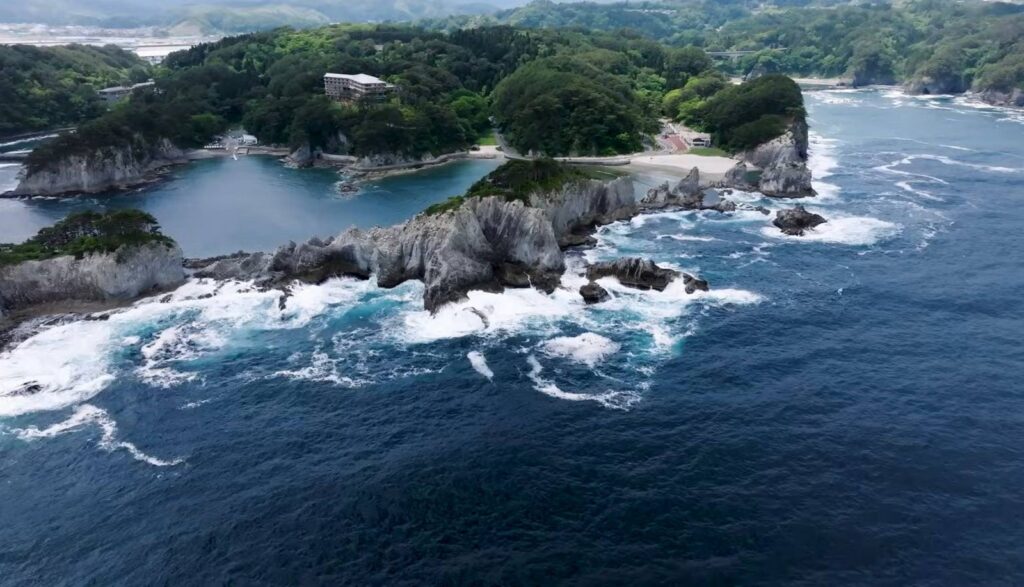
Which natural landscapes define the beauty of Iwate?
Iwate’s beauty is defined by its striking contrasts. One moment you are standing atop dramatic ocean cliffs along the Sanriku Coast, watching waves roll into curved bays under vast open skies; the next, you are surrounded by quiet mountain scenery where deep forests and hidden valleys create a profound sense of calm. The coastline feels raw and powerful, with steep rock formations and sweeping sea views that transform as the light and weather shift throughout the day. This is a landscape best experienced at a slow pace, allowing yourself the time to pause at viewpoints and truly absorb the atmosphere.
Deep underground, Ryusendo Cave offers a completely different perspective on the region’s natural character. Inside, one of Japan’s clearest subterranean lakes glows in intense shades of blue, its remarkable transparency creating an almost surreal, cinematic environment. The accessible cave passages make the experience immersive yet comfortable, with the water appearing even more vivid during the winter months. Together with the nearby mountains and traditional hot spring areas, Iwate is a destination where coastal drama and quiet interior landscapes coexist in perfect, restful balance.
Click here to learn more about creating a personal itinerary
Tip from the Itinerary Expert: Combine coastal viewpoints and a cave visit within the same driving loop. This keeps your schedule efficient while leaving plenty of time to enjoy the shifting light and the small, quiet details that make Iwate’s landscapes so memorable.
What hidden gems in Iwate are worth discovering?
Beyond its famous temples and dramatic coastline, Iwate reveals a quieter, more intimate side for travelers willing to look a little deeper. The town of Tono is steeped in folklore, famous for legends recorded in the early twentieth century that speak of river spirits and protective household beings. Surrounded by emerald mountains and shaped by centuries of relative isolation, Tono still carries a strong sense of rural tradition, where everyday landscapes feel closely tied to old stories and ancient beliefs.
Several nearby sites bring these legends to life. The Tono Folklore Museum introduces regional myths through illustrations, films, and preserved historic interiors, offering context to the stories that define the area. Kappa-buchi Pond and Jokyo-ji Temple are directly connected to local tales, giving visitors a tangible link to the creatures and characters of regional storytelling. For a different kind of immersion, Osawa Onsen provides a traditional hot spring experience rooted in long-standing heritage, while Ryusendo Cave reveals its remarkable “Dragon Blue” underground lake, where extraordinary water clarity creates a calm yet powerful natural atmosphere.
Tip from the Itinerary Expert: Pair folklore sites in Tono with a stay at a traditional onsen to slow the pace of your trip and experience Iwate’s cultural depth beyond its most photographed landmarks.
What activities in Iwate keep the journey engaging for younger travelers?
Iwate’s appeal for younger travelers lies in experiences that invite movement and curiosity rather than passive sightseeing. In Hiraizumi, cycling between temple complexes turns a historical visit into an active exploration, with quiet paths and open scenery making the journey itself part of the adventure.
Along the Sanriku coast, a sightseeing boat ride near Jodogahama adds excitement to the day, especially when seagulls fly alongside the vessel and can be fed from the deck. In Tono, folklore museums and storytelling spaces present regional legends through visual displays and performances, transforming mythology into something vivid and engaging. It’s a way to experience the local culture through action and atmosphere instead of simply reading about it on a plaque.
Tip from the Itinerary Expert: Combine light outdoor activities, short boat experiences, and interactive cultural stops in the same day to keep energy levels high while avoiding long, tiring transfers.
Iwate 3-day scenic family itinerary
Trip Duration: 3 days
Day 1 - Hiraizumi temples and traditional onsen stay
Morning (10:00–13:00). Arrive in Iwate via the Tohoku Shinkansen to Ichinoseki and continue to Hiraizumi, where the pace immediately slows. Begin with an unhurried walk through the historic temple grounds, following the majestic cedar-lined path toward the Golden Hall of Chuson-ji. Plan for 2–3 hours to explore the complex and its museum comfortably, leaving plenty of space to appreciate the forested setting and spiritual atmosphere.
Lunch (13:00–14:00). Enjoy a relaxed local lunch near the temple entrance or station area before heading to the cliffside Takkoku no Iwaya Temple. The transfer takes about 30 minutes by bicycle, taxi, or a short drive, and the visit itself usually requires 45–60 minutes of quiet exploration.
Evening (15:00–18:00). Continue by train to Hanamaki and transfer to a traditional hot-spring ryokan such as Osawa Onsen. Spend the late afternoon soaking in the restorative baths and settling into the quiet mountain surroundings before dinner. Ending the day this way helps ease travel fatigue and sets a calm, authentic tone for the journey ahead.
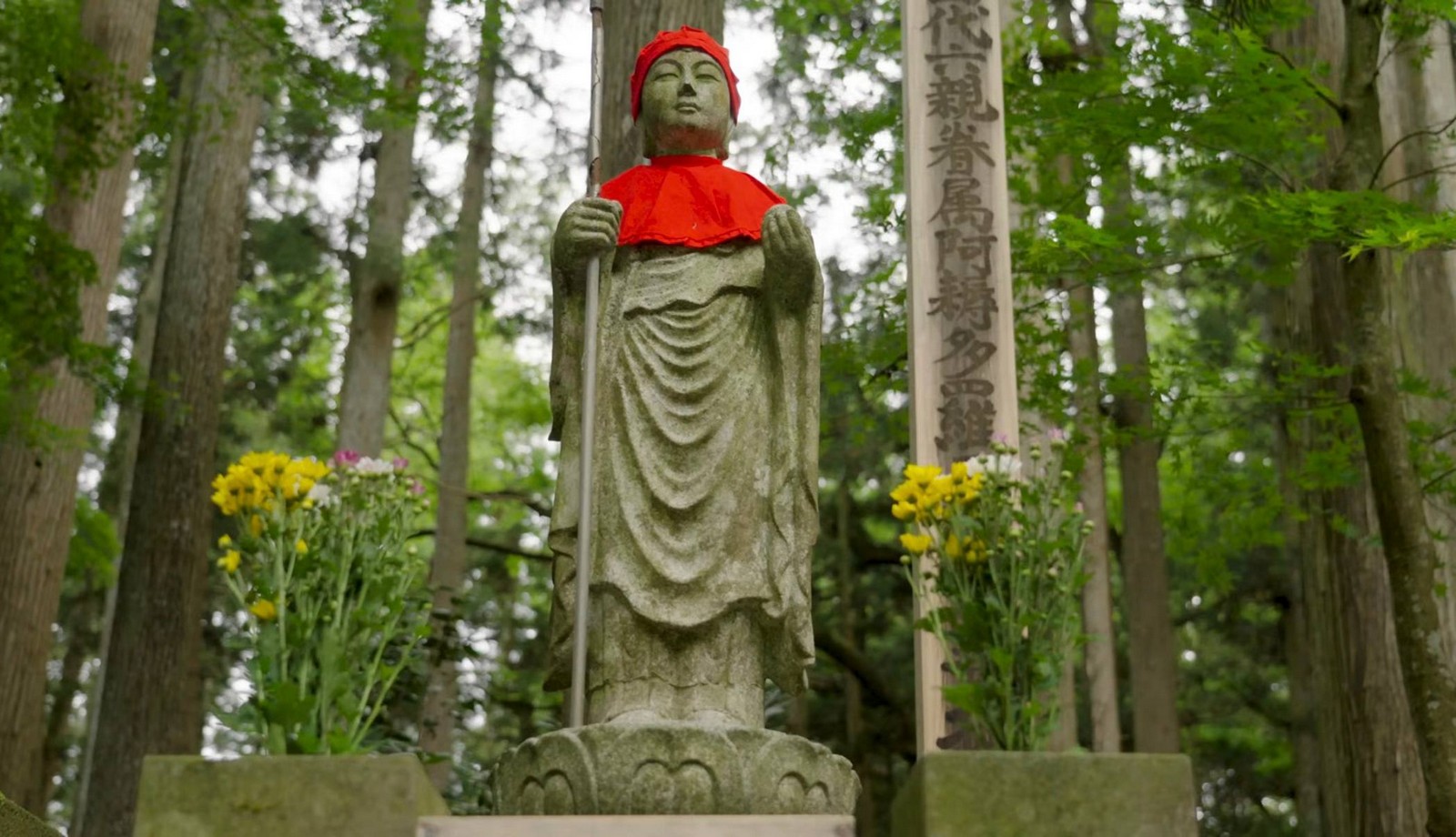
A serene forest statue wrapped in red cloth, symbolizing protection and quiet spirituality.
Tip from the Itinerary Expert: I structure the first day around one meaningful cultural highlight and a restorative onsen stay. It keeps arrival stress low and lets the trip begin with relaxation rather than long, tiring transfers.
Overnight Location: Hanamaki Onsen area
Places to Visit
Chuson-ji Temple
Time: 10:30
Duration: 2–3 hours
UNESCO-listed temple complex renowned for the gold-covered Konjikido Hall and its serene forest surroundings.
Takkoku no Iwaya Temple
Time: 14:30
Duration: 45–60 minutes
Cliff-integrated temple offering one of the region’s most dramatic and atmospheric sacred landscapes.
Osawa Onsen
Time: 16:30
Duration: Evening stay
Historic hot-spring inn with traditional baths set in a peaceful mountain environment.
Day 2 - Morioka culture, food, and relaxed city exploration
Morning (10:00–13:00). After breakfast, travel to Morioka, Iwate’s inviting prefectural capital. Wander through neighborhoods known for traditional Nambu ironware and explore quiet temple streets and scenic viewpoints at an easy pace. Allow 2–3 hours for walking between cultural stops, browsing small independent shops, and pausing at local cafés.
Lunch (13:00–14:30). Try a regional noodle specialty such as wanko soba or another local delicacy in the city center. A proper sit-down meal here often takes 60–90 minutes, especially when enjoying traditional serving styles and the warm hospitality of the city.
Evening (15:00–18:00). Continue exploring on foot, passing historic landmarks and finishing the day at a cozy café or local craft brewery. Morioka’s compact and approachable layout makes it easy to experience the city’s charm without rushing or relying on heavy transport.
Tip from the Itinerary Expert: Choose accommodation near Morioka Station to simplify your logistics. A slower city day with flexible café breaks feels far more enjoyable than trying to check off too many landmarks at once.
Overnight Location: Morioka
Places to Visit
Morioka historic and craft district
Time: 10:30
Duration: 2–3 hours
Walkable neighborhoods showcasing traditional crafts, temples, and the city’s relaxed rhythm.
Local noodle restaurant experience
Time: 13:00
Duration: 60–90 minutes
Regional soba and noodle dishes served in the distinctive and fun Morioka style.
Café or local brewery visit
Time: 16:00
Duration: 1–2 hours
Evening stop highlighting independent cafés and the city’s vibrant, small-scale food and drink culture.
Day 3 — Sanriku Coast scenery and Ryusendo nature
Morning (10:00–13:00). Travel from Morioka toward the stunning Sanriku Coast. Start with exceptionally fresh seafood near the fishing port before heading to Jodogahama Beach. Plan 1–2 hours for the gentle walking trails and shoreline viewpoints that overlook the iconic white rock formations.
Lunch (13:00–14:00). Enjoy a seafood lunch in Miyako, reflecting the region’s strong and proud coastal food culture.
Afternoon and Evening (14:30–18:00). Continue north to the dramatic Kitayamazaki Cliffs, allowing 60–90 minutes to explore the observation decks and perhaps descend toward the water for a new perspective of the jagged shoreline. Before heading back, visit Ryusendo Cave to experience its ethereal, deep-blue underground lake-a perfect final stop before returning toward Morioka or continuing your journey.
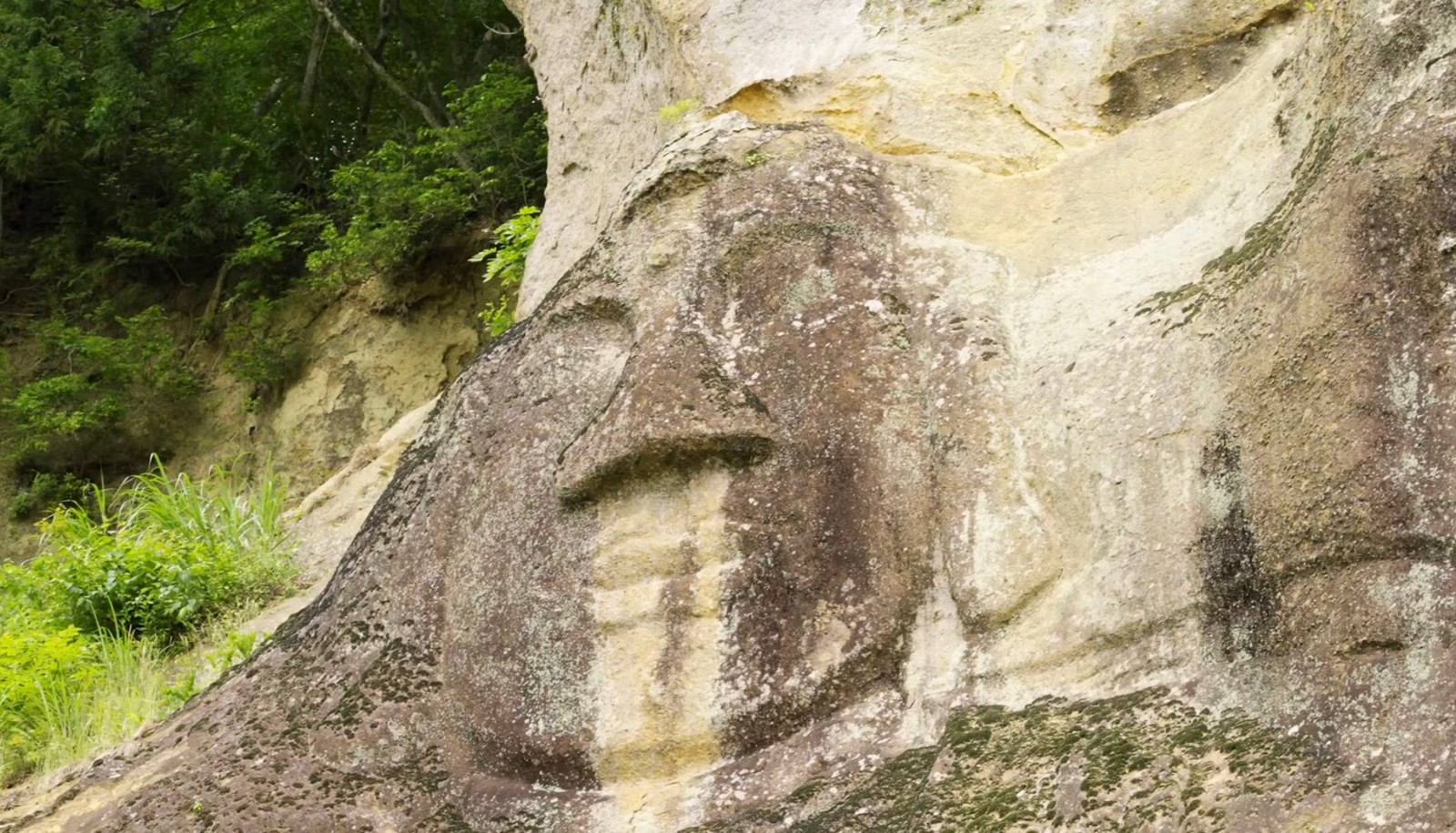
Ancient stone Buddha carved into the cliff, blending history with the surrounding landscape.
Tip from the Itinerary Expert: Distances along the coast can feel longer than expected. Group nearby viewpoints together and allow for some buffer time so the day remains scenic and relaxed rather than a race against the clock.
Overnight Location: Morioka or onward travel
Places to Visit
Jodogahama Beach
Time: 11:30
Duration: 1–2 hours
White-stone shoreline with clear water and scenic coastal walking paths.
Kitayamazaki Cliffs
Time: 15:00
Duration: 60–90 minutes
Impressive sea cliffs offering panoramic views of the rugged Sanriku coastline.
Ryusendo Cave
Time: 16:30
Duration: 60 minutes
Limestone cave known for its exceptionally clear, deep-blue underground lake.
Traveller experiences in Iwate

Daniel Cooper
October 2023

I spent three unhurried days moving between ancient temples, the rugged coastline, and quiet towns, and the deep sense of calm stayed with me long after I returned home. Walking through Chuson-ji early in the morning felt almost meditative, with barely a soul around. The views near Jodogahama were incredible for photography, especially with the shifting light over the water. Tip from the Itinerary Expert: Distances turned out to be longer than I expected, so renting a car made the entire trip smoother and far less stressful.
Maya Fernandez
July 2024

Our family loved how naturally the trip balanced grand outdoor scenery and gentle activities. The boat ride along the coast, especially feeding the seagulls from the deck, became the kids’ favorite moment of the summer. In the evenings, soaking in the traditional hot springs was the perfect way to wind down and connect. Public transport worked well in the cities, but reaching the more secluded nature spots required careful planning. Next time, I would build in extra buffer time between locations to keep things relaxed.
Omar Rahman
September 2022
The landscapes of Iwate completely surprised me. Kitayamazaki’s cliffs looked dramatic and untouched, and the deep blue water inside Ryusendo Cave felt almost unreal in person. I truly appreciated how peaceful everything felt compared to Japan’s larger, bustling cities. Even the simple meals in Morioka were memorable. The only real challenge was coordinating the local bus schedules, which took some careful timing, but the reward was worth it.
Sophie Laurent
May 2021
I truly enjoyed the slower, more intentional rhythm of travel here. Cycling between the temple complexes in Hiraizumi turned sightseeing into an active and enjoyable experience rather than something tiring. Staying overnight at an onsen helped us fully recharge after the journey from Tokyo. A few attractions closed earlier than I anticipated, so starting our days a bit earlier would have made the pace even more comfortable.
Ethan Walker
August 2019
The Sanriku coastline was easily one of the most beautiful areas I’ve seen in Japan. Wide ocean views, quiet walking paths, and fresh seafood lunches created a perfect blend of relaxation and exploration. Having a car gave us the freedom to stop at scenic viewpoints whenever we wanted, which really shaped the overall experience and made the journey feel like ours.
Layla Hassan
November 2018
The autumn colors around the temples and parks were incredibly vivid, making photography effortless and rewarding. I loved that the region felt authentic, welcoming, and uncrowded. Some uphill walking near the temple grounds meant comfortable shoes were essential, but taking the time to move slowly and notice the details made the visit far more meaningful.
Noah Bennett
February 2025
Visiting in winter felt almost magical. The snow-covered landscapes, quiet streets, and the crystal-clear underground lake in Ryusendo created truly unforgettable scenery. There were very few visitors, which made the atmosphere even more peaceful and private. The cold required proper preparation, but the calm beauty and restorative hot springs made it an absolutely worthwhile winter escape.
Tips for planning a smooth Iwate trip
I treat Ichinoseki as the main entry point for the region. The Tohoku Shinkansen gets you there quickly from Tokyo, and from there it’s easy to branch out to Hiraizumi and other nearby highlights without losing half a day to transfers.
For Chuson-ji, I always aim for an early start. The majestic cedar-lined approach feels much quieter in the morning, photos are easier to take, and you can experience the Golden Hall in a meditative atmosphere before larger groups arrive. I recommend allowing at least 2 hours at Chuson-ji if you want the visit to feel relaxed. The grounds are more extensive than they appear, and the uphill sections are quite noticeable—comfortable walking shoes really matter here.
If Hiraizumi is a stop between cities, I suggest leaving your luggage at the station first. Exploring hands-free makes the temple walk far more enjoyable and keeps your day light and flexible. For a Sanriku Coast day, I find it best to rent a car in Miyako. While trains bring you into town, having your own vehicle makes reaching the dramatic cliffs, hidden beaches, and remote viewpoints much simpler.
When taking the sightseeing boat to Jodogahama, I see it as a highlight of the experience rather than just transport. Feeding the seagulls may seem like a small detail, but it often becomes one of the most memorable moments for travelers. At Kitayamazaki, I suggest deciding in advance whether you’ll tackle the stairs. The full descent is about 750 steps, so it’s best to plan it for when everyone still has plenty of energy, not at the end of a long day.
For Ryusendo Cave, I usually schedule it as a dedicated half-day trip from Morioka. Since the bus ride is around 2 hours 14 minutes each way, I avoid overloading the day with too many additional stops. Finally, I like finishing an active day with an onsen stay, such as Osawa Onsen. It resets the mood, eases travel fatigue, and makes the following morning feel noticeably smoother—especially after the long journey from Tokyo.
Tip from the itinerary expert: I treat Ichinoseki as the main entry point to save time on transfers and suggest starting your Chuson-ji visit early to enjoy the Golden Hall in peace.
Insights from the Itinerary Expert
I first traveled through Iwate in October 2023, and what lingered long after the trip was the rare feeling of space and quiet that’s becoming harder to find in Japan. Walking along the forested approach to Chuson-ji Temple (Chuson-ji) felt grounding and unhurried, offering a sense of peace rather than a rushed sightseeing stop. Later, along the shoreline near Jodogahama Beach (Jodogahama), I watched the scenery shift constantly with the light-one moment soft and calm, the next dramatic and windswept.
Traveling here takes more coordination than in major cities: distances are longer, bus schedules can be limited, and timing truly matters. Yet, that extra layer of planning is exactly what preserves Iwate’s peaceful character. Over time, I learned to build each day around one meaningful anchor rather than trying to see everything. I now pair each highlight with nature, excellent local food, and proper rest instead of racing between locations.
A night at a traditional onsen such as Osawa Onsen (Osawa Onsen) completely resets the rhythm of the trip, especially after longer transfers. Even a place as striking as Ryusendo Cave (Ryusendo Cave), with its deep-blue underground lake, feels far more impressive when you arrive without feeling rushed. Iwate suits travelers who appreciate quiet beauty, authentic landscapes, and experiences that unfold slowly. With a thoughtfully structured personal itinerary, this region reveals a deeper, more reflective side of Japan-one that often becomes the most memorable part of the entire journey.
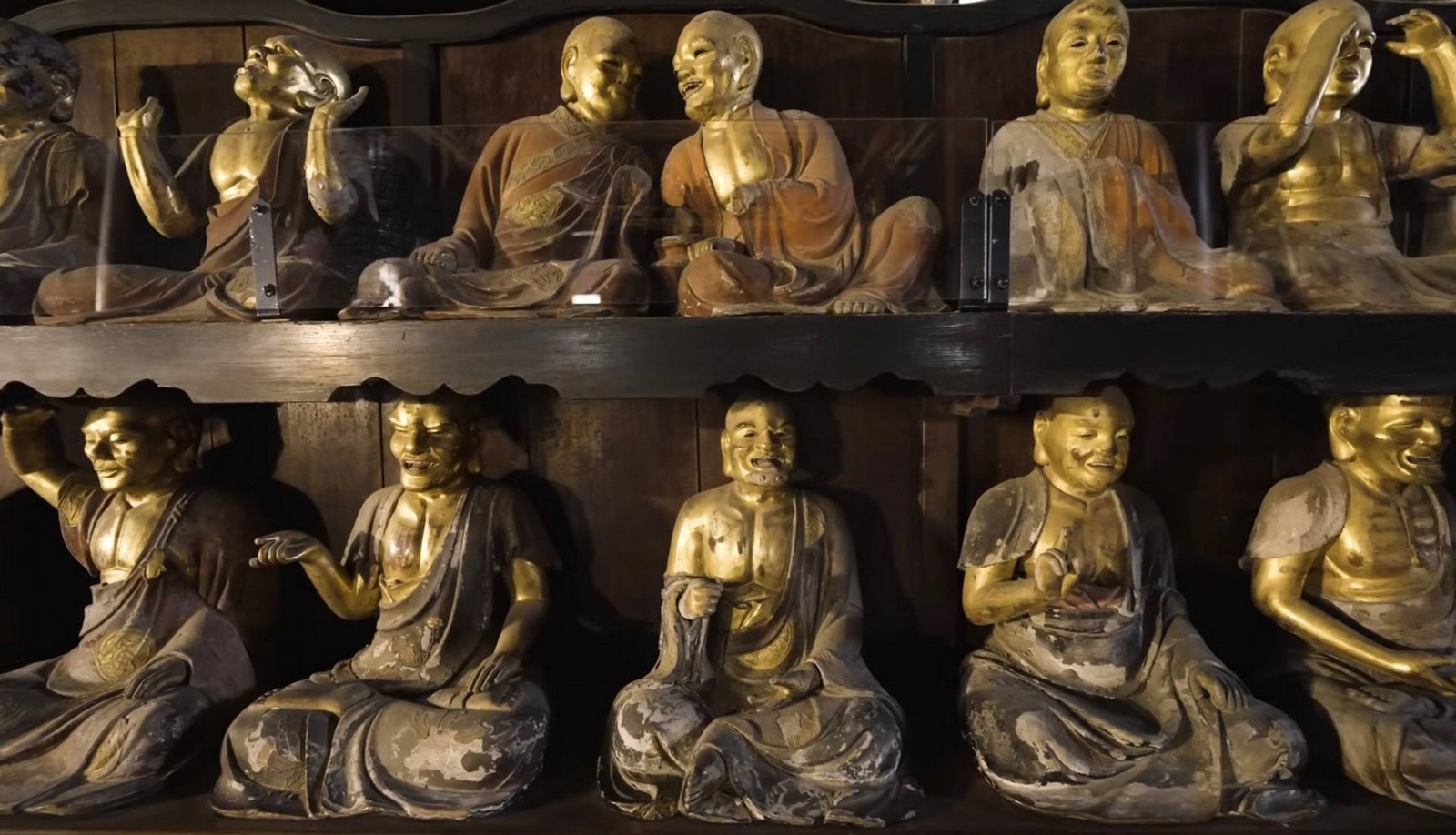
Golden temple figures preserving centuries of faith, art, and cultural heritage.
Tip from the itinerary expert: Build your day around one main highlight and pair it with a traditional onsen stay, like Osawa Onsen, to maintain a relaxed and meaningful pace.
What should you budget for a trip to Iwate?
| Name | Amount | Description |
|---|---|---|
| Budget hotel (double room, per night) | 6,000–12,000 JPY | Typical rates for business-style hotels in Morioka and other cities across Iwate. Prices naturally fluctuate on weekends, holidays, and during peak travel seasons. |
| Mid-range hotel (double room, per night) | 6,000–12,000 JPY | Mid-range properties often overlap with the upper end of this range depending on room size, booking dates, and the specific amenities included. |
| Expensive stay for a couple (onsen ryokan, per night) | 10,000 JPY | Starting rates for traditional onsen stays such as Osawa Onsen, particularly for authentic toji-style rooms. The final cost will vary based on your meal plan and the season. |
| Apartment for a family of 5 (per night) | 12,000–24,000 JPY | If larger family apartments are limited, budgeting for two business hotel rooms (6,000–12,000 JPY each) is a practical and very realistic alternative in this region. |
| Car rental (per day) | 10,000–14,000 JPY | Compact cars are the most popular choice for exploring the coast. Smaller vehicles may cost around 8,000–9,000 JPY per day depending on the city and your insurance coverage. |
| Public transport (example fare) | 2,710 JPY | One-way bus fare from Morioka to Ryusendo-mae, a journey of approximately 2 hours 14 minutes. Services can be infrequent, so checking schedules in advance is essential. |
| Restaurant meal (per person) | 1,375 JPY | Average price for local specialties like Morioka Reimen. Many regional favorites, including Jajamen, typically fall within the 1,000–1,999 JPY range. |
| Parking (city center example) | 200 / 40 min; max 1,300 JPY | Standard central Morioka parking rates. Many hotels provide guest parking for roughly 800 JPY per night, which is often more convenient for overnight stays. |
| Basic supermarket/konbini groceries for 2 (per day) | 4,000–8,000 JPY | Estimated daily food budget based on approximately 2,000–4,000 JPY per person for simple meals, convenience store finds, and light groceries. |
Frequently asked questions about visiting Iwate
01
How many days are enough to explore Iwate comfortably?
Ideally, you should plan for 3–4 days. This window gives you enough time to truly experience the temple heritage of Hiraizumi, the dramatic Sanriku coastline, and the ethereal Ryusendo Cave. It also allows for at least one traditional onsen stay, ensuring you aren’t constantly rushing between distant stops.
02
Is renting a car necessary in Iwate?
While trains connect the main cities, renting a car makes a world of difference. Coastal cliffs, limestone caves, and rural folklore areas are much easier to combine into a smooth, flexible day trip when you have your own transportation and aren’t tied to infrequent bus schedules.
03
What is the best season to visit Iwate for nature and scenery?
It really depends on the atmosphere you are looking for. Winter brings silent, snowy landscapes and strikingly clear cave lakes, while autumn is famous for its vivid, glowing foliage. Summer is the perfect time for coastal drives and seaside walks along the Sanriku shoreline. Choosing the season that matches your personal scenery preference will define your experience.
04
Is Iwate suitable for a relaxed family-style trip?
Yes, it is perfectly suited for families. The region offers calm, approachable cities, wide open landscapes, engaging boat rides, and gentle cycling routes. The naturally slower pace of the area keeps the trip comfortable for all ages while offering enough variety to stay engaging every day.
05
How difficult is it to travel between attractions?
Travel distances in Iwate can be longer than they first appear on a map. I recommend grouping nearby sights together—especially along the coast—to keep your schedule balanced. This approach avoids spending too much of your holiday in transit and leaves more time for exploration.
06
Are there memorable experiences for children in Iwate?
Absolutely. Activities like feeding seagulls from a boat near Jodogahama, cycling between the ancient temples in Hiraizumi, or exploring the interactive folklore sites in Tono create hands-on moments. These experiences feel like an active adventure rather than just a historical tour.
07
What was the most surprising part of visiting Iwate?
The deep sense of quiet is what often surprises travelers most. Even well-known sites feel uncrowded and authentic. Moments like standing before the intense, deep-blue lake inside Ryusendo Cave often become the quiet emotional highlight of the entire journey.
What we propose

Emma Heidi
Customer Experience Manager
Take all the stress out of planning your trip!
With our experts, you can create the perfect itinerary for you – complete, comfortable, and tailored to all your dreams, wishes, and needs.
We take care of every little detail, so you can simply focus on enjoying your journey.
We’ve been designing personalized itineraries since 2015, and over the years we’ve created thousands of custom itineraries for happy clients.

Save time, avoid confusion – we do the work for you. Our service saves you weeks of searching, reading, comparing, and complicated planning. Instead of wasting endless hours – you receive a ready-to-use, accurate and clear itinerary.

A tailor-made itinerary – built just for you. Your itinerary is personally designed based on our experts’ real field experience and genuine feedback from hundreds of travelers – including hidden discoveries and insider tips that don’t appear in any travel guide.

Smart accommodation selection – often saves you hundreds or even thousands of dollars. We help you choose verified and recommended places to stay, checking availability for your exact travel dates. Sometimes we suggest hotels not “in the center,” but in safe, convenient, and highly strategic locations – which can significantly reduce travel costs and save you even thousands of dollars.

We’re by your side even during the trip. We stay with you throughout your vacation – providing professional help whenever needed. If the weather changes, there’s a strike, a local event, heavy crowds, or any unexpected situation – we are here to update, guide, and adjust your itinerary in real time.

Easy-to-use itinerary – with direct navigation links. Your itinerary includes direct Waze / Google Maps links – no need to search for parking addresses, no stress, no mistakes. Just tap – and go.

Service cost: from only $420. (Special price for short itineraries up to 5 days). Clients tell us the itinerary saves them costly mistakes, fines, wrong choices – plus exclusive discounts on car rentals, better-priced accommodations, and money-saving local tips.
Want to know if it’s really worth it?
Take a look at the experiences of travelers who built their personal itinerary with us.
Click here and let’s start building the itinerary that will save you time, money, and stress – and turn your vacation into perfection.
Of course, your first inquiry is completely free – with no commitment whatsoever.
How it works


- You are welcome to contact us
- We discuss your trip
- You fill out a special form
- We create your itinerary
- You get it with all useful tips
- We are in touch with you all the time