My introduction to Austria happened by chance — and turned into a true love. The Alpine landscapes, silence, and powerful energy of nature completely changed my plans. For more than ten years, I have explored Austria dozens of times: on foot, by bicycle, and even from the air — discovering routes for travelers of all ages and travel styles. Today I help people experience the real Austria and create personalized itineraries that make each journey deeper, more comfortable, and more inspiring. Let Austria become your next unforgettable destination!
Haus der Musik
Haus der Musik is one of the most unusual museums in Vienna. This isn’t a place where you quietly move from one display case to the next. Here, music is experienced through movement, sound, and interaction: you listen, conduct, experiment, and sometimes simply pause and let sound surround you.
The museum brings together Austrian classical music, sound science, and modern technology. What makes it especially family-friendly is that you don’t need any musical background. Children and adults can enjoy it equally, even if classical music isn’t part of everyday life. That mix of play, learning, and discovery is what makes Haus der Musik stand out.
Haus der Musik: key information
How to Get There
Because it’s so central, it’s easy to combine the visit with a walk through the Old Town (Innere Stadt).
If you are staying in the city center, walking is the simplest option. Public transport is also convenient, with metro and tram stops nearby.

Since 2015, our website has specialized in individual planning of unique routes, taking into account personal preferences and desires.
Each of you will receive a unique PDF file from us, which contains everything you need: travel routes, car rentals, hotels, the best tourist attractions, attractions for kids and everything you need for a perfect vacation.
During the trip, we are available for you by phone via WhatsApp.
Our personal service provides information from A to Z, taking into account many small details that can become a decisive factor on the way from a wasted trip to an unforgettable vacation.
Our service will make your trip comfortable, save a lot of time on planning and preparation, and most importantly – will allow you to become freer and fully enjoy the pleasure of the trip.
Parking
Parking in the historic center is limited, so if you arrive by car, underground parking garages are the most realistic choice.
Opening Hours
Daily 10:00–22:00
- Monday: 10:00 - 22:00
- Tuesday: 10:00 - 22:00
- Wednesday: 10:00 - 22:00
- Thursday: 10:00 - 22:00
- Friday: 10:00 - 22:00
- Saturday: 10:00 - 22:00
- Sunday: 10:00 - 22:00
Tickets
Adult €17; Reduced ticket €13; Children (3–11) €7; Children under 3 free; Family ticket (2 adults + up to 3 children) €35; Evening ticket (after 20:00) ~€6.5; Combined ticket with Mozarthaus Vienna ~€22
From: 6.5 EUR
Duration
Plan around two hours for a relaxed visit; many families spend 90–150 minutes focusing on interactive zones. Some families stay close to three hours if children are deeply engaged.
Best Time to Visit
Evenings or early mornings are calmer. After 20:00, tickets are cheaper.
Evening hours are usually calmer and often cheaper, while daytime visits can feel busier, especially on rainy days.
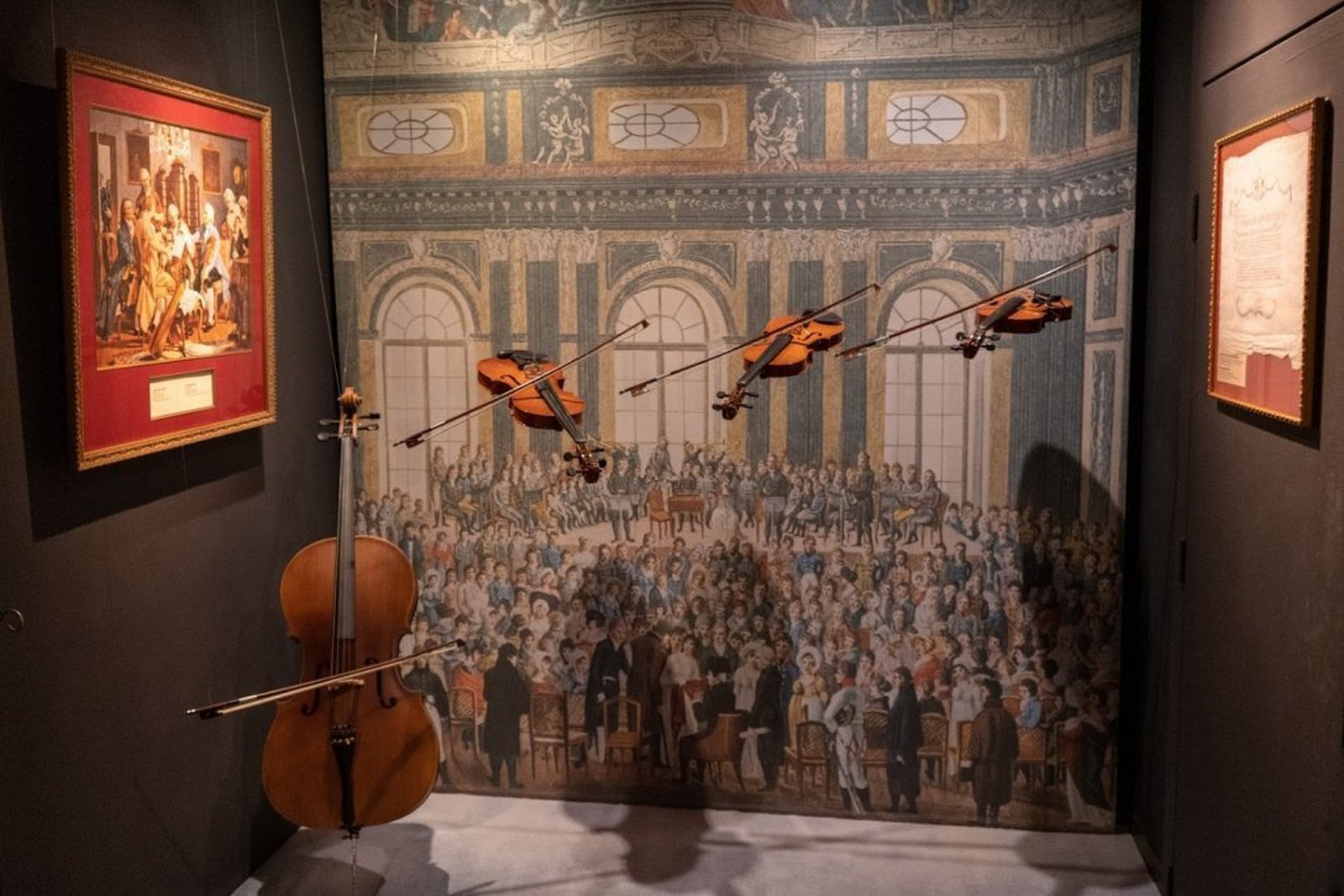
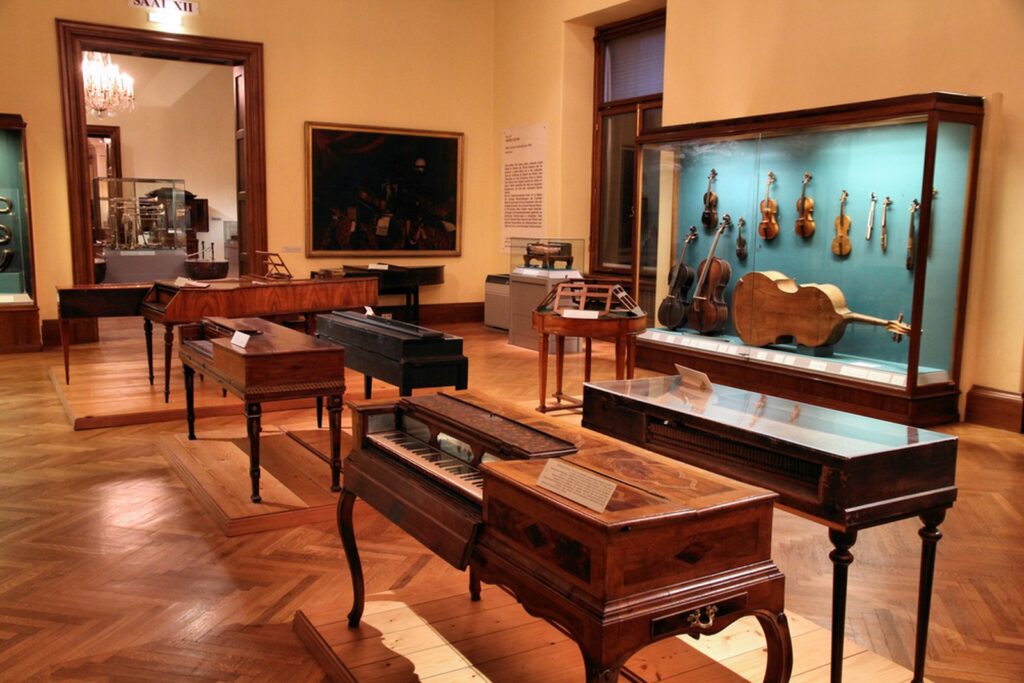
String instruments and musical history displayed in an interactive hall
What you actually see inside Haus der Musik
The museum is built around sound, screens, and hands-on interaction, with several distinct zones that families can explore in their own order and pace.
Vienna Philharmonic Orchestra & Otto Nicolai introduction
The visit begins with an introduction to the Vienna Philharmonic Orchestra and its founder, Otto Nicolai. This section avoids long historical explanations and instead uses sound, video, and interactive elements to set the tone. It works well as a gentle entry point into the museum and doesn’t overload children with information, making it easy to move forward without losing focus.
Sonosphere
One of the most memorable areas is the sound world known as the Sonosphere. The space is intentionally dark so visitors focus entirely on listening rather than looking around. Here you can hear sounds of nature and city life from unusual perspectives, recordings inspired by space and planets, and even how the world sounds inside a mother’s womb. Interactive sound islands invite visitors to guess what they are hearing. Children often stay here longer than expected, as the experience feels immersive and calming rather than overwhelming.
Tip from the Itinerary Expert (first-hand experience): this is one of the rare museum spaces where children naturally slow down. I often use it as a short pause to reset after more active sections.

Science of sound: frequency, volume, and hearing perception
A full section of the museum is dedicated to the science of sound, including frequency, volume, and hearing perception. Instead of long texts, the concepts are explained through short experiments and hands-on stations. One display shows how the same sound is perceived differently by humans and animals, such as turtles or cats. This comparison often sparks curiosity and conversation, especially among older children and teenagers.
Giant musical instruments
Large-scale models of musical instruments explain how sound is produced. Instruments are grouped by type, such as wind, string, and percussion, and touch screens allow visitors to hear each instrument individually. This is a visually strong area that works well even for children who are not naturally drawn to classical music. The clear connection between shape, movement, and sound makes the experience intuitive and easy to understand.
Composer rooms (Mozart, Haydn, Beethoven, Schubert, Strauss, Mahler)
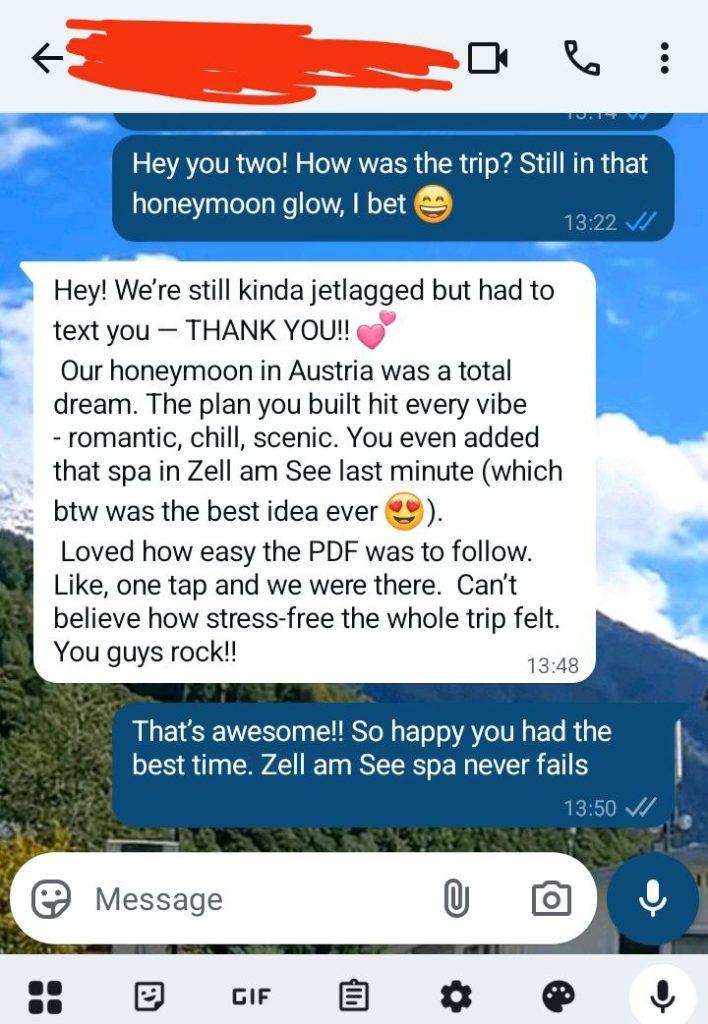
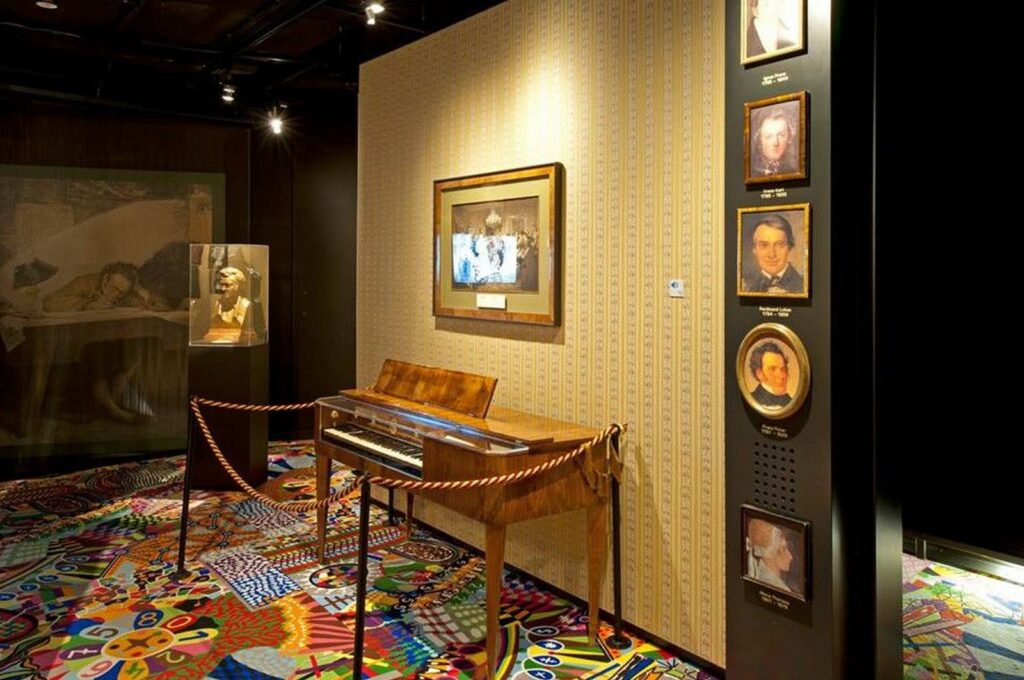
Several rooms are dedicated to composers who worked in Austria, including Mozart, Haydn, Beethoven, Schubert, Strauss, and Mahler. Each composer has a separate room with music, visual installations, and interactive portraits. The rooms are acoustically separated, so music does not overlap between spaces. This allows focused listening, but younger children often spend less time here. This section is generally more engaging for teenagers and adults who enjoy listening and reading.
Beethoven hearing experience
One of the most emotional installations allows visitors to experience how Beethoven perceived sound at different stages of his life. Acoustic tubes simulate the progression of hearing loss, including the period when he was already completely deaf. The installation is short but impactful and tends to resonate more with older children and adults than with younger visitors.
Virtual Conductor (conduct the Vienna Philharmonic Orchestra)
The conducting room is a highlight for many families. Visitors stand in front of a large screen and conduct the Vienna Philharmonic Orchestra using hand movements. If the tempo or gestures are incorrect, the orchestra reacts or even stops. The experience is more challenging than it looks and often leads to repeated attempts and laughter.
Create your own music (waltz dice, Clong sound creature)
In several interactive zones, children can roll virtual dice to create their own waltz, design a sound creature called Clong, and hear how their creation sounds before sending it back into the museum’s sound universe. These creative areas are especially popular with children aged 6–14 and balance the more structured sections of the museum.
Room of Silence
After the more intense sound experiences, visitors can enter a dedicated room of silence. This space allows the ears to reset and provides a calm moment before continuing or ending the visit. Saving this room for the end often helps children leave the museum relaxed rather than overstimulated.
Is Haus der Musik suitable for your family?
Haus der Musik works best for families with children aged 6 and up, especially those who enjoy screens, sound, and hands-on interaction. It’s a good fit for parents looking for an indoor activity that doesn’t feel like a traditional museum and allows children to move, experiment, and choose their own pace.
It may be less suitable for toddlers who need space to run freely or for children who are sensitive to noise and sensory input. Families focused only on nature and outdoor experiences may also find it less relevant.
That said, the museum offers elevators, seating areas, clean restrooms, a café, and a well-organized shop, which makes longer visits more comfortable.
Suitable For
- ✓ Families
- ✗ Seniors
- ✗ Limited Mobility
Amenities
- ✓ Toilets
- ✓ Cafe
- ✗ Elevator
- ✗ Kids Zone
- ✗ Stroller Friendly
- ✗ Wheelchair Accessible
Food, breaks, and nearby options
There is a café on the ground floor of Haus der Musik, which works well for a short break or a quick drink. Just outside the museum, the streets of the Old Town offer many casual dining options within a few minutes’ walk.
Typical prices in Vienna help with planning: coffee or a soft drink usually costs €3–€4.5, quick meals or café food range from €7–€12, and a standard restaurant meal is around €15–€25. These ranges make it easy to plan meals without unexpected expenses.
Practical planning notes for families
For a relaxed visit, plan around two hours, extending only if children are deeply engaged. Evening hours are usually calmer and often cheaper, while daytime visits can feel busier, especially on rainy days.
A rental car is generally more convenient for a family trip overall, but for this museum alone it’s easier not to drive into the center. Walking or public transport avoids parking stress and saves time.
Tip from the Itinerary Expert: start the visit with the most interactive exhibits. Beginning with hands-on experiences keeps children engaged from the start and sets a good rhythm for the rest of the visit.
Haus der Musik: 2-Day Family Walking Route in Vienna
Trip Duration: 2 days
Day 1 - Old Town atmosphere and Haus der Musik
Morning (10:00-12:30)
Begin with a relaxed walk through Innere Stadt (Vienna Old Town). Distances are short, usually 5-10 minutes on foot between points. Walk without a strict plan, let children set the pace, and stop for photos or small shops along the way.
Lunch (12:30-13:30)
Choose a casual restaurant or café near the Old Town. Average prices are €12-18 per person. Keeping lunch light helps avoid post-meal fatigue.
Afternoon (14:00-16:30)
Walk 10-15 minutes to Haus der Musik and plan 2-2.5 hours inside. Start with the Virtual Conductor, then continue to the Sonosphere, sound physics, and music creation areas.
Evening (17:00-18:00)
Have an early dinner near the museum. Quiet cafés are a good option for tired children. Tickets after 20:00 cost around €6.5, so the visit can also be shifted to the evening.
Click here to learn more about creating a personal itinerary
Day 2 - Light culture and urban nature
Morning (10:00-11:00)
Spend the morning walking around the exterior of the Vienna State Opera (Wiener Staatsoper). An interior visit isn’t necessary for families; 30-40 minutes outside is enough for photos and a short explanation before moving on.
Lunch (12:00-13:00)
Have lunch near the Opera area. This part of the city offers many family-friendly restaurants with clear menus and reasonable waiting times.
Afternoon (14:00-17:00)
Walk about 10 minutes to Stadtpark (Vienna City Park) and plan to spend 2-3 hours there. Wide paths, open lawns, benches, and space to move freely make it a perfect contrast to the museum experience.
Evening (17:00-18:00)
Finish the day with dinner near the park or return to the Old Town by tram or metro in 10-15 minutes.
Traveler experiences at Haus der Musik

Daniel Morgan
April 2018

I honestly didn’t expect to spend more than an hour here, but we stayed almost three. The virtual conductor experience turned into a family competition and was much harder than it looks. Our kids loved creating their own waltz. Some areas had more reading than they wanted, so we skipped those and focused on interaction. That freedom made the visit work perfectly for us.
Sofia Reynolds
September 2019
We visited on a rainy afternoon and Haus der Musik became the highlight of the day. The darker listening rooms were surprisingly calming, especially after walking around the city. I appreciated how many places there were to sit down, which helped when the kids got tired. Some popular stations were busy, so patience and flexibility were important.
Michael Turner
July 2021
This place feels more like a playground for sound than a traditional museum. My teenage son was fascinated by how different animals hear sounds, while I found the Beethoven hearing installation genuinely moving. We arrived after 20:00 and paid much less, which felt like a smart decision. I wouldn’t rush this visit—letting it unfold naturally works best.
Emma Collins
December 2021
We went in the early evening and the atmosphere was relaxed. The musical stairs at the entrance immediately hooked the kids and set the mood. Conducting the Vienna Philharmonic was both funny and humbling. Not every section worked for our younger child, but we skipped without stress and still felt the visit was complete.
James Patel
May 2023
Haus der Musik surprised me. I’m not particularly interested in classical music, but the interactive approach made everything accessible. Creating sound creatures and listening to the universe sounds was genuinely engaging. We stayed longer than planned and finished in the quiet room, which helped reset after all the stimulation.
Laura Bennett
February 2024
This was meant to be a short stop, but we ended up rearranging the rest of the day. The kids kept going back to the conductor station, and I liked that no one rushed us. Some areas felt intense sound-wise, so taking short breaks between floors made a big difference. Overall, it was flexible and family-friendly.
Oliver Hughes
January 2025
One of the few indoor activities where both kids and adults stayed engaged. The sound physics section sparked real conversations with our teenagers, which doesn’t happen often. We didn’t read every screen, and that was fine. Saving the quiet room for the end really changed how relaxed we felt leaving the museum.
Tips from the Itinerary Expert
I always aim for an evening visit after 20:00. It’s noticeably calmer, tickets are cheaper, and children stay focused longer without daytime crowds.
From first-hand experience, beginning with the Virtual Conductor or sound experiments immediately hooks kids and sets the right rhythm for the visit.
If the conductor station is busy, I skip it and return toward the end. Lines usually shorten, and the experience feels less rushed.
With families, I pick 3-4 strong sections and ignore the rest. Trying to see everything often leads to fatigue and frustration.
Some sound areas are intense. I pause on seating floors or move to quieter sections to help kids reset before continuing.
Ending here makes a real difference. I’ve seen children calm down instantly, leaving the museum relaxed rather than overstimulated.
I don’t force an order. When kids linger, we stay; when interest drops, we move on. The museum is designed for this flexibility.
There’s a lot of touching and gesturing. I always use coat storage or lockers when available—free hands improve the flow.
A light snack beforehand and dinner afterward works best. Kids stay alert inside and unwind properly once the visit ends.
After sound-heavy experiences, even a brief walk nearby helps balance energy and mood for the rest of the day.
Insights from the Itinerary Expert
I visited Haus der Musik (House of Music) in spring 2024, during a family trip to Vienna, looking for an indoor activity that would genuinely work for both children and adults. What stood out immediately was that this place doesn’t force a fixed route or pace. You are free to explore, skip, return, and adjust the visit to your family’s energy level, which is essential when traveling with kids.
From my experience, the strength of Haus der Musik lies in its balance. It offers enough depth to feel meaningful, but it never demands full attention to every detail. Interactive zones pull children in naturally, while quieter listening areas give adults space to slow down. That flexibility makes it possible to enjoy the museum without exhaustion.
There are limitations. Some sound areas can feel intense during busy hours, and younger children may lose interest in composer-focused rooms. Timing makes a real difference, and calmer hours improve the overall experience noticeably.
In the context of a family city trip, Haus der Musik adds cultural depth without draining energy. It fits best into a well-paced itinerary that mixes indoor activities with outdoor walks and relaxed meals. Vienna offers many layers, and this museum connects them in a way that feels accessible, engaging, and family-friendly.
Haus der Musik & Vienna: Price List (2025)
| Name | Amount | Description |
|---|---|---|
| Museum tickets – Adult | 17 EUR | |
| Museum tickets – Reduced ticket | 13 EUR | |
| Museum tickets – Children (3-11) | 7 EUR | |
| Museum tickets – Children under 3 | Free EUR | |
| Museum tickets – Family ticket (2 adults + up to 3 children) | 35 EUR | |
| Museum tickets – Evening ticket (after 20:00) | ~6.5 EUR | |
| Museum tickets – Combined ticket with Mozarthaus Vienna | ~22 EUR | |
| Food & drinks – Coffee / soft drink | 3–4.5 EUR | |
| Food & drinks – Quick meal / café | 7–12 EUR | |
| Food & drinks – Lunch (mid-range restaurant) | 15–25 EUR | |
| Food & drinks – Dinner (tourist restaurant) | 30+ EUR | |
| Public transport – Single ride (metro / tram) | 2.40 EUR | |
| Public transport – 24-hour pass | 8 EUR | |
| Public transport – 48-hour pass | 14.10 EUR | |
| Public transport – 72-hour pass | 17.10 EUR | |
| Accommodation (per night) – Hostel | 20–35 EUR | |
| Accommodation (per night) – Budget hotel | 50–90 EUR | |
| Accommodation (per night) – Mid-range hotel | 90–170 EUR | |
| Accommodation (per night) – Luxury hotel | 170+ EUR | |
| Daily budget – Budget traveler | 50–80 EUR | |
| Daily budget – Average traveler | 70–180 EUR | |
| Daily budget – Comfortable travel | 175+ EUR |
Frequently Asked Questions about Haus der Musik
What we propose

Emma Heidi
Customer Experience Manager
Take all the stress out of planning your trip!
With our experts, you can create the perfect itinerary for you – complete, comfortable, and tailored to all your dreams, wishes, and needs.
We take care of every little detail, so you can simply focus on enjoying your journey.
We’ve been designing personalized itineraries since 2015, and over the years we’ve created thousands of custom itineraries for happy clients.

Save time, avoid confusion – we do the work for you. Our service saves you weeks of searching, reading, comparing, and complicated planning. Instead of wasting endless hours – you receive a ready-to-use, accurate and clear itinerary.

A tailor-made itinerary – built just for you. Your itinerary is personally designed based on our experts’ real field experience and genuine feedback from hundreds of travelers – including hidden discoveries and insider tips that don’t appear in any travel guide.

Smart accommodation selection – often saves you hundreds or even thousands of dollars. We help you choose verified and recommended places to stay, checking availability for your exact travel dates. Sometimes we suggest hotels not “in the center,” but in safe, convenient, and highly strategic locations – which can significantly reduce travel costs and save you even thousands of dollars.

We’re by your side even during the trip. We stay with you throughout your vacation – providing professional help whenever needed. If the weather changes, there’s a strike, a local event, heavy crowds, or any unexpected situation – we are here to update, guide, and adjust your itinerary in real time.

Easy-to-use itinerary – with direct navigation links. Your itinerary includes direct Waze / Google Maps links – no need to search for parking addresses, no stress, no mistakes. Just tap – and go.

Service cost: from only $420. (Special price for short itineraries up to 5 days). Clients tell us the itinerary saves them costly mistakes, fines, wrong choices – plus exclusive discounts on car rentals, better-priced accommodations, and money-saving local tips.
Want to know if it’s really worth it?
Take a look at the experiences of travelers who built their personal itinerary with us.
Click here and let’s start building the itinerary that will save you time, money, and stress – and turn your vacation into perfection.
Of course, your first inquiry is completely free – with no commitment whatsoever.
How it works


- You are welcome to contact us
- We discuss your trip
- You fill out a special form
- We create your itinerary
- You get it with all useful tips
- We are in touch with you all the time