
I have been working in the tourism industry for over 15 years. During this time, I have built strong partnerships with leading service providers — from car rentals and insurance to hotels, airlines, local guides, and the best attractions around the world. I specialize in creating personalized itineraries, paying attention to every detail to ensure that each traveler has unforgettable experiences. Additionally, I actively run a travel blog, sharing my knowledge with a wide audience of travelers worldwide. If you are planning your trip and want it to be comfortable, well-planned, and truly memorable, I am here to help you turn your dream into reality.

Waterfalls of Switzerland
Switzerland is one of Europe’s richest countries in water resources, and you feel it immediately when travelling through the Alps. Glaciers, steep alpine valleys, and vertical limestone cliffs have shaped hundreds of waterfalls across the country. Many are easy to access and well suited to family visits. From roaring rivers in the lowlands to delicate alpine cascades, waterfalls are not isolated sights here – they’re part of the natural rhythm of travel routes.
What makes Swiss waterfalls especially appealing for families is the combination of powerful nature, safe infrastructure, and relatively short walking distances. You rarely need extreme hiking skills to reach impressive views, but you do need to plan realistically. Distances, stairs, and timing matter more than they first appear – and that’s exactly where the Itinerary Expert approach helps.
How to get around waterfalls in Switzerland: is a car really necessary?
Yes – renting a car is strongly recommended when planning a trip focused on waterfalls. While some iconic locations are reachable by train, many of the most atmospheric waterfalls sit in alpine valleys where public transport is limited or infrequent. A car gives you flexibility with timing, weather changes, and travelling with children, especially when visiting more than one waterfall in a day.
That said, a combined approach can work well. Places like Rhine Falls and Lauterbrunnen Valley are accessible by train, but valleys such as Val Bavona, Simmental, or mountain passes near Klausenpass are far more convenient with a car. Parking is usually organised near major waterfalls, and you’ll often find both paid and free options depending on the side you approach from.
Click here to learn more about creating a personal itinerary
Tip from the Itinerary Expert: When travelling with children, always check which side you approach from. At Rhine Falls, parking choice can completely change walking distance, the number of stairs, and whether viewpoints are free or paid. I learned this the hard way after underestimating distances on my first visit.

When is the best time to visit waterfalls in Switzerland?
The most impressive season for waterfalls in Switzerland is late spring and early summer. Snowmelt and glacier runoff create maximum water volume, especially at Rhine Falls and Trümmelbach Falls. During this period, the sound, spray, and movement feel dramatic and memorable.
Summer offers the best balance between accessibility and comfort. Hiking paths are open, alpine roads are passable, and locations like Foroglio allow short walks and even cold-water swimming nearby. Autumn typically means fewer people, but water levels can drop at some waterfalls. Winter visits are possible, yet access can be limited and stairs may be slippery – which matters when travelling with kids.
Tip from the Itinerary Expert: If you want powerful water and manageable crowds, arrive early in the morning or later in the day. Evenings can feel calmer, but don’t plan boat rides too late – schedules are limited, and missing the last one is stressful with tired kids.
Which cities are best for exploring waterfalls in Switzerland?
Lauterbrunnen
Lauterbrunnen Valley is often described as the valley of 72 waterfalls, and this is not an exaggeration. Vertical cliffs rise hundreds of meters above the valley floor, with waterfalls cascading directly beside villages and walking paths. It is one of the most visually striking regions in Switzerland and forms part of a UNESCO-listed natural landscape.
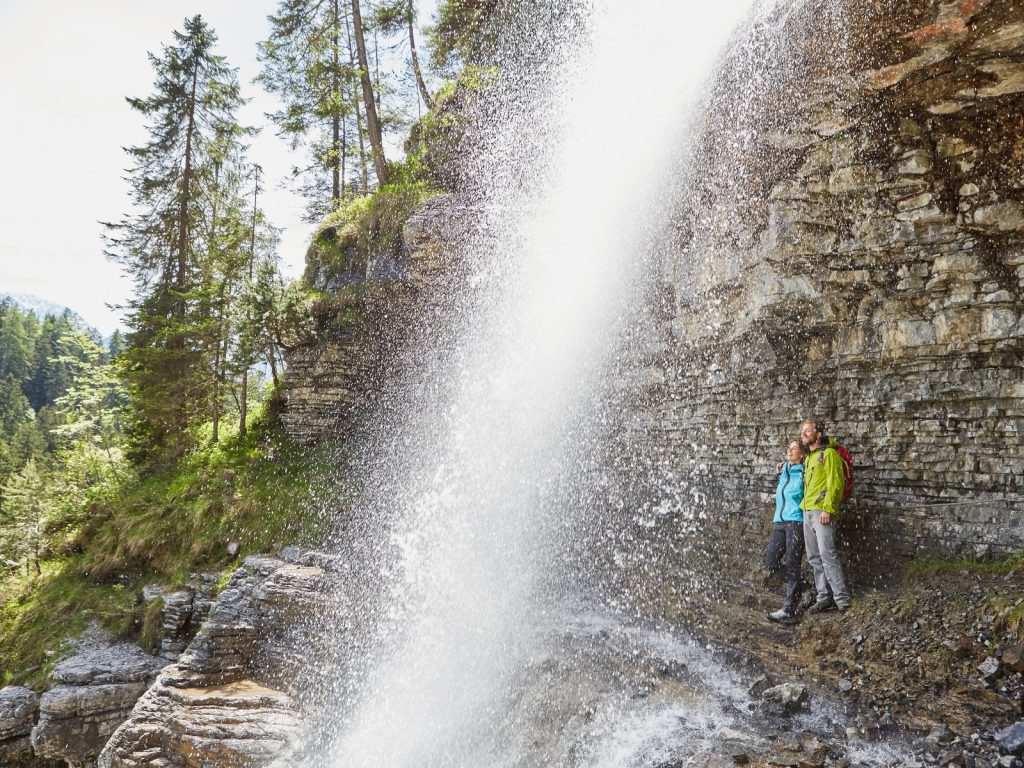
The most famous waterfall here is Staubbach Falls, one of Europe’s highest free-falling waterfalls. It drops almost straight down near the village and can be viewed from several angles. A short path leads behind the waterfall, where spray, wind, and changing light create a powerful sensory experience. The path is short but steep and can be slippery near the end, which is important to consider when travelling with children.
Nearby, Trümmelbach Falls offer a completely different experience. These are underground glacier waterfalls hidden inside the mountain, accessed via tunnels, staircases, and a lift. Ten separate cascades thunder through narrow rock channels, carrying up to 20,000 litres of water per second during peak melt. Children under four are not allowed inside, and noise levels are high – this is intense, immersive nature rather than a gentle walk.
Tip from the Itinerary Expert: I always recommend separating Staubbach Falls and Trümmelbach Falls into different time blocks. Visiting both back-to-back can overwhelm children – one is open and airy, the other loud and enclosed.
Neuhausen am Rheinfall / Schaffhausen
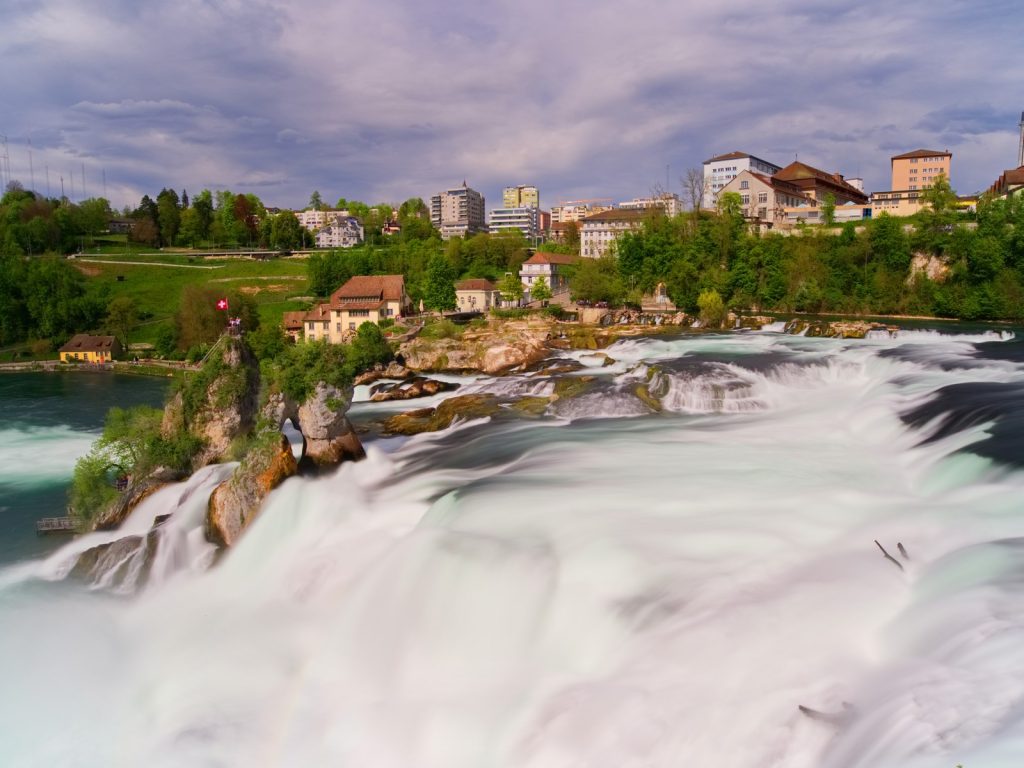
Rhine Falls (Rheinfall) is the largest waterfall in Europe by volume, and its scale is immediately apparent. While it is not very high – around 23 meters – its width of approximately 150 meters and the sheer force of the water make it visually and physically impressive, especially in summer.
The area is very well organised. You can view the waterfall from both sides of the river, from bridges, observation decks, and from boats that approach remarkably close to the rushing water. Boat rides are one of the highlights for families, although they are not inexpensive and often sell out quickly on busy days. Expect multiple staircases, some of them steep, and a fair amount of walking if you want to explore all viewpoints.
There are playgrounds, cafés, benches, and wide promenades nearby, which makes Rhine Falls surprisingly family-friendly despite the crowds. The main drawback is exactly that – during weekends and holidays, the number of visitors can feel overwhelming.
Tip from the Itinerary Expert: For the best balance, approach Rhine Falls from Neuhausen for boat rides and use the castle side (Schloss Laufen) for closer viewpoints. Changing sides once saved me nearly an hour of unnecessary walking.
Brienz / Interlaken
Giessbach Falls (Giessbachfälle) consist of a cascade of 14 waterfalls flowing down toward Lake Brienz. Unlike a single dramatic drop, this is a layered experience where bridges, paths, and viewpoints reveal the water repeatedly from different heights.
You can reach Giessbach by car or by boat across Lake Brienz. From below, a funicular leads up toward the historic Grand Hotel Giessbach, while hiking paths allow you to walk alongside and even behind parts of the waterfall system. The bridges are especially engaging for children, though surfaces can become slippery after rain.
This area works particularly well for families because it combines waterfalls, lake views, gentle walking, and the option for a relaxed meal in one compact location.

Lenk (Simmental)
The Simmental region is often described as one of Switzerland’s greenest valleys, and it feels noticeably quieter and more rural than the busier areas of the Bernese Oberland. This slower pace makes it especially appealing for families who want impressive nature without constant crowds.
Near the village of Lenk, Iffigfall drops nearly 200 meters, creating strong spray and a refreshing mist even on warm summer days. From the parking area, a short and well-marked walk leads to a bridge directly facing the waterfall. The visual impact is immediate, dramatic, and accessible without long hikes.
Nearby, Siebenbrunnen Falls form a multi-cascade route that feels wilder but still manageable. The paths allow you to experience nature at a calmer rhythm, making it easier to adjust the visit to children’s energy levels.
Tip from the Itinerary Expert: If your kids get tired quickly, choose Iffigfall over longer valley hikes. It delivers maximum visual impact with minimal walking – something I’ve come to appreciate more with every family trip.
Foroglio (Ticino)
In the Italian-speaking canton of Ticino, Cascata di Foroglio feels noticeably different from alpine waterfalls in the north. The atmosphere is warmer, the light softer, and the setting more Mediterranean in mood. The waterfall plunges 108 meters beside a traditional stone village, with only a short walk from the parking area.
The contrast between the massive falling water and the compact stone houses makes this one of the most photogenic waterfall settings in Switzerland. In summer, many families combine the visit with a picnic or time near the water. While the stream is icy, children often enjoy splashing at the edges on hot days.
This is an easy stop to include even on a slower travel day, especially when you want strong scenery without physical effort.
Which natural regions are best for waterfall lovers?
Certain regions in Switzerland naturally concentrate waterfalls due to their geology and terrain. Lauterbrunnen Valley, the Bernese Oberland, Simmental, Val Bavona, and areas near Klausenpass appear repeatedly as the richest zones for waterfall exploration.
Lakes such as Lake Brienz and Lake Constance often enhance the experience by adding reflections, boat access, and relaxed walking paths near waterfalls. These combinations work particularly well for families who want variety without long transfers.
2-Day Waterfalls Route in Switzerland (by Car)
Trip Duration: 2 days
Day 1 - Rhine Falls Region (Rheinfall / Rhine Falls)
10:00 – Arrival at Neuhausen am Rheinfall (by car)
Park near Rheinfall Parking P1 or on the Schloss Laufen side. From parking, expect a 5-15 minute walk, depending on the side. Plan 1.5-2 hours to explore viewpoints and walk close to the water to feel the spray and sound of the falls.
11:45 – Boat ride to the waterfall
Take a 15–25 minute boat ride approaching the cascade. Boats typically operate from April to October during daytime hours. Prices range from approximately 7–10 CHF for short rides. This is usually the most exciting part for children.
13:30 – Lunch near the falls
Lunch at Schlössli Wörth or nearby cafés along the promenade. Menus are simple and service is fast, which works well with kids.
15:00 – Riverside walk and playground time
Enjoy a short walk along the Rhine with benches and play areas. Plan 45-60 minutes for a relaxed pace.
17:00 – Drive to hotel (Schaffhausen area)
Driving time within the region is usually 10-20 minutes.
Day 2 - Lauterbrunnen Valley (Staubbach & Trümmelbach)
10:00 – Drive to Lauterbrunnen Valley
From central Switzerland, allow 1.5-2.5 hours of driving time on mountain roads. Park in Lauterbrunnen village, where parking areas are clearly marked. The setting is compact, and most walks start directly from the village.
12:30 – Staubbach Falls (Staubbachfall)
From the parking area, it’s a 10-minute walk to the main viewpoints. Spend 40-50 minutes exploring the area and, if conditions allow, walking behind the waterfall. The path is short but steep and can be slippery near the end, so pace matters with children.
13:30 – Lunch in Lauterbrunnen village
Choose one of the local restaurants or bakeries along the main street. Simple alpine dishes and quick service make this an easy stop between activities.
15:00 – Trümmelbach Falls (Trümmelbachfälle)
Drive 5 minutes south toward Stechelberg. Parking is available on site. Plan about 60 minutes for the visit. Entry prices are approximately 14 CHF for adults and 6 CHF for children. Children under four are not allowed, and the environment is loud and enclosed.
17:00-18:00 – Valley walk and photo stops
Finish the day with an easy, flat walk along the valley floor. Wide views of cliffs and waterfalls make this a calm, low-effort way to end the day.
Prices
| Name | Amount | Description |
|---|---|---|
| Rhine Falls boat ride (short rides) | 7–10 CHF | Prices range from approximately 7–10 CHF for short rides. |
| Trümmelbach Falls entry (adults) | 14 CHF | Entry prices are approximately 14 CHF for adults. |
| Trümmelbach Falls entry (children) | 6 CHF | Entry prices are approximately 6 CHF for children. |
Traveler Experiences

Daniel Cooper
Visited June 2019

We spent a full day at Rhine Falls (Rheinfall) with our two kids. The sound and spray are intense up close. Boat rides were the highlight, but lines grew long after noon. There are many stairs, so good shoes matter. Rushing this place doesn’t work.
Michael Harris
Visited September 2018
Giessbach Falls (Giessbachfälle) surprised me. Fourteen cascades sound abstract until you start crossing the bridges. Some paths are steep, so we moved slowly. Combining waterfalls with views over Lake Brienz kept the visit relaxed.
Emily Foster
Visited July 2023

Trümmelbach Falls are intense and loud. My teenagers loved it, but it would overwhelm younger kids. The tunnels and lift help manage energy. It’s not a long visit, but it leaves a strong impression.
James Wilson
Visited May 2025
Cascata di Foroglio felt completely different from northern Switzerland. Stone houses, a massive waterfall, and minimal walking from the car. The water is icy, but the spray cools you down quickly. Arriving early helped avoid crowds.
Tips from the Itinerary Expert
- Choosing the right side of a waterfall before parking saves time and energy. At Rhine Falls, one approach means longer walks and paid platforms, while the other offers shorter routes and free viewpoints.
- I never combine open-air waterfalls with enclosed ones back-to-back. Staubbach Falls and Trümmelbach Falls work best in separate time blocks, especially for children under 12.
- Arriving early or later in the afternoon makes a noticeable difference. Before 11:00 or after 16:00, crowds thin out and the atmosphere feels calmer.
- Waterproof layers matter even in summer. Spray at Rhine Falls, Giessbach Falls, and Iffigfall is constant, and dry kids stay engaged longer.

Since 2015, our website has specialized in individual planning of unique routes, taking into account personal preferences and desires.
Each of you will receive a unique PDF file from us, which contains everything you need: travel routes, car rentals, hotels, the best tourist attractions, attractions for kids and everything you need for a perfect vacation.
During the trip, we are available for you by phone via WhatsApp.
Our personal service provides information from A to Z, taking into account many small details that can become a decisive factor on the way from a wasted trip to an unforgettable vacation.
Our service will make your trip comfortable, save a lot of time on planning and preparation, and most importantly – will allow you to become freer and fully enjoy the pleasure of the trip.
Insights from the Itinerary Expert
I last explored the waterfalls of Switzerland in July 2023, travelling through Rhine Falls, Lauterbrunnen Valley, and Giessbach Falls with a family-focused approach. What stands out is how immediate nature feels here. You don’t prepare for waterfalls – you hear them first, then suddenly you’re right beside them.
These places are not passive viewpoints. Stairs, spray, noise, and distance all shape the experience. Staubbach Falls feels poetic and light, while Trümmelbach Falls is powerful and demanding. Managing pace, timing, and energy is the difference between a smooth day and an exhausting one.
The waterfalls of Switzerland offer a rare balance of raw natural force and family-accessible infrastructure. With thoughtful planning, they become immersive, memorable experiences rather than just photo stops. I invite you to create an individual, well-paced itinerary together – one that fits your family’s rhythm and this remarkable country.
Common Questions About Visiting Waterfalls in Switzerland
What we propose

Emma Heidi
Customer Experience Manager
Take all the stress out of planning your trip!
With our experts, you can create the perfect itinerary for you – complete, comfortable, and tailored to all your dreams, wishes, and needs.
We take care of every little detail, so you can simply focus on enjoying your journey.
We’ve been designing personalized itineraries since 2015, and over the years we’ve created thousands of custom itineraries for happy clients.

Save time, avoid confusion – we do the work for you. Our service saves you weeks of searching, reading, comparing, and complicated planning. Instead of wasting endless hours – you receive a ready-to-use, accurate and clear itinerary.

A tailor-made itinerary – built just for you. Your itinerary is personally designed based on our experts’ real field experience and genuine feedback from hundreds of travelers – including hidden discoveries and insider tips that don’t appear in any travel guide.

Smart accommodation selection – often saves you hundreds or even thousands of dollars. We help you choose verified and recommended places to stay, checking availability for your exact travel dates. Sometimes we suggest hotels not “in the center,” but in safe, convenient, and highly strategic locations – which can significantly reduce travel costs and save you even thousands of dollars.

We’re by your side even during the trip. We stay with you throughout your vacation – providing professional help whenever needed. If the weather changes, there’s a strike, a local event, heavy crowds, or any unexpected situation – we are here to update, guide, and adjust your itinerary in real time.

Easy-to-use itinerary – with direct navigation links. Your itinerary includes direct Waze / Google Maps links – no need to search for parking addresses, no stress, no mistakes. Just tap – and go.

Service cost: from only $420. (Special price for short itineraries up to 5 days). Clients tell us the itinerary saves them costly mistakes, fines, wrong choices – plus exclusive discounts on car rentals, better-priced accommodations, and money-saving local tips.
Want to know if it’s really worth it?
Take a look at the experiences of travelers who built their personal itinerary with us.
Click here and let’s start building the itinerary that will save you time, money, and stress – and turn your vacation into perfection.
Of course, your first inquiry is completely free – with no commitment whatsoever.
How it works


- You are welcome to contact us
- We discuss your trip
- You fill out a special form
- We create your itinerary
- You get it with all useful tips
- We are in touch with you all the time